U.S. expands military operations in Latin America... ‘Operation total annihilation’ formalized
The start of the Ecuadorian drug cartel bombing heralds an 'anti-cartel war' across the Western Hemisphere.
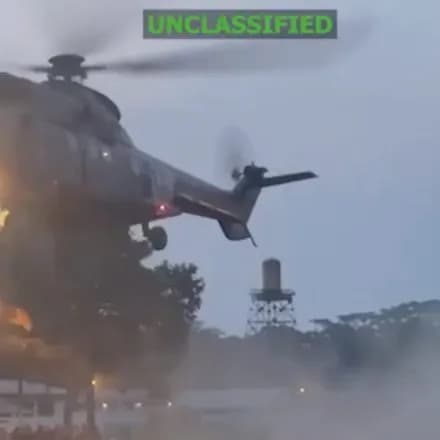
- •The United States launches 'Operation Total Eradication' with Ecuador, intensifying military attacks on Latin American cartels
- •Approximately 160 civilians have been killed and 48 ships destroyed in maritime operations since September 2025
- •Amid controversy over violations of the Constitution and international law, President Trump even hinted at the possibility of annexing Cuba.
Key facts: Official announcement of the U.S.’s ‘Operation of Total Extermination’
A senior Pentagon official said in congressional testimony last week that the military offensive against Latin American drug cartels was "just the beginning," officially naming the operation "Operation Total Extermination."
Acting Assistant Secretary of Defense for Homeland Defense and Inter-American Security Joseph Humire testified before the House Armed Services Committee that "we are supporting bilateral offensive operations against cartel targets along the Colombia-Ecuador border." He characterized it as "the beginning of a military offensive launched by Ecuador against transnational criminal organizations with support from the United States."
This testimony took place the day after President Donald Trump again mentioned the possibility of annexing Cuba. President Trump said, "I believe I will have the honor of taking over Cuba. I think I can do whatever I want, whether I liberate it or take it over."
Why it is important: Paradigm shift in U.S. military intervention in the Western Hemisphere
This operation goes beyond simple drug crackdowns and shows a fundamental change in America's military strategy in the Western Hemisphere.
First, it is the regularization of direct military action against sovereign countries. In the March 3rd airstrike, it was reported that a 500-pound bomb landed on Colombian territory or caused damage through a 'ricochet effect'. A structure is being formed where the United States directly projects military force into the territory of its allies and justifies it as 'cartel eradication'.
Second, the scale of civilian damage. Through Operation Southern Spear, which began in September 2025, the United States destroyed 48 ships in the Caribbean and Eastern Pacific and killed approximately 160 civilians. In the Pacific operation on March 19, two people were killed and one survived. The Trump administration claims the victims were members of more than two dozen cartels and criminal organizations, but has refused to release the names of those organizations.
Third, there is the controversy over constitutional and international legal legitimacy. “This administration is only paying lip service to the Constitution and international law governing the use of force,” said Rebecca Ingber, a professor at Cardozo Law School and former legal advisor to the State Department. “Rushing into war at the whim of one person is the exact opposite of what the Constitution requires.”
Historical context: From the war on drugs to the ‘war on cartels’
The United States' military intervention in Latin America has a long history, but the current situation has entered a qualitatively different phase.
In the 1980s and 1990s, indirect intervention was mainly done to support the Colombian government in the name of the 'war on drugs.' The United States focused on training, equipment, and intelligence support.
Plan Colombia in the 2000s was a more active military and economic support package, but local government forces were still the main actors of the operation.
After 2025, the United States will transition to a ‘direct combat’ model, carrying out direct airstrikes and naval strikes. SOUTHCOM Commander General Francis Donovan told the Senate Armed Services Committee that "strikes on ships are not the answer," but signaled the expansion into "an anti-cartel campaign that would inflict total systemic friction across this network."
The background to this transition is the Trump administration's decision to designate several drug cartels as 'terrorist organizations.' Through this, the administration claims that it has secured the legal basis to use military force without congressional approval.
Future outlook [AI analysis]
The possibility of an escalation is high. Acting Assistant Secretary Humier responded that he “does not know” the exact number of ground airstrikes being carried out in about 20 Latin American and Caribbean countries. This suggests that the operation is already expanding beyond official counts.
Diplomatic tensions are expected to increase. The incident of an unexploded bomb being dropped on Colombian territory could also cause a rift in relations with allies. Given that Ecuador's Ministry of Defense has confirmed this fact, it is highly likely that domestic public pressure will increase on local governments' participation in US operations.
Constitutional challenges are expected to materialize. The White House submitted a war powers report to Congress regarding the March 6 airstrike, but this constitutes an ex post facto notification. The movement to restore congressional authority over the administration's independent military action may be strengthened, led by the opposition party.
President Trump's remarks on Cuba imply that the current administration's Western Hemisphere strategy may expand beyond drug eradication to geopolitical reorganization. This could be interpreted as a response to China and Russia's expansion of influence in Latin America, but it is highly likely to result in a backlash from the international community.
댓글 (4)
기사 잘 봤습니다. 다른 시각의 분석도 읽어보고 싶네요.
좋은 의견이십니다.
간결하면서도 핵심을 잘 정리한 기사네요.
좋은 의견이십니다.
More in Special

How to avoid ICE agents checking your phone at the airport

주일 중국대사관 침입한 괴한, 자위대 현직 장교로 확인

New York City public hospital breaks up with Palantir... Ending controversy over commercialization of citizen health data

The Corsican Mafia Exposed: Breaking a Century of Silence

AI-Generated Fake Person Used to Sell Dubai Flight Seats

Facebook Groups Traded Endangered Species Using Code Language — Indonesian Broker Network Exposed
Latest News
"간부 잘 아는데 교통비 좀" 휴가 군인들 돈 뜯은 50대 구속
50대 A씨가 휴가 중인 군인들에게 부대 간부를 아는 척 접근해 돈을 사취

英 옥토퍼스, 이란 전쟁 이후 태양광 판매 50% 증가
이란 전쟁 이후 영국 옥토퍼스의 태양광 판매량 50% 증가
당정 "추경, 지방·취약계층에 더 지원되는 방식으로"
당정이 지방자치단체와 취약계층 중심의 추경 편성 방침 재확인

당정, 석유 최고가격제 손실 보전을 추경에 반영키로
당정이 석유 최고가격제 손실을 추경에 반영하기로 결정

어머니 폭행하고 금팔찌 빼앗은 30대 아들 경찰에 붙잡혀
어머니 폭행 후 금팔찌 빼앗은 30대 남성 체포
아이티 갱단 폭력사태로 10개월간 5천명 이상 사망
아이티에서 지난 10개월간 갱단 폭력으로 5천명 이상 사망
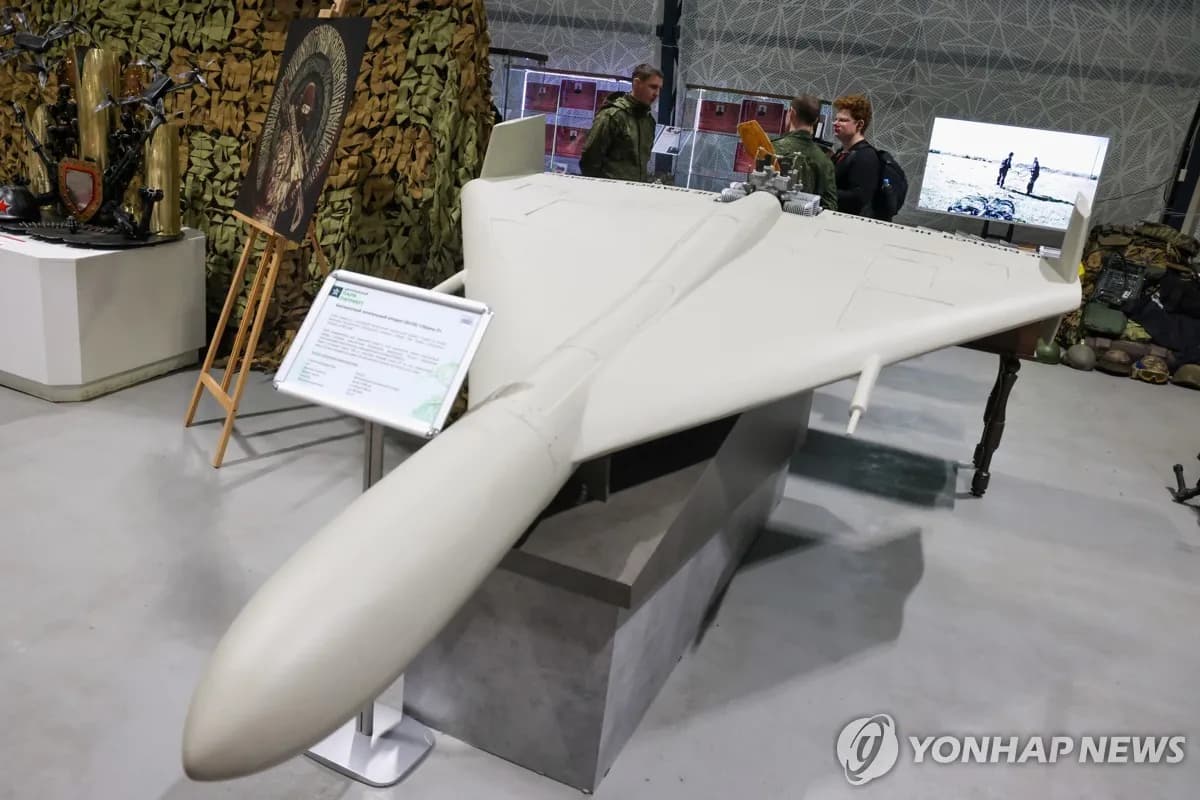
서방 정보당국 "러시아, 우크라이나 전쟁 후 이란에 드론·식량 공급"
서방 정보당국, 러시아의 이란 드론·식량 공급 작업 거의 완료 파악

6년 전 세 살 딸 살해한 30대 친모 구속송치
경찰, 6년 전 세 살 딸 살해 혐의 30대 친모를 구속송치