US-China Trade War Peaks with Tariff Retaliation in 2025
Trump's Second-Term Tariff War Reshapes Bilateral Relations Around Economic Conflict
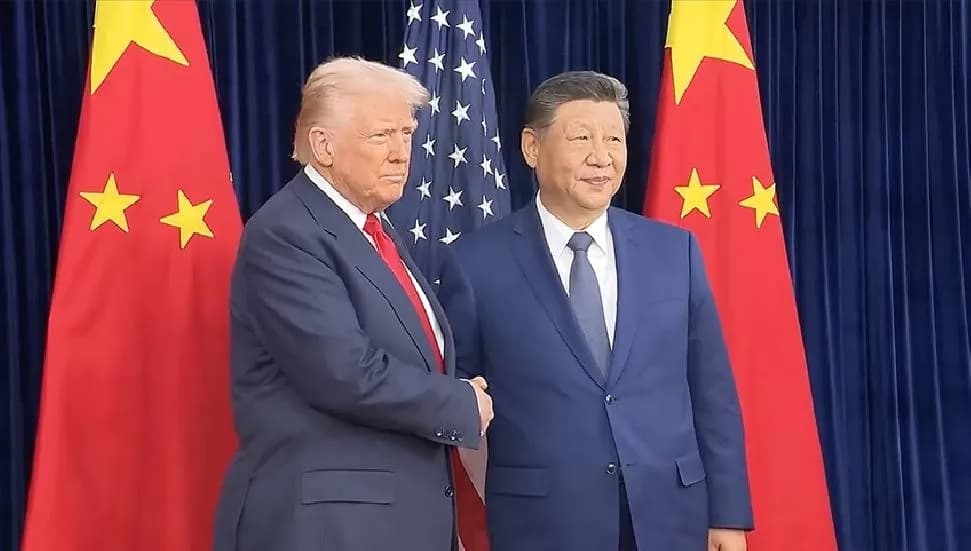
- •The Trump administration's 2025 tariff policies intensified the US-China trade war, escalating to extreme retaliatory tariffs of up to 145% vs 125%.
- •Despite five rounds of negotiations and a summit meeting, core issues remained unresolved, with only temporary 90-day suspensions as stopgap measures.
- •China responded by strengthening its multipolarization strategy and Global South alliances, while Japan's hints at Taiwan intervention added new tension factors.
A New Phase in the Trade War
The defining keyword of China's foreign policy in 2025 was 'tariff retaliation.' As Donald Trump's second-term administration launched a full-scale attempt to reshape the global trade order using tariffs as a weapon, the conflict between the world's two largest economies entered a new dimension.
The leading actors on the diplomatic stage have changed. US-China relations, once centered on political and military issues, have now shifted to a framework where trade negotiators and economic officials take center stage. At the negotiation table, trade specialists have replaced diplomats, and tariff discussions have supplanted security talks.
145% vs 125%: A Vicious Cycle of Tariff Retaliation
On April 2, the Trump administration imposed additional tariffs on major trading partners including China, marking the beginning of an all-out trade war. Beijing immediately responded with retaliatory tariffs, and tariff rates on both sides spiraled out of control.
Ultimately, the situation reached extremes with the US imposing 145% tariffs on Chinese products and China imposing 125% tariffs on American goods. This signifies that what began as a simple trade dispute has escalated into an economic war shaking the entire global supply chain.
Five Rounds of Negotiations: Consecutive Temporary Patches
To ease mounting tensions, working-level officials from both countries sat down for negotiations five times throughout 2025:
- May 10-11: Geneva, Switzerland
- June 9-10: London, United Kingdom
- July 28-29: Stockholm, Sweden
- September 14-15: Madrid, Spain
- October 25-26: Kuala Lumpur, Malaysia
After the fifth round, both sides announced they had reached a temporary agreement framework, but core issues remained unresolved and postponed. They merely froze tariff rates for two 90-day periods, failing to find fundamental solutions.
Summit Provides Momentary Relief
On October 30, President Trump and President Xi Jinping met in person in Busan, South Korea. The agreement reached at this summit was a 'postponement' rather than a 'resolution.'
The US reduced the additional 20% tariff—imposed for inadequate crackdown on illegal fentanyl trafficking—to 10%, and agreed to suspend the mutual 24% tariff for one year starting November 10. Critical issues such as semiconductor technology restrictions, rare earth controls, and shipping sector sanctions remain unresolved.
China's Strategic Response: Multipolarity and the Global South
In response to US economic pressure, China diversified its diplomatic strategy. Beijing pivoted toward promoting a 'multipolar world order' and strengthening cooperation with the 'Global South'—a coalition of developing nations.
The Shanghai Cooperation Organization (SCO) summit held in Tianjin, China, and the Beijing military parade commemorating the 80th anniversary of World War II's end served as platforms to convey this message. These moves are interpreted as attempts to consolidate relations with Russia while building an alternative axis to the US-centric order.
The Japan Factor: New Tensions Over Taiwan Intervention Hints
Toward year's end, diplomatic conflict with Japan also emerged. When newly appointed Japanese Prime Minister Sanae Takaichi hinted at the possibility of military intervention regarding Taiwan, new tensions arose in China-Japan relations.
Japan's indication of willingness to intervene in Taiwan—an issue China defines as a core interest—demonstrates that the East Asian geopolitical landscape is becoming increasingly complex as it intertwines with US-China tensions.
Future Outlook [AI Analysis]
US-China relations in 2025 exemplified 'managed conflict.' The crisis management mode—avoiding full-scale confrontation while not pursuing fundamental resolution—is likely to continue.
Several points warrant attention:
First, the tariff war will become protracted. Both sides are enduring economic damage without retreating. The pattern of 90-day suspensions and renegotiations is likely to repeat throughout 2026.
Second, China's 'de-Americanization' of supply chains will accelerate. Moves to strengthen control over critical resources like rare earths and reduce dependence on the US through economic solidarity with developing nations are expected to intensify.
Third, Taiwan could become a new flashpoint. Japan's hints at possible intervention may not be mere diplomatic rhetoric. If tensions in the Taiwan Strait escalate while US pressure on China continues, the risk of the trade war transforming into a security crisis cannot be ruled out.
From a global economic perspective, supply chain reorganization is inevitable. Companies are being forced to choose between the 'US market' and the 'Chinese market,' accelerating the 'bloc-ization' of the world economy. Middle powers like South Korea are expected to face increasingly difficult diplomatic balancing acts under pressure to choose sides.
댓글 (3)
댓글란이 과열되지 않았으면 합니다. 차분한 논의가 필요해요.
이 문제의 본질이 무엇인지 깊이 생각해볼 필요가 있습니다.
이 사안은 신중하게 접근해야 한다고 봅니다.
More in Special
The Corsican Mafia Exposed: Breaking a Century of Silence

AI-Generated Fake Person Used to Sell Dubai Flight Seats

Facebook Groups Traded Endangered Species Using Code Language — Indonesian Broker Network Exposed
G6 Alliance Declares Support for Hormuz Strait Security... Reverses Stance Under Trump Pressure
Seoul's Average Monthly Rent Surpasses 1.51 Million Won as Soaring Official Property Prices Trigger 'Housing Cost Bomb'

Rihanna Tops Spotify Without New Album for 10 Years, Proving Power of Catalog
Latest News

Santo Domingo's Malecón Sports Park Construction Progressing Smoothly
Construction of a soccer field and skate park is progressing smoothly in the Malecón area of Santo Domingo, Dominican Republic.

Beyond Vaccines: Refusal of Newborn Vitamin K Shots Spreads
Half of newborns at an Idaho hospital did not receive vitamin K injections due to parental refusal.
US Military Strikes Iranian Facilities Threatening Strait of Hormuz
US military strikes Iranian underground missile facilities near the Strait of Hormuz

UFC 313: Jones vs. Aspinall Heavyweight Title Fight Confirmed
UFC 313 confirmed for March 8: Jon Jones vs. Tom Aspinall heavyweight title fight
Black Combat: A New Leap for Korean MMA Promotion
Black Combat is rapidly growing as one of the top three domestic MMA promotions, securing a young fan base through digital marketing

Russia Anticipates Economic Gains from US-Iran Conflict
US-Iran tensions drive international oil prices up, increasing Russia's energy export revenues
Gas Sprayer Detected at BTS Comeback Concert Venue Metal Detector
Woman in her 50s caught carrying gas sprayer at BTS comeback concert venue

PM Starmer Faces Overseas War and Domestic Political Crisis Simultaneously
PM Starmer simultaneously faces overseas military crisis and domestic political division