Japan's 'Nuclear Armament' Remarks Spark Controversy, Neighboring Countries Issue Warnings
Koichi Administration Official's Nuclear Weapons Advocacy Triggers Chain Reaction from China, Russia, and North Korea... Foundation of Postwar Pacifism Shaken
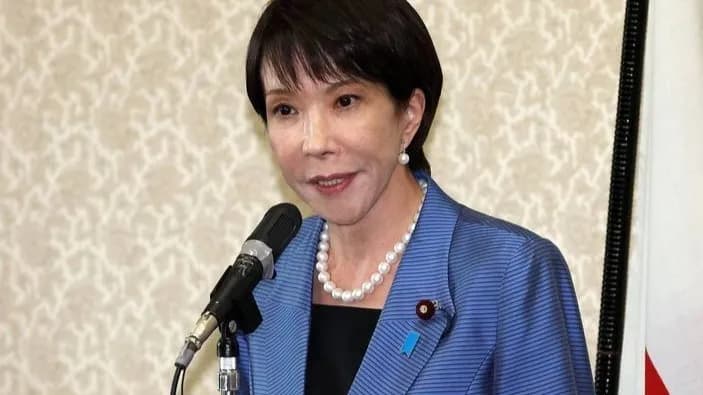
- •Japanese Prime Minister's Office national security official's 'need for nuclear weapons' remarks trigger domestic and international controversy
- •China, Russia, and North Korea issue chain warnings against Japan's remilitarization ambitions, raising concerns of plummeting trust among neighboring countries
- •Postwar Three Non-Nuclear Principles shaken, raising possibility of diplomatic isolation and heightening security tensions in Asia-Pacific region
Shocking Remarks from Japanese Government Official
On the 18th, a national security policy official from the Japanese Prime Minister's Office made remarks to the media stating that "Japan should possess nuclear weapons," creating new tensions in regional security. The statement immediately triggered backlash both domestically and internationally, raising fundamental questions about Japan's postwar 'Three Non-Nuclear Principles' (not possessing, not producing, and not permitting the introduction of nuclear weapons).
On the 21st, Onodera Itsunori, chairman of the ruling Liberal Democratic Party's Research Commission on Security, added fuel to the controversy by stating on a TV debate program that "discussion is needed regarding the status of the Three Non-Nuclear Principles." He argued that "it is a fait accompli that Japan is under the U.S. 'nuclear umbrella,' and this is an issue that must be discussed." The LDP is reportedly planning to submit a related motion to the cabinet in February next year to promote parliamentary debate.
Domestic Backlash and Political Criticism
Strong opposition has continued within Japan across party lines. Former Prime Minister Ishiba Shigeru drew a clear line on the 20th during a TV program, stating, "If Japan possesses nuclear weapons, it would have to withdraw from the Nuclear Non-Proliferation Treaty (NPT) and the International Atomic Energy Agency (IAEA)," adding that "this would shake the foundation of Japan's energy policy and would never be advantageous."
Former Defense Minister Nakatani Gen criticized the remarks, saying, "Government officials should not carelessly express personal opinions, and such statements are unacceptable." Saito Tetsuo, leader of the opposition Komeito party, demanded the dismissal of the official, stating that "nuclear possession would drive Japan into diplomatic isolation and seriously deteriorate the security environment."
The Japan Confederation of A-and H-Bomb Sufferers Organizations issued a statement strongly opposing the remarks: "These statements ignore the existence of atomic bomb victims and condone nuclear war, which is absolutely unacceptable."
Chain of Warnings from Neighboring Countries
Japan's testing of the 'nuclear red line' has triggered immediate cautionary reactions from neighboring countries.
Chinese Foreign Ministry spokesperson Guo Jiakun warned on the 19th that "Japanese right-wing conservative forces are expanding their ambitions to revive militarism, break free from international order constraints, and accelerate 'remilitarization,'" adding that "China and the international community should be highly vigilant and seriously concerned."
Russian Foreign Ministry Deputy Minister Rudenko stated on the 20th, "Russia clearly opposes discussions related to Japan's possession of nuclear weapons," noting that "Japan's remilitarization will heighten tensions in Northeast Asia and trigger countermeasures from relevant countries." The Russian Foreign Ministry emphasized that it has "systematically" conveyed concerns about Japan's militarization risks, including rapid defense spending increases, through diplomatic channels.
Korean Central News Agency reported on the 21st through a statement by the director of the Japanese Research Institute of North Korea's Foreign Ministry: "Japan presents itself as the 'only atomic bomb victim nation' on one hand, while fervently pursuing nuclear armament on the other," warning that "as proven by its history of past aggression, if nuclear weapons fall into Japanese hands, a nuclear catastrophe will befall Asian countries."
Deviation from Postwar Pacifism
The Kochi Shimbun wrote in an editorial on the 20th, "Since the launch of the Takaichi administration, there have been successive moves to fundamentally overturn the non-nuclear policy that postwar Japan has maintained," urging that "the government must deeply reflect on Japan's postwar peaceful development trajectory and respond responsibly."
The Ryukyu Shimpo pointed out that "Prime Minister Takaichi's previous erroneous remarks regarding Taiwan caused a cooling of China-Japan relations and heightened regional military tensions, and these nuclear possession remarks will also trigger strong opposition from China and neighboring countries."
Assessment of Japan's Nuclear Capabilities
South Korea's Hankyoreh newspaper analyzed in a commentary on the 21st that "Japan has been assessed since the Cold War period as having the technical conditions to manufacture nuclear weapons without nuclear testing," noting that "within the NPT system, it has possessed nuclear fuel reprocessing rights and has long held large quantities of plutonium."
Xiang Haoyu, special researcher at the Asia-Pacific Research Institute of the China Institute of International Studies, explained in an interview with Global Times that "Japan theoretically possesses nuclear materials capable of manufacturing large quantities of nuclear warheads and has complete nuclear fuel cycle capabilities, but there are various technical and practical obstacles to actually pursuing nuclear possession."
Strategic Dilemma and Diplomatic Isolation [AI Analysis]
The successive nuclear possession remarks by Japanese government officials are not merely the accidental expression of personal opinions, but rather an inevitable result of Japan's domestic political shift to the right and a 'test' of public opinion. This reflects dangerous trends of radicalization in Japan's security policy and weakening of its pacifist foundation, revealing ambitions to break through the postwar order.
Researcher Xiang Haoyu noted that "strong criticism from neighboring countries shows that the international community maintains a high level of vigilance and zero-tolerance attitude toward Japan's nuclear possession remarks," pointing out that "concerns about triggering regional nuclear competition and threatening strategic stability are at the core." The United States has also recently emphasized that Japan must adhere to its non-proliferation commitments, demonstrating that the international community shows a unified attitude of vigilance toward the 'remilitarization' ambitions of Japan's right wing.
According to Russian media analysis, facing intensifying economic and social problems, rising prices, and increased livelihood burdens, Japanese authorities may be attempting to deflect domestic contradictions and conceal incompetent governance through recent aggressive foreign policies.
Researcher Xiang warned that "if Japan continues to test red lines on nuclear issues, it will further lose the trust of neighboring countries and fall into 'diplomatic isolation,' with diplomatic maneuvering space seriously reduced and security situation deteriorating." The Three Non-Nuclear Principles, proposed by Prime Minister Sato Eisaku in 1967 and passed by the plenary session of the House of Representatives in 1971, have symbolized Japan's postwar peaceful development trajectory along with Article 9 of the Japanese Constitution (renunciation of war clause), and challenges to these principles are likely to pose serious potential threats to peace and stability in the Asia-Pacific region.
Meanwhile, if Japan actually pursues nuclear armament, it would have to pay multilayered costs including NPT withdrawal, IAEA sanctions, and energy policy collapse, which could paradoxically result in making national security even more vulnerable.
댓글 (3)
댓글란이 과열되지 않았으면 합니다. 차분한 논의가 필요해요.
차분한 논의가 필요하다는 말에 공감합니다.
Nuclear 문제는 양쪽 입장을 모두 들어봐야 할 것 같습니다.
More in Global

US Military Strikes Iranian Facilities Threatening Strait of Hormuz

PM Starmer Faces Overseas War and Domestic Political Crisis Simultaneously
President Lee Orders Thorough Investigation into Daejeon Factory Fire

U.S.-Israel Strike Iran's Natanz Nuclear Facility... Trump Hints at War's End
Daejeon Anjeon Industries Fire: All 14 Missing Found Dead, 74 Total Casualties
Democratic Party Leaders Pay Condolences for Former President Moon's Mother-in-Law
Latest News

Santo Domingo's Malecón Sports Park Construction Progressing Smoothly
Construction of a soccer field and skate park is progressing smoothly in the Malecón area of Santo Domingo, Dominican Republic.

Beyond Vaccines: Refusal of Newborn Vitamin K Shots Spreads
Half of newborns at an Idaho hospital did not receive vitamin K injections due to parental refusal.
The Corsican Mafia Exposed: Breaking a Century of Silence
Citizens in Corsica, France have begun publicly denouncing the mafia problem that has been taboo for decades.

UFC 313: Jones vs. Aspinall Heavyweight Title Fight Confirmed
UFC 313 confirmed for March 8: Jon Jones vs. Tom Aspinall heavyweight title fight

Black Combat: A New Leap for Korean MMA Promotion
Black Combat is rapidly growing as one of the top three domestic MMA promotions, securing a young fan base through digital marketing

Russia Anticipates Economic Gains from US-Iran Conflict
US-Iran tensions drive international oil prices up, increasing Russia's energy export revenues
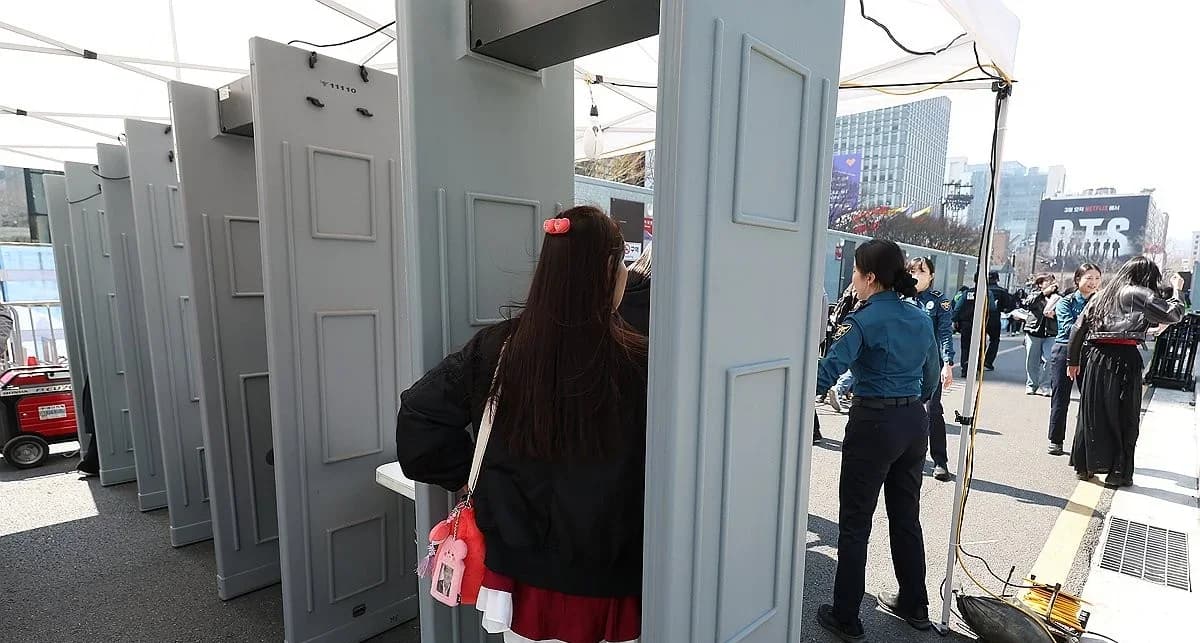
Gas Sprayer Detected at BTS Comeback Concert Venue Metal Detector
Woman in her 50s caught carrying gas sprayer at BTS comeback concert venue

BTS Returns as Full Group of 7 with Performance for 40,000 Fans at Gwanghwamun Square
BTS performed as a complete group of seven at Gwanghwamun Square at 8 PM on the 21st