Traditional Taekwondo Enters the Metaverse: Malaysia's VR Taekwondo Boom
Sparring with headsets and motion sensors eliminates injury concerns... First world championship held in 2024
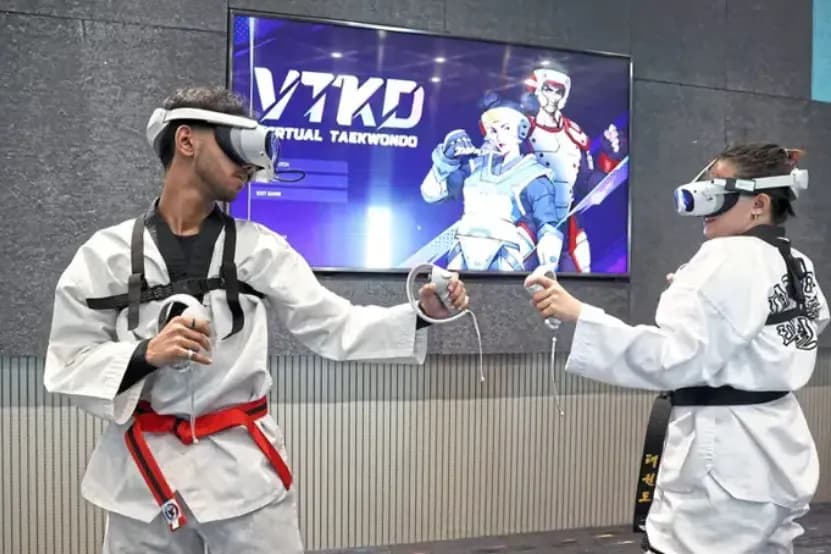
- •VR taekwondo, where competitors spar using VR headsets and motion sensors, is spreading in Malaysia.
- •The elimination of injury risk has led to high parental acceptance, and the esports generation welcomes the approach.
- •The first world championship was held in Singapore in 2024, where a Malaysian athlete placed fourth.
Injury-Free Sparring: How VR is Transforming Taekwondo
In a university auditorium in Kuala Lumpur, Malaysia, taekwondo athletes Gan Jing Yuan and Asadullah Mohamed Azvi are preparing for a sparring demonstration. However, the equipment they're wearing isn't traditional protective gear. Armed with VR headsets, motion sensors, and joysticks, the two competitors face off in virtual space.
Gan Jing Yuan, a 20-year-old computer science student, practiced taekwondo from childhood but had to quit sparring at age 14 due to an ankle injury. The contact-heavy nature of sparring posed too great a risk of re-injury. But in VR taekwondo, opponents' kicks never make physical contact. All attacks occur only in the digital arena.
How VR Taekwondo Works
VR taekwondo operates similarly to arcade fighting games. Athletes wear VR headsets and hold joysticks in both hands for defensive movements. Additionally, five motion sensors are attached to the body: one on the back (tracking upper body movements) and two on each leg (detecting kicks).
Through the headset, competitors directly face their opponents in virtual space. The objective is simple: land as many successful kicks as possible to deplete the opponent's health bar. In the real world, the two athletes never make contact. Referees instruct them to maintain distance and pause matches when necessary to separate competitors.
Touching the headset during a match is prohibited. Coach Tony Lee Chun Wah explains, "Touching the headset can cause technical issues and force a rematch, so it's considered a form of cheating." This is because losing competitors could intentionally trigger rematches.
Parents Reassured, Esports Generation Welcomes It
Coach Lee, who has led university taekwondo teams for years, says he immediately embraced VR taekwondo when first introduced to it. He was convinced that "reduced injury risk would lead more parents to allow their children to participate in taekwondo."
He also considered that esports has become a mainstream form of competition among younger generations. "I recognized that digital competition has become a challenging arena for young people, and I thought it was time to learn this new approach."
Coach Lee calls VR taekwondo "Malaysia's new baby." Some local clubs began introducing this format to members starting in 2024. "In VR taekwondo, you're not playing a game on your smartphone or screen. You have to enter the game directly. I always say, 'Don't let the game play you—you play the game.' You have more control."
World Championship Debut: Malaysian Athlete Places Fourth
According to Coach Lee, who coached the Malaysian national team at the first World Taekwondo Virtual Championships held in Singapore in 2024, one Malaysian competitor placed fourth in a division.
Eight-year-old children were spotted competing while wearing VR equipment. This demonstrates that VR taekwondo is expanding age ranges and increasing accessibility.
Future Outlook [AI Analysis]
VR taekwondo is likely to gain attention as a fusion of traditional martial arts and digital technology. Reduced injury risk will be a key factor in increasing participation among youth and beginners. As parental concerns decrease, it should have a positive impact on expanding taekwondo's reach.
Additionally, the connection with esports creates expectations for attracting new audiences. Gamers who traditionally had no interest in combat sports may enter martial arts through VR taekwondo. The 2024 inaugural world championship suggests this field is becoming institutionalized internationally.
However, VR equipment costs and accessibility remain challenges. Headset, motion sensor, and joystick sets are far more expensive than traditional uniforms, and gyms equipped with this technology are limited. Equipment price reduction and expanded distribution will be critical variables determining VR taekwondo's popularization going forward.
댓글 (3)
간결하면서도 핵심을 잘 정리한 기사네요.
그 부분은 저도 궁금했습니다.
기사 잘 봤습니다. 다른 시각의 분석도 읽어보고 싶네요.
More in Gaming

BGMI 4.3 Update Released: Krafton India's Marketing Director Reveals Success Formula

Life is Strange: Reunion Launches March 26

Studio Ghibli-Inspired Puzzle Game 'Nomori' Debuts at GDC

Sony Abandons PC Multi-Platform Strategy, Returns to PS5 Exclusivity

Disney's Next CEO Plans Movie Premieres in Fortnite

TikTok Altered Indie Game Ads with AI Without Consent, Sparking Racism Controversy
Latest News

Santo Domingo's Malecón Sports Park Construction Progressing Smoothly
Construction of a soccer field and skate park is progressing smoothly in the Malecón area of Santo Domingo, Dominican Republic.

Beyond Vaccines: Refusal of Newborn Vitamin K Shots Spreads
Half of newborns at an Idaho hospital did not receive vitamin K injections due to parental refusal.

US Military Strikes Iranian Facilities Threatening Strait of Hormuz
US military strikes Iranian underground missile facilities near the Strait of Hormuz

The Corsican Mafia Exposed: Breaking a Century of Silence
Citizens in Corsica, France have begun publicly denouncing the mafia problem that has been taboo for decades.

UFC 313: Jones vs. Aspinall Heavyweight Title Fight Confirmed
UFC 313 confirmed for March 8: Jon Jones vs. Tom Aspinall heavyweight title fight

Black Combat: A New Leap for Korean MMA Promotion
Black Combat is rapidly growing as one of the top three domestic MMA promotions, securing a young fan base through digital marketing

Russia Anticipates Economic Gains from US-Iran Conflict
US-Iran tensions drive international oil prices up, increasing Russia's energy export revenues
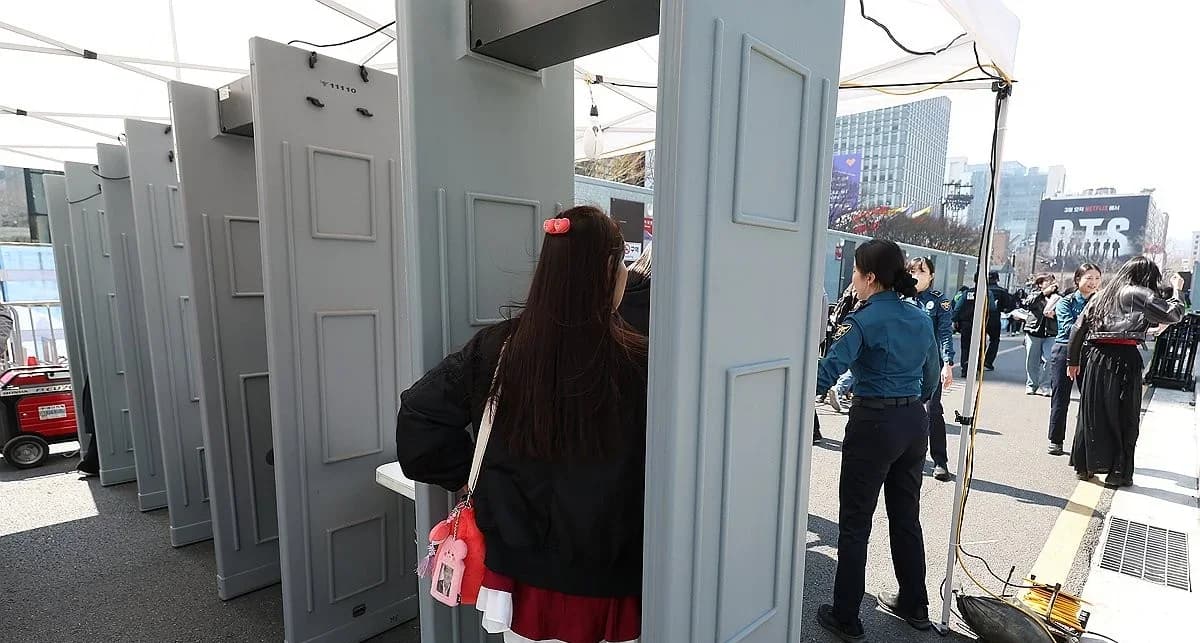
Gas Sprayer Detected at BTS Comeback Concert Venue Metal Detector
Woman in her 50s caught carrying gas sprayer at BTS comeback concert venue