Bank of Thailand Expected to Cut Interest Rates by 0.25%p Amid Economic Slowdown Concerns
Monetary Policy Takes Center Stage as Political Instability Limits Fiscal Response
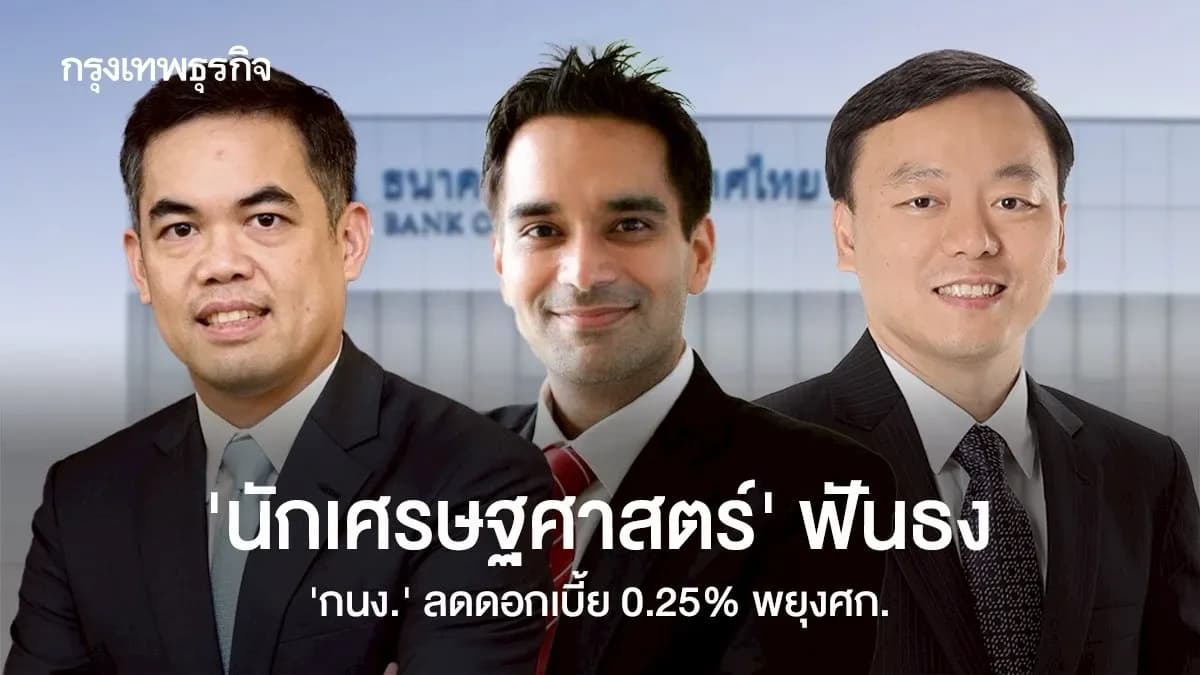
- •The Bank of Thailand is expected to cut its benchmark interest rate from 1.5% to 1.25% by 0.25 percentage points on the 17th.
- •With parliament dissolved, fiscal policy is limited, making monetary policy the sole tool for economic stimulus.
- •Concerns persist that rate cuts will deplete policy capacity and that transmission to the real economy remains uncertain.
BOT's Final Rate Decision of the Year
The Bank of Thailand (BOT) Monetary Policy Committee (MPC) is widely expected to cut the benchmark interest rate by 0.25 percentage points at its regular meeting on the 17th. If the current policy rate of 1.5% is lowered to 1.25%, it would represent the lowest interest rate level in Thailand's history.
This meeting is drawing attention as both the final monetary policy meeting of 2025 and the second under new Governor Sethaput Suthiwartnarueput's leadership.
Thailand's Economy Facing Multiple Crises
Thailand's economy is currently confronting simultaneous internal and external challenges. Pipat Luengnaruemitchai, chief economist at Kiatnakin Phatra Securities, analyzed that a rate cut is inevitable.
Internal factors include weak domestic demand, low inflation, negative credit growth, surging non-performing loans (NPLs), and a strong baht. These are compounded by external shocks: flood damage, the Thailand-Cambodia border conflict, and uncertainty over trade tariff negotiations with the United States—all hampering economic recovery.
The biggest variable is political instability. With the dissolution of parliament, the current government has transitioned to a caretaker government system, making economic stimulus through fiscal policy virtually impossible. This has concentrated economic stabilization responsibilities on monetary policy.
Economist Pipat emphasized, "With fiscal policy in a vacuum, monetary policy must play a more active role," adding that "considering all conditions, maintaining rates cannot be justified."
The Rate Cut Dilemma: Running Out of Ammunition
However, the rate cut comes with serious concerns. The primary worry is depleting policy capacity. Cutting rates now reduces the "ammunition" available to respond to future economic crises or financial shocks.
Economist Pipat noted, "Preserving capacity for crisis response might be more beneficial," and "the central bank must explore policy tools beyond interest rates." Otherwise, Thailand could face a future shortage of monetary policy instruments.
Rate Cuts Alone Are Not Enough
Another issue is the policy transmission mechanism. If commercial banks don't lower lending rates even when the central bank cuts rates, the reduction's effects won't reach the real economy—a phenomenon known as "wasted bullets."
In fact, Thailand has experienced cases where commercial banks maintained lending rates despite central bank cuts. This makes clear communication from the central bank crucial. Banks must be incentivized to increase lending, ensuring rate cut benefits actually reach economic actors.
Economist Pipat posed the question: "Large corporations benefit from rate cuts, but how will SMEs—which banks are reluctant to lend to—receive these benefits?"
Need for Multi-layered Policy Tools
This has led to calls for the BOT to employ additional measures beyond interest rate policy. The BOT is already implementing NPL resolution measures, credit support initiatives, expanded targeted lending, and soft loan programs.
These policies can deliver concentrated effects on specific sectors more effectively than rate cuts. For example, they can provide liquidity to areas difficult to access through commercial banks' regular lending, such as SMEs or the agricultural sector.
Future Outlook [AI Analysis]
If the Bank of Thailand cuts rates this time, it could signal a turning point in Asian regional monetary policy. This is particularly significant given that political instability has paralyzed fiscal policy, leaving monetary policy as the sole economic stabilization tool.
However, the historically low rate of 1.25% will significantly constrain future policy flexibility. Should global economic shocks or regional financial crises occur, Thailand may have to rely on unconventional monetary policies without room for further rate cuts.
Additionally, whether commercial banks lower lending rates will be a critical variable for actual economic recovery. If the central bank's policy intentions aren't properly transmitted to the market, rate cuts risk becoming merely symbolic gestures.
Ultimately, Thailand's economic recovery requires alignment of monetary policy, fiscal policy, and political stability. Currently, monetary policy is shouldering this heavy burden alone.
댓글 (6)
간결하면서도 핵심을 잘 정리한 기사네요.
좋은 의견이십니다.
of에 대해 더 알고 싶어졌습니다. 후속 기사 부탁드립니다.
좋은 의견이십니다.
기사 잘 봤습니다. 다른 시각의 분석도 읽어보고 싶네요.
공감합니다. 참고하겠습니다.
More in Economy

Russia Anticipates Economic Gains from US-Iran Conflict

President Lee Visits Daejeon Factory Fire Site, Says 'Everything Melted'

U.S. Economic Expert Warns of Financial Shock Within 4-5 Years
NYSE Falls for Fourth Consecutive Week Amid Middle East Escalation Fears
U.S. Federal Reserve Unveils Bank Capital Regulation Modernization Plan
Federal Reserve Announces Enforcement Actions Against Two Former Bank Employees
Latest News

Santo Domingo's Malecón Sports Park Construction Progressing Smoothly
Construction of a soccer field and skate park is progressing smoothly in the Malecón area of Santo Domingo, Dominican Republic.

Beyond Vaccines: Refusal of Newborn Vitamin K Shots Spreads
Half of newborns at an Idaho hospital did not receive vitamin K injections due to parental refusal.

US Military Strikes Iranian Facilities Threatening Strait of Hormuz
US military strikes Iranian underground missile facilities near the Strait of Hormuz
The Corsican Mafia Exposed: Breaking a Century of Silence
Citizens in Corsica, France have begun publicly denouncing the mafia problem that has been taboo for decades.

UFC 313: Jones vs. Aspinall Heavyweight Title Fight Confirmed
UFC 313 confirmed for March 8: Jon Jones vs. Tom Aspinall heavyweight title fight

Black Combat: A New Leap for Korean MMA Promotion
Black Combat is rapidly growing as one of the top three domestic MMA promotions, securing a young fan base through digital marketing
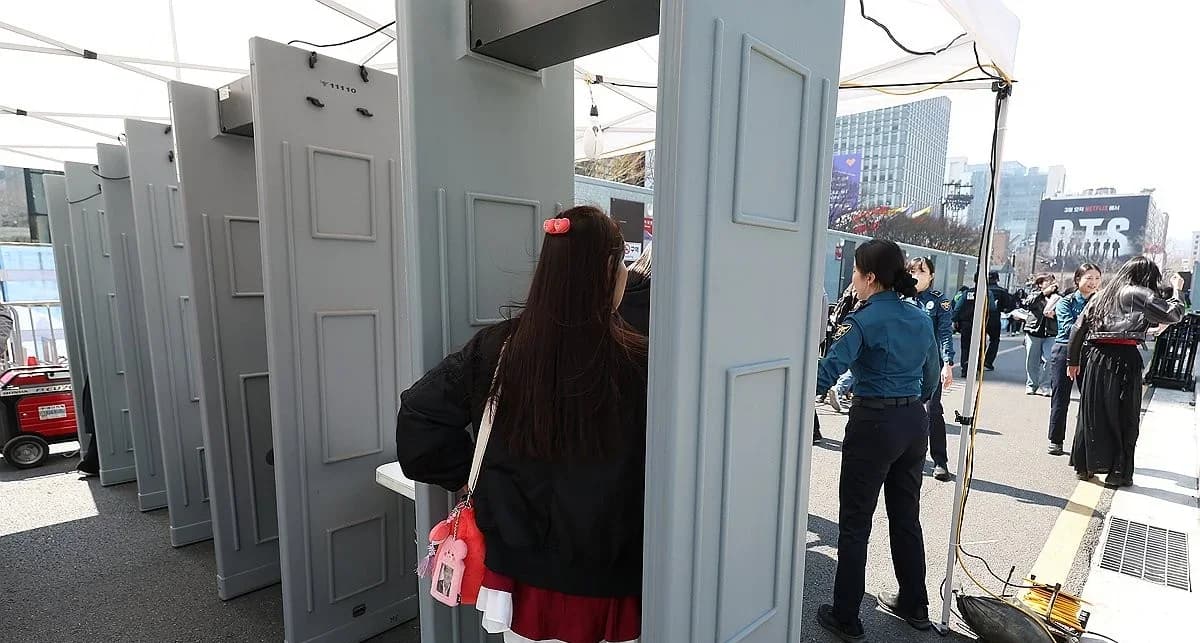
Gas Sprayer Detected at BTS Comeback Concert Venue Metal Detector
Woman in her 50s caught carrying gas sprayer at BTS comeback concert venue

PM Starmer Faces Overseas War and Domestic Political Crisis Simultaneously
PM Starmer simultaneously faces overseas military crisis and domestic political division