12,000-Year-Old Elk Hide May Be World's Oldest Sewn Garment
Ice Age Artifact from Oregon Cave Reveals Sophisticated Needlework of Ancient Indigenous Peoples
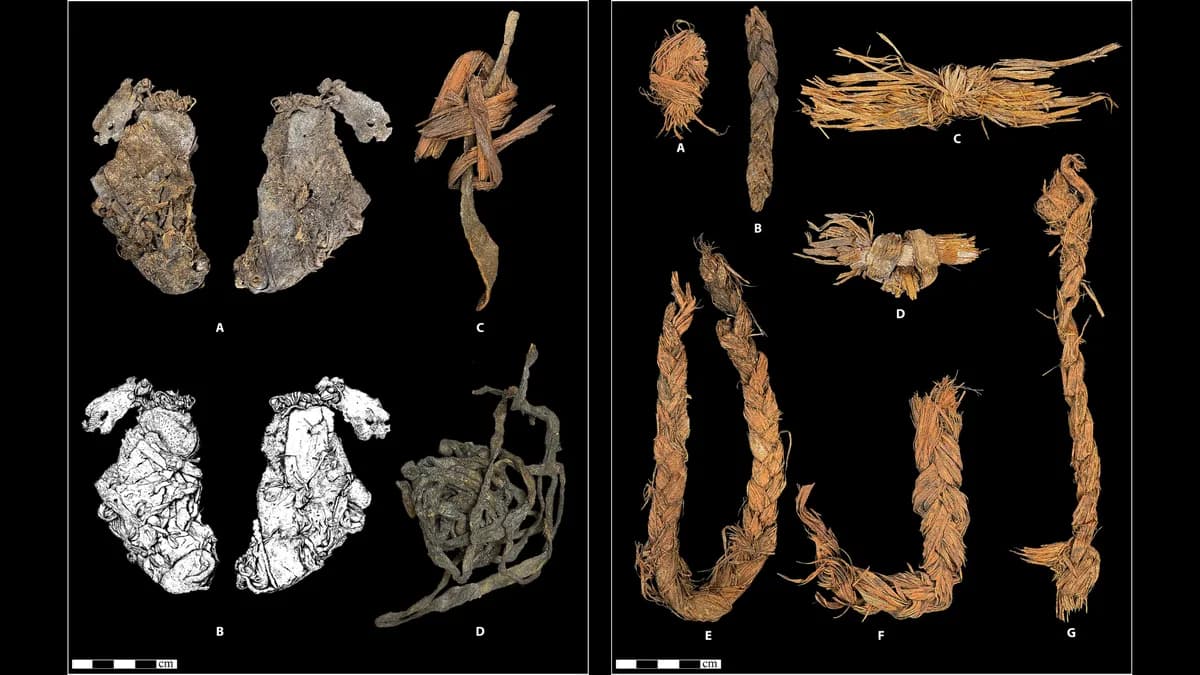
- •A 12,000-year-old elk hide discovered in an Oregon cave has been confirmed as potentially the world's oldest sewn garment.
- •Bone needles and ornaments excavated together prove the sophisticated sewing skills of Ice Age indigenous peoples.
- •60 years after its 1958 excavation, radiocarbon dating has brought new recognition of its value.
The Reality of Ice Age Clothing Revealed
A rare discovery has been reported in archaeological circles. Animal hide fragments excavated from Cougar Mountain Cave in central Oregon have been confirmed through radiocarbon dating to be approximately 12,000 years old. The hide clearly shows traces of stitching along its edges with plant and animal fibers, suggesting it may be the oldest existing sewn garment in the world. Researchers stated that this discovery could be the only clothing artifact recovered from the Pleistocene era.
This research, published on February 4 in the American scientific journal Science Advances, is a reanalysis of artifacts first excavated from Cougar Mountain Cave in 1958. Along with the hide fragments, bone needles and ornaments were discovered together, all confirmed to be from the Younger Dryas period at the end of the last Ice Age.
Beyond Survival: A Tool for Social Expression
This discovery goes beyond simple chronological value. Researchers emphasized that these artifacts provide important insights into the purposes for which Ice Age people used clothing. The bone needles and ornaments found together suggest that people of that time used clothing not only for the practical purpose of surviving harsh cold, but also as a means of social identity and expression.
Particularly, the sewing technique on this artifact, presumed to be elk hide, has been evaluated as quite sophisticated. The sewing method that combined plant fibers and animal sinew proves that indigenous people at the time possessed highly developed textile processing technology. This is evidence that prompts reconsideration of existing perceptions about the technological level of early settlers on the North American continent.
Secrets Revealed After 60 Years
It took considerable time for these artifacts to receive academic attention. At the time of the initial excavation in 1958, appropriate dating technology was absent, and the artifacts remained stored unresearched for decades. Only when modern radiocarbon dating techniques were applied was their true value finally revealed.
The Cougar Mountain Cave and nearby Paisley Caves area are known as important archaeological sites for early human activity on the North American continent. Various Ice Age artifacts including stone tools, animal bones, and plant remains continue to be excavated from this region, and this discovery represents one of the rarest cases among them.
The Younger Dryas period was a sudden cold period lasting from approximately 12,900 to 11,700 years ago, during which North American continent residents had to adapt to extreme climate change. This discovery is physical evidence showing that they maintained cultural identity and formed communities beyond mere survival.
Future Prospects [AI Analysis]
This research is likely to suggest several important directions in the field of North American archaeology. First, it is expected that re-examination of Ice Age artifacts that have been excavated but remain unanalyzed will become more active. This is because the advancement of modern analytical techniques can reveal information that was missed in the past.
Second, there is a possibility that the academic community's evaluation of the technological level of early North American continent settlers will be upgraded. Sophisticated sewing techniques and textile processing capabilities suggest that they possessed complex social structures and cultural traditions, and related research is expected to expand in the future.
Third, an opportunity has been created for the anthropological topic of social expression through clothing and ornaments to be explored more deeply in time. Since clothing use beyond practicality has been confirmed already 12,000 years ago, research that re-examines the origins of humanity's symbolic thinking and cultural expression is expected to follow.
댓글 (5)
간결하면서도 핵심을 잘 정리한 기사네요.
공감합니다. 참고하겠습니다.
흥미로운 주제입니다. 주변에도 공유해야겠어요.
Elk에 대해 더 알고 싶어졌습니다. 후속 기사 부탁드립니다.
좋은 의견이십니다.
More in Life

브라질 볼소나로 전 대통령, 건강 악화로 임시 가택연금 조치

The decline of university bars, the end of the ‘pour and drink’ era

NASA appoints Jennifer Lyons as new director of Launch Services Program

NASA Shared Services Center Releases Fiscal Year 2026 Service Catalog and Performance Report

James Webb Telescope captures Saturn's icy rings in infrared light

Japanese elementary school students' #1 future wish is to be a 'streamer'... surpassing doctors and teachers
Latest News

"간부 잘 아는데 교통비 좀" 휴가 군인들 돈 뜯은 50대 구속
50대 A씨가 휴가 중인 군인들에게 부대 간부를 아는 척 접근해 돈을 사취

英 옥토퍼스, 이란 전쟁 이후 태양광 판매 50% 증가
이란 전쟁 이후 영국 옥토퍼스의 태양광 판매량 50% 증가

당정 "추경, 지방·취약계층에 더 지원되는 방식으로"
당정이 지방자치단체와 취약계층 중심의 추경 편성 방침 재확인

당정, 석유 최고가격제 손실 보전을 추경에 반영키로
당정이 석유 최고가격제 손실을 추경에 반영하기로 결정

어머니 폭행하고 금팔찌 빼앗은 30대 아들 경찰에 붙잡혀
어머니 폭행 후 금팔찌 빼앗은 30대 남성 체포

아이티 갱단 폭력사태로 10개월간 5천명 이상 사망
아이티에서 지난 10개월간 갱단 폭력으로 5천명 이상 사망

서방 정보당국 "러시아, 우크라이나 전쟁 후 이란에 드론·식량 공급"
서방 정보당국, 러시아의 이란 드론·식량 공급 작업 거의 완료 파악

6년 전 세 살 딸 살해한 30대 친모 구속송치
경찰, 6년 전 세 살 딸 살해 혐의 30대 친모를 구속송치