14,500-Year Timeline Challenged: Monte Verde Site Dating Controversy
Volcanic ash analysis suggests pre-Clovis site may be only 8,200 years old, shaking archaeological consensus
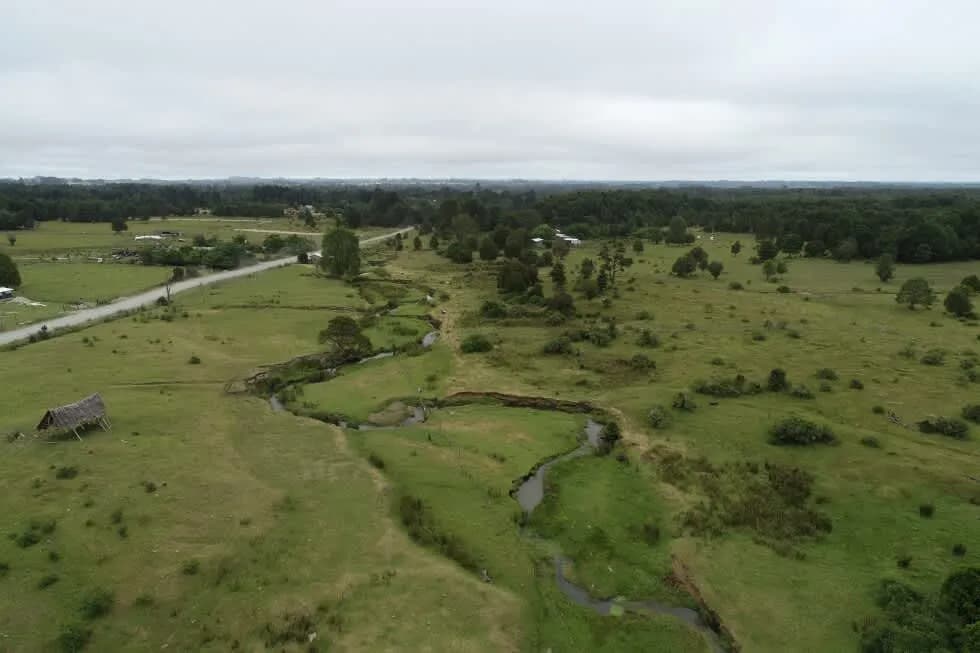
- •A study published in *Science* suggests Chile's Monte Verde site may date to within 8,200 years rather than 14,500 years ago.
- •This could shake the foundational evidence for pre-Clovis settlement theories and coastal migration routes.
- •The academic community is immediately challenging the findings based on directly dated artifacts and sampling methodology.
Rewriting the Settlement of the Americas
A new study suggests that Chile's Monte Verde archaeological site may be thousands of years younger than previously believed. A research team led by Professor Todd Surovell of the University of Wyoming published findings in the latest issue of Science, proposing that the site may date to 4,200-8,200 years ago rather than the established 14,500 years before present, based on volcanic ash layer analysis.
This represents the first independent reexamination of Monte Verde in nearly 50 years since its original excavation. The research team analyzed volcanic ash samples collected from alluvial deposits surrounding the site using radiocarbon dating and luminescence techniques. Results indicate that the geological layers containing artifacts may have formed much more recently than previously estimated.
Why This Research Matters
Monte Verde is far more than just an archaeological site. After receiving formal academic validation in 1997, this site became the decisive evidence that dismantled the "Clovis First" theory. The Clovis First hypothesis proposed that groups bearing Clovis culture were the first to reach the American continents approximately 13,000 years ago by crossing the Bering Strait.
The 14,500-year date predates this by 1,500 years, serving as crucial evidence for the "coastal migration theory"—the idea that humans migrated southward along the Pacific coastline rather than through interior ice-free corridors. This theory has rewritten textbooks over the past two decades and fundamentally shifted the paradigm of pre-Columbian American research.
If this new study proves accurate, the entire framework of theories regarding when and how humans settled the Americas will require reexamination. Numerous subsequent studies that used Monte Verde as a reference point may also be affected.
When Did This Controversy Begin?
The Monte Verde site was first discovered in southern Chile in the late 1970s. Tom Dillehay, a professor at Vanderbilt University who led the excavation, received academic validation in 1997 after rigorous peer review, establishing the site's age at 14,500 years before present.
At that time, the archaeological community was extremely cautious about accepting pre-Clovis sites. Several "pre-Clovis" sites announced during the 1970s and 1980s had been rejected due to methodological flaws. Monte Verde was the first case to break through this skepticism and gain acceptance.
During the 2000s, similar-aged sites were discovered in succession, including Florida's Page-Ladson site (14,550 years) and Texas's Buttermilk Creek site (15,500 years), lending strength to the coastal migration theory. In the 2020s, the controversy expanded further when stone tools estimated at 30,000 years old were discovered in Mexico's Chiquihuite Cave.
However, questions about Monte Verde's dating have been raised consistently. Issues such as the site's complex depositional environment, potential contamination of organic samples, and geological disturbance have been cited as concerns. Surovell's team's research represents the first systematic examination of these doubts.
Academic Rebuttals and Key Issues
The academic community has immediately pushed back against these findings. The biggest point of contention is sampling location. Critics point out that Surovell's team analyzed surrounding terrain rather than the site itself. If the artifact-bearing layers and volcanic ash layers are not directly connected, the reliability of the age estimation could be compromised.
More importantly, there is the rebuttal concerning directly dated artifacts. Tools made from mastodon ivory (an extinct elephant relative) were discovered at Monte Verde, and radiocarbon dating of the artifacts themselves yielded dates of 14,500 years ago. Critics note that Surovell's team's research fails to account for this direct evidence.
Additionally, Monte Verde yielded diverse organic evidence including wooden structures, medicinal plant remains, and evidence of fire use, most of which dated to 14,000-15,000 years ago. The position of the original research team is that the probability of all this evidence being contaminated or misinterpreted is low.
Future Outlook [AI Analysis]
This controversy is unlikely to reach a quick resolution. Archaeological dating requires a complex process combining multiple independent methodologies with contextual site interpretation. Future additional excavations and multi-layered analyses of the Monte Verde site will be essential.
If the 8,200-year hypothesis gains traction, the benchmark for pre-Clovis sites may shift back to the Texas or Florida sites. Conversely, if the 14,500-year dating is reconfirmed, the methodology for interpreting volcanic ash layers itself may require reconsideration.
From a broader perspective, this controversy demonstrates the healthy self-verification process of archaeological research. Reexamining 50-year-old excavation results with new technology is an essential process for increasing scientific rigor. The settlement history of the Americas is expected to continue evolving through new discoveries and reinterpretations.
댓글 (3)
이 문제의 본질이 무엇인지 깊이 생각해볼 필요가 있습니다.
댓글란이 과열되지 않았으면 합니다. 차분한 논의가 필요해요.
균형 잡힌 시각이 필요하다는 데 동의합니다.
More in Life

브라질 볼소나로 전 대통령, 건강 악화로 임시 가택연금 조치

The decline of university bars, the end of the ‘pour and drink’ era

NASA appoints Jennifer Lyons as new director of Launch Services Program

NASA Shared Services Center Releases Fiscal Year 2026 Service Catalog and Performance Report

James Webb Telescope captures Saturn's icy rings in infrared light

Japanese elementary school students' #1 future wish is to be a 'streamer'... surpassing doctors and teachers
Latest News

"간부 잘 아는데 교통비 좀" 휴가 군인들 돈 뜯은 50대 구속
50대 A씨가 휴가 중인 군인들에게 부대 간부를 아는 척 접근해 돈을 사취

英 옥토퍼스, 이란 전쟁 이후 태양광 판매 50% 증가
이란 전쟁 이후 영국 옥토퍼스의 태양광 판매량 50% 증가

당정 "추경, 지방·취약계층에 더 지원되는 방식으로"
당정이 지방자치단체와 취약계층 중심의 추경 편성 방침 재확인

당정, 석유 최고가격제 손실 보전을 추경에 반영키로
당정이 석유 최고가격제 손실을 추경에 반영하기로 결정

어머니 폭행하고 금팔찌 빼앗은 30대 아들 경찰에 붙잡혀
어머니 폭행 후 금팔찌 빼앗은 30대 남성 체포

아이티 갱단 폭력사태로 10개월간 5천명 이상 사망
아이티에서 지난 10개월간 갱단 폭력으로 5천명 이상 사망

서방 정보당국 "러시아, 우크라이나 전쟁 후 이란에 드론·식량 공급"
서방 정보당국, 러시아의 이란 드론·식량 공급 작업 거의 완료 파악

6년 전 세 살 딸 살해한 30대 친모 구속송치
경찰, 6년 전 세 살 딸 살해 혐의 30대 친모를 구속송치