80-Year-Old 'SuperAgers' Show Twice the Brain Cell Generation Rate of Average Seniors
Discovery of 'Epigenetic Memory' in Adult Brain Cells Opens New Possibilities for Dementia Treatment
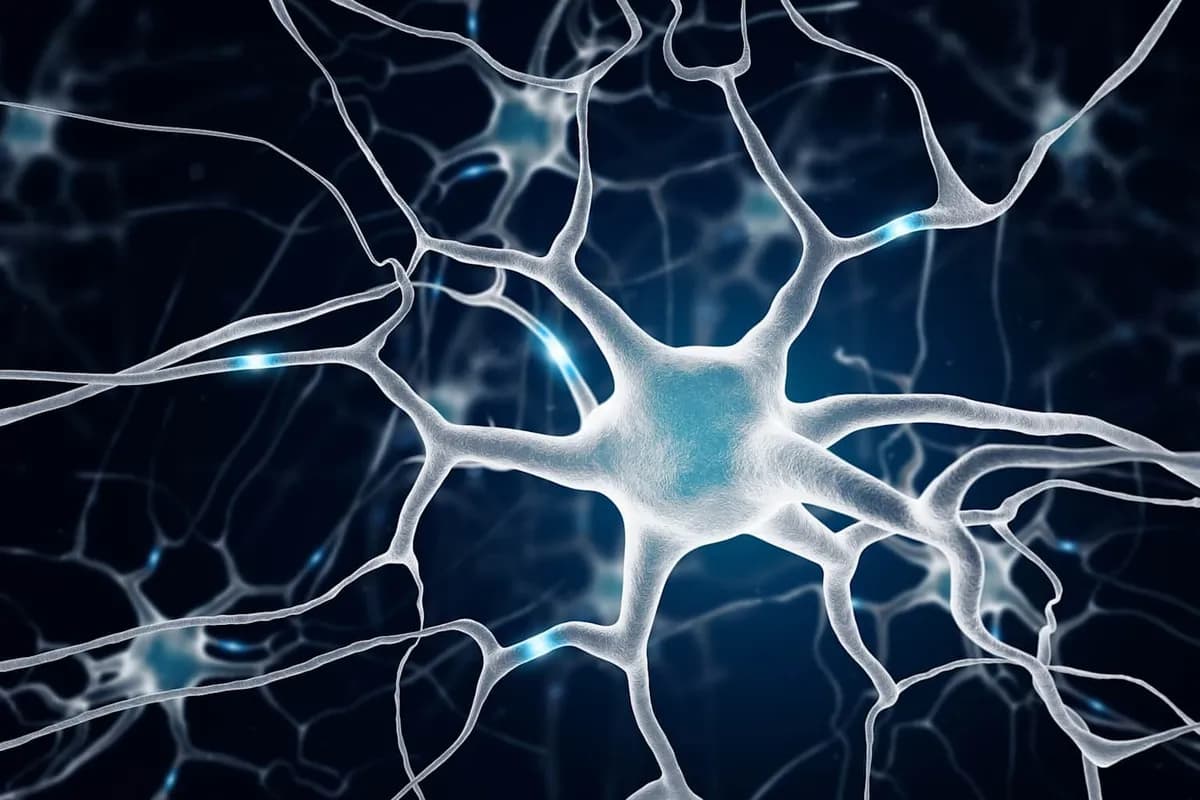
- •Research reveals that the brains of SuperAgers in their 80s generate new neurons at twice the rate of average elderly individuals.
- •Adult brain cells have been found to maintain 'epigenetic memory' from developmental stages for decades, preserving neural identity.
- •This discovery presents new possibilities for developing preventive treatments for Alzheimer's disease and dementia.
The Brain's Secret Against Aging
Among seniors aged 80 and above, 'SuperAgers' who maintain exceptional memory capabilities generate new neurons at a rate more active than not only average elderly individuals but also young adults, according to a new study. Published in the international journal Nature on February 24 by a joint research team from the University of Illinois Chicago (UIC), Northwestern University, and Washington University, this study provides the first evidence that the neural regeneration capacity of adult brains varies dramatically between individuals.
The research team analyzed donated brain tissue from five groups: healthy young adults, average elderly individuals, SuperAgers, patients with mild dementia, and Alzheimer's disease patients. Results showed that neurogenesis in the hippocampus (the memory center) of SuperAgers occurred at approximately twice the rate of average elderly individuals. In contrast, almost no new neuron generation was observed in the brains of Alzheimer's patients.
Brain Cells 'Remember' Their Fetal Origins
A separate study from the Karolinska Institute, published in Nature Neuroscience on March 18, provides clues to the mechanism behind this phenomenon. When the research team mapped epigenetic regulatory processes across the adult human brain and spinal cord, they discovered that brain cells, including oligodendrocytes, maintain genetic markers from developmental stages even decades later.
Epigenetics is the field that studies how gene expression is regulated without changes to the DNA sequence. This discovery suggests that adult brain cells retain a 'genetic blueprint' formed during fetal and infant stages as a form of memory, which serves as a key mechanism for maintaining neural identity throughout life.
Professor Orly Lazarov of UIC Medical School stated, "This research represents major progress in understanding how the human brain processes cognition, forms memories, and ages. Identifying why some brains age more healthily than others will help develop treatments for healthy aging, cognitive resilience, and dementia prevention."
From '20th Century Impossibility' to 21st Century Treatment Potential
The possibility of neuron regeneration in adult brains has long been a subject of debate. Until the late 20th century, the neuroscience community accepted the conventional wisdom that "new neurons are not generated in adult brains." However, the paradigm began to shift in the late 1990s when neurogenesis was observed in the hippocampal region of rodents.
Subsequent primate studies revealed that neurogenesis is linked to memory formation and processing capabilities, but in humans, direct evidence was difficult to obtain due to the limitation of analyzing only donated brain tissue. This study is significant in that it quantitatively demonstrated neurogenesis in adult humans for the first time using brain tissue samples secured through Northwestern University's SuperAger program.
Future Prospects [AI Analysis]
This discovery provides important implications in two directions. First, the fact that adult brains maintain hidden regenerative potential likely presents new approaches to dementia drug development. In particular, if the mechanisms of high-level neurogenesis observed in SuperAger brains can be identified, it could lead to the development of treatments applicable to average elderly individuals.
Second, as researchers pointed out, there is also a possibility that epigenetic memory may increase vulnerability to brain tumors. This is because cells that maintain developmental-stage genetic markers could increase tumor risk if abnormally activated. Therefore, future research is expected to proceed in directions that promote neurogenesis while ensuring safety.
The Karolinska Institute and UIC research teams have currently begun developing treatments targeting epigenetic regulatory mechanisms. If their research succeeds, clinical treatments that suppress age-related cognitive decline may emerge by the mid-2030s.
댓글 (2)
기사 잘 봤습니다. 다른 시각의 분석도 읽어보고 싶네요.
SuperAgers에 대해 더 알고 싶어졌습니다. 후속 기사 부탁드립니다.
More in Life

브라질 볼소나로 전 대통령, 건강 악화로 임시 가택연금 조치

The decline of university bars, the end of the ‘pour and drink’ era

NASA appoints Jennifer Lyons as new director of Launch Services Program

NASA Shared Services Center Releases Fiscal Year 2026 Service Catalog and Performance Report

James Webb Telescope captures Saturn's icy rings in infrared light

Japanese elementary school students' #1 future wish is to be a 'streamer'... surpassing doctors and teachers
Latest News

"간부 잘 아는데 교통비 좀" 휴가 군인들 돈 뜯은 50대 구속
50대 A씨가 휴가 중인 군인들에게 부대 간부를 아는 척 접근해 돈을 사취

英 옥토퍼스, 이란 전쟁 이후 태양광 판매 50% 증가
이란 전쟁 이후 영국 옥토퍼스의 태양광 판매량 50% 증가

당정 "추경, 지방·취약계층에 더 지원되는 방식으로"
당정이 지방자치단체와 취약계층 중심의 추경 편성 방침 재확인

당정, 석유 최고가격제 손실 보전을 추경에 반영키로
당정이 석유 최고가격제 손실을 추경에 반영하기로 결정
어머니 폭행하고 금팔찌 빼앗은 30대 아들 경찰에 붙잡혀
어머니 폭행 후 금팔찌 빼앗은 30대 남성 체포

아이티 갱단 폭력사태로 10개월간 5천명 이상 사망
아이티에서 지난 10개월간 갱단 폭력으로 5천명 이상 사망

서방 정보당국 "러시아, 우크라이나 전쟁 후 이란에 드론·식량 공급"
서방 정보당국, 러시아의 이란 드론·식량 공급 작업 거의 완료 파악

6년 전 세 살 딸 살해한 30대 친모 구속송치
경찰, 6년 전 세 살 딸 살해 혐의 30대 친모를 구속송치