A Collapsed Workers' City Falls to the Far Right
Portrait of Blyth in Northeast England — From Coal Mines to Green Energy, Yet Still Left Behind
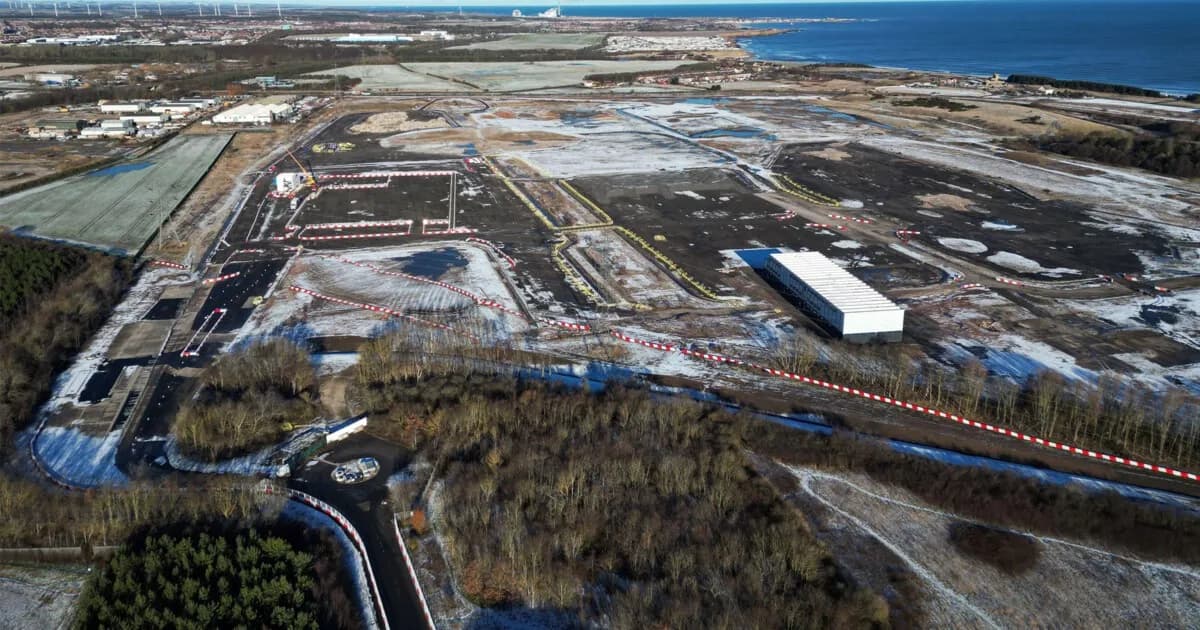
- •Blyth in Northeast England has transformed from a coal and shipbuilding workers' city into a forward base for offshore wind industry, but residents remain marginalized and are voting for far-right parties.
- •Jobs brought by the green energy industry are mostly short-term contract positions, with high-skilled jobs and profits concentrated in multinational corporations and London, providing no real benefits to the local community.
- •Nigel Farage's Reform UK targets deindustrialized regions with the message that 'green transition makes ordinary people poorer,' and without simultaneously pursuing climate justice and class justice, there is a high risk of far-right populism spreading.
Vanished Industries, Abandoned People
Blyth, located in Northumberland in Northeast England, was once a Labour Party stronghold. This city, once filled with shipyards and coal mines, brimmed with the pride of skilled workers. But now, Union Jack flags flutter from every lamppost on its streets, and in the 2019 general election, Boris Johnson's Conservative Party emerged victorious.
Ronnie Campbell's life story encapsulates the city's transformation. Entering the coal mines at age 15, he led the 1984-85 strike against the Thatcher government and served as Member of Parliament for Blyth Valley for 32 years from 1987. When he took a small boat to block oil tankers, this place was not merely a workers' city but the frontline of class struggle.
Campbell received a visit from Jeremy Corbyn just before his death in early 2024. While both men still believed in socialism and communitarianism, the Labour Party they had fought for their entire lives had already become a different entity.
Blyth's Paradox — A Green Energy Capital, But Why?
Ironically, Blyth is now the symbol of Britain's green energy transition. The world's first offshore wind farm was established off its coast in 2000, and currently 40% of Britain's entire offshore wind turbines are located in the East Sea. Blyth's port serves as a forward base for wind turbine maintenance, and there are plans to build a battery factory nearby.
So why do people in this city vote for the far-right party Reform UK? The answer is simple. The jobs brought by the green energy industry do not provide the stability, community spirit, and pride that coal mining and shipbuilding once offered.
Wind turbine maintenance positions are mostly short-term contract work. Turbine manufacturing happens overseas, and high-skilled engineering jobs are concentrated in London. What remains in Blyth are low-wage service jobs and warehouse part-time work. One local resident says, "In the coal mine days, we had colleagues. Now we only have zero-hour contracts."
From Coal Mines to Wind Power — A History of Disconnected Industrial Transition
Deindustrialization in Northeast England began in the 1980s. The 1984-85 miners' strike was defeated by the Thatcher government, and coal mines subsequently closed one by one. Shipyards also disappeared in the 1990s, pushed out by international competition. While a finance and service-centered economy took hold in the 2000s, regions like Blyth in the Northeast were left behind.
The rise of the offshore wind industry in the 2010s briefly offered hope. However, the supply chain failed to take root locally. Turbine blades are made in Denmark, electrical components in Germany. The British government prioritized attracting private investment over public investment, and consequently profits went to multinational corporations.
The 2019 Brexit general election was the moment this anger exploded. Blyth residents voted for the Conservative Party and Reform UK. The simple, clear message that "Brussels bureaucrats stole our jobs" proved more powerful than Labour's response that "complex restructuring is needed."
Nigel Farage's Weapon — The Ten-Foot Chopsticks Theory
Reform UK leader Nigel Farage employs a political strategy targeting cities like Blyth. He doesn't claim "global warming is a hoax." Instead, he says "the green transition makes you poorer."
His logic goes like this: "Net zero policies are raising electricity bills. Heat pump installation mandates only benefit middle-class homeowners. Electric vehicle subsidies only go to London's wealthy. You get nothing."
This strategy evokes the "Ten-Foot Chopsticks" parable. In hell, people cannot eat because their chopsticks are too long. In heaven, people use the same chopsticks to feed each other. Farage reinforces the hellish image with his message that "green transition is exploitation, not cooperation."
Labour's Dilemma — Between Climate and Class
Keir Starmer's Labour government has promised to achieve 100% clean electricity by 2030. However, Blyth residents remain skeptical. The prevailing sentiment is "London politicians are doing something in our name again."
Labour talks about "just transition," but concrete policies are lacking. For example:
- Retraining programs: They exist but have less than 10% participation
- Local supply chain development: No budget allocated
- Public ownership of wind farms: Only under discussion
One trade union official criticized, "The government only looks at carbon emission graphs, not at people." Indeed, Blyth's unemployment rate is 2 percentage points higher than the national average, and average wages are 15% lower.
Was There Another Way? — The Scottish Case
Interestingly, Northeast Scotland took a different path. The area near Aberdeen transitioned from the oil industry to offshore wind while adopting a locally-led model.
Key differences:
- Local government equity participation: Scottish government holds 25% stake in wind farms
- Priority procurement for local businesses: 60% of maintenance contracts allocated to local companies
- Community benefit sharing: Portion of wind farm profits returned to community funds
As a result, the political landscape near Aberdeen has not shifted as far right as Blyth. While Scotland isn't perfect either, the crucial point is that there were channels for local residents to participate in the transition process.
Europe's Green Populism — Not Just Blyth's Problem
Blyth's story is being repeated across Europe. Eastern Germany, Northern France, and Polish Silesia all show similar patterns.
- Deindustrialization → Long-term unemployment
- Introduction of green transition policies → Increased cost burden
- Rise of far-right parties → Combined with anti-EU and anti-immigration sentiment
Germany's Alternative for Germany (AfD) framed environmentalism as elite taste, claiming "wind turbines ruin the German landscape." France's National Rally (RN) leveraged the carbon tax as a trigger point for the "Yellow Vest protests."
The common thread is that mainstream parties failed to clearly answer the question of who bears the costs of green transition.
Climate Justice and Class Justice Cannot Be Separated
The lesson from Blyth is clear. Climate crisis response and social justice must be pursued simultaneously. Otherwise, green transition will be perceived as a "project for the rich" and become fodder for far-right populism.
What is specifically needed:
- Expansion of public ownership: Public ownership of renewable energy facilities with profits returned to communities
- Employment-linked policies: Direct connection of green infrastructure construction to local employment
- Strengthened social safety net: Substantial compensation for workers harmed during transition
- Democratic participation: Structures allowing local residents to participate in energy policy decisions
Future Outlook [AI Analysis]
The fate of cities like Blyth will likely face its first test in the 2025 UK local elections. If Reform UK secures a significant number of local government seats, the Labour government will face major constraints in pursuing green policies.
In the medium to long term, whether Britain adopts a model like the EU's Just Transition Fund will be crucial. However, large-scale public investment will be difficult given reduced fiscal capacity after Brexit.
The most worrying scenario is that far-right populism could halt the green transition itself. Farage has already announced a "scrap net zero" campaign. If this becomes reality, Britain will not only fall behind in climate crisis response, but cities like Blyth will remain as places without industry, jobs, or future.
A glimmer of hope lies in the resilience of local communities. Activists like Deirdre Campbell still demand a "genuinely just transition." When their voices translate into policy, ten-foot chopsticks can finally become tools to feed each other.
댓글 (2)
Collapsed 소식 정말 안타깝습니다. 유가족분들께 깊은 위로를 전합니다.
이런 일이 다시는 반복되지 않았으면 합니다. Workers 관련 대책이 시급합니다.
More in Special

How to avoid ICE agents checking your phone at the airport

주일 중국대사관 침입한 괴한, 자위대 현직 장교로 확인

New York City public hospital breaks up with Palantir... Ending controversy over commercialization of citizen health data

U.S. expands military operations in Latin America... ‘Operation total annihilation’ formalized

The Corsican Mafia Exposed: Breaking a Century of Silence

AI-Generated Fake Person Used to Sell Dubai Flight Seats
Latest News

"간부 잘 아는데 교통비 좀" 휴가 군인들 돈 뜯은 50대 구속
50대 A씨가 휴가 중인 군인들에게 부대 간부를 아는 척 접근해 돈을 사취
英 옥토퍼스, 이란 전쟁 이후 태양광 판매 50% 증가
이란 전쟁 이후 영국 옥토퍼스의 태양광 판매량 50% 증가

당정 "추경, 지방·취약계층에 더 지원되는 방식으로"
당정이 지방자치단체와 취약계층 중심의 추경 편성 방침 재확인

당정, 석유 최고가격제 손실 보전을 추경에 반영키로
당정이 석유 최고가격제 손실을 추경에 반영하기로 결정
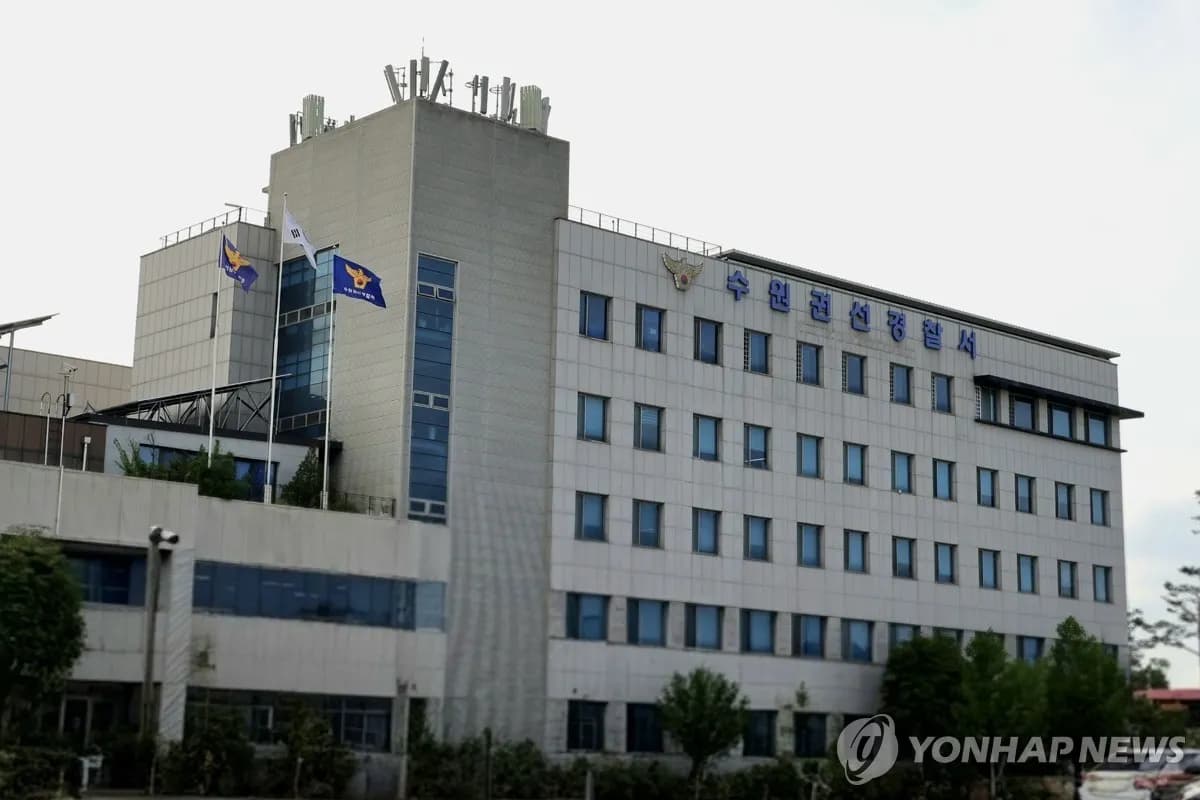
어머니 폭행하고 금팔찌 빼앗은 30대 아들 경찰에 붙잡혀
어머니 폭행 후 금팔찌 빼앗은 30대 남성 체포

아이티 갱단 폭력사태로 10개월간 5천명 이상 사망
아이티에서 지난 10개월간 갱단 폭력으로 5천명 이상 사망

서방 정보당국 "러시아, 우크라이나 전쟁 후 이란에 드론·식량 공급"
서방 정보당국, 러시아의 이란 드론·식량 공급 작업 거의 완료 파악

6년 전 세 살 딸 살해한 30대 친모 구속송치
경찰, 6년 전 세 살 딸 살해 혐의 30대 친모를 구속송치