Artemis 2 Splashes Down: Humanity's Return to Deep Space After 52 Years
Four astronauts set record-breaking distance from Earth in first crewed lunar flyby since Apollo 17

- •Artemis 2 successfully returned four astronauts after humanity's first crewed lunar flyby in 52 years
- •The mission broke the all-time human distance record, reaching 252,756 miles from Earth
- •The mission sets the stage for Artemis 3, which aims to land humans on the moon
Four Astronauts Return After 52-Year Silence
NASA's Artemis 2 Orion capsule, named 'Integrity,' splashed down off the coast of San Diego on April 10, safely returning astronauts Reid Wiseman, Victor Glover, Christina Koch, and Canada's Jeremy Hansen. The mission marked the completion of humanity's first crewed lunar flyby in over half a century.
"From the pages of Jules Verne to a modern-day mission to the moon, a new chapter of exploration is complete," said NASA spokesperson Rob Navias.
Why This Mission Is Historic
Artemis 2 was not merely a spaceflight—it was the first crewed mission to venture beyond low Earth orbit since Apollo 17 in December 1972. Victor Glover became the first person of color to leave Earth orbit. Christina Koch became the first woman, and Jeremy Hansen the first non-American, to fly into deep space. All Apollo-era astronauts had been white American men.
"We sent four amazing people to the moon and safely returned them to Earth for the first time in more than 50 years," said NASA Artemis program manager Lori Glaze.
Records Shattered
During its lunar flyby on April 6, Integrity reached a peak distance of 252,756 miles (406,771 km) from Earth—surpassing the 248,655-mile record set unintentionally by Apollo 13 in 1970. Total mission distance: 700,237 miles (1.1 million km).
The mission followed a free-return trajectory around the far side of the moon—by design, unlike Apollo 13's emergency deviation. It was also the first mission to carry four crew members into deep space and the first to feature a proper space toilet beyond Earth orbit.
From Apollo to Artemis: A 52-Year Gap
Human lunar exploration effectively ended with Apollo 17 in 1972. The waning of Cold War competition, budget cuts, and technical challenges confined crewed spaceflight to low Earth orbit for decades. NASA formally announced the Artemis program in 2017, and after years of delays, the uncrewed Artemis 1 flew successfully in 2022. Artemis 2 has now opened the crewed chapter.
Looking Ahead [AI Analysis]
Artemis 2's success lays the groundwork for Artemis 3, which aims to land humans on the moon—potentially as early as 2027, though budget and technical variables remain significant. China's parallel crewed lunar program, targeting the early 2030s, is likely to intensify competition reminiscent of the 1960s Space Race. The systems validated by Artemis 2 are also foundational to long-term goals including the Gateway lunar station and eventual Mars missions.
댓글 (15)
간결하면서도 핵심을 잘 정리한 기사네요.
공감합니다. 참고하겠습니다.
그 부분은 저도 궁금했습니다.
흥미로운 주제입니다. 주변에도 공유해야겠어요.
기사 잘 봤습니다. 다른 시각의 분석도 읽어보고 싶네요.
공감합니다. 참고하겠습니다.
공감합니다. 참고하겠습니다.
아르테미스 관련 기사 잘 읽었습니다. 유익한 정보네요.
NASA에 대해 더 알고 싶어졌습니다. 후속 기사 부탁드립니다.
간결하면서도 핵심을 잘 정리한 기사네요.
흥미로운 주제입니다. 주변에도 공유해야겠어요.
좋은 의견이십니다.
기사 잘 봤습니다. 다른 시각의 분석도 읽어보고 싶네요.
아르테미스 관련 기사 잘 읽었습니다. 유익한 정보네요.
NASA에 대해 더 알고 싶어졌습니다. 후속 기사 부탁드립니다.
More in Global

A Daily Spoonful of Peanut Butter Curbs Blood Sugar Spikes, Diabetes Patients Report

Over 200 Arrested at Palestine Action Protest

Tribal Gas Stations Offer Rare Relief Amid Surging Fuel Prices Sparked by Iran War
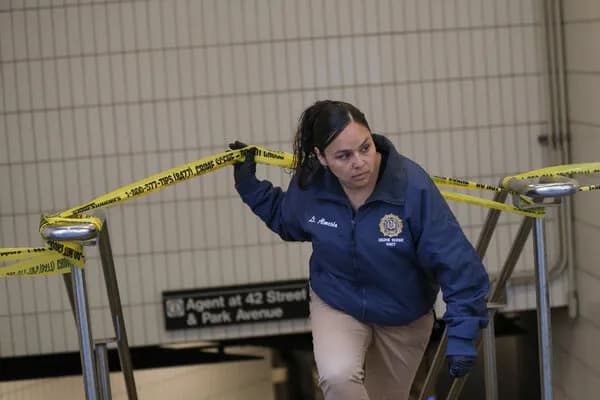
Stabbing Attack at Grand Central Subway Station: 3 Injured, Suspect Shot by Police

Woman, 19, killed in dog attack at house; man, 37, arrested

US-Iran Nuclear Talks Begin in Islamabad; Iranian Media Confirms Start of Negotiations
Latest News

US Gas Prices Surge 20%, March CPI Jumps 3.3% — Consumer Confidence Plummets
US March CPI rose 3.3% year-over-year, the largest monthly gain since June 2022

An Se-young reaches Asia Championships final, one win from badminton Grand Slam
An Se-young defeats teammate Shim Yu-jin in 36 minutes to reach the Asia Championships final

Tatis Jr. to Make First Career Start at Second Base
Tatis Jr. will start at second base for the first time in his MLB career.

Springer Exits Game Against Twins With Broken Toe
Springer fractured his left toe on a foul ball in the 3rd inning vs. Twins.

Murder Arrest After Fatal Stabbing of 21-Year-Old at Primrose Hill, London
Finbar Sullivan, 21, fatally stabbed at Primrose Hill, north London on Tuesday

Vance Meets Pakistan's PM Ahead of High-Stakes US-Iran Peace Talks in Islamabad
VP Vance meets Pakistan's PM in Islamabad ahead of formal US-Iran peace negotiations