Egypt Discovers 10,000-Year-Old Rock Art Shelter in South Sinai
100-meter 'Open Museum' Spanning Neolithic to Islamic Era—Evidence of Millennia of Human Habitation Confirmed
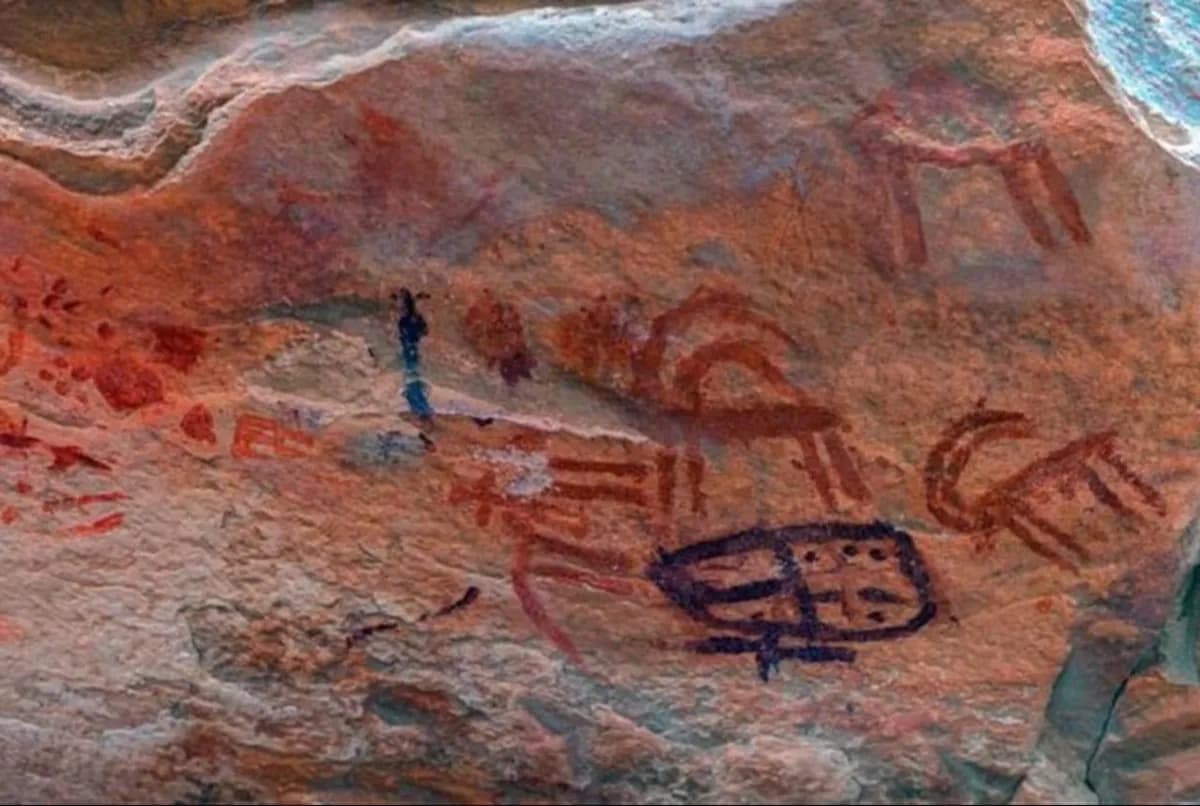
- •Egyptian archaeologists discovered a 100-meter rock shelter on the Umm Arak plateau in South Sinai, preserving petroglyphs from the Neolithic period dating back 10,000 years through the Islamic era.
- •Hunting scenes, animals, and symbolic motifs painted in red and gray were found alongside stone tools and pottery fragments, confirming traces of human habitation spanning thousands of years.
- •The Egyptian government has evaluated this discovery as evidence of the Sinai Peninsula's cultural richness and as a natural museum documenting artistic development from prehistoric times through the early Islamic period.
Artistic Heritage from Prehistoric to Islamic Times
Egyptian archaeologists have discovered a prehistoric rock shelter featuring petroglyphs dating back approximately 10,000 years on the Umm Arak plateau in South Sinai, Egypt's Ministry of Tourism and Antiquities announced on the 12th.
This shelter, naturally formed in sandstone layers, spans over 100 meters in length, with ceilings and walls vividly preserving animals, symbolic motifs, and everyday life scenes painted in red and gray. The oldest drawings are estimated to date from the Neolithic period between 10,000 and 5,500 BCE, while later carvings including hunters with bows and dogs, riders on camels and horses, and early Arabic inscriptions were also discovered.
Sherif Fathy, Egypt's Minister of Tourism and Antiquities, stated, "This discovery demonstrates the unique cultural and anthropological richness of the Sinai Peninsula and provides new evidence that diverse civilizations flourished in this region over thousands of years."
Evidence of Millennia of Continuous Human Habitation
Archaeologists also excavated animal remains and traces of residential structures at this site. This suggests that the Umm Arak shelter served not merely as an artistic space but as a gathering place for humans and livestock over thousands of years.
Stone tools and pottery fragments ranging from Egypt's Middle Kingdom period through the Roman era to the medieval period were unearthed at the site. This proves that this location was a 'living site' continuously utilized from prehistoric times through the early Islamic period.
The Ministry of Tourism and Antiquities emphasized in a statement, "Given the diversity of the findings, Umm Arak is a naturally preserved open museum that records humanity's artistic and symbolic development from prehistoric times to the early Islamic era."
Opportunity to Reexamine Sinai Peninsula's Civilizational History
This discovery is being recognized as a significant archaeological achievement demonstrating that the Sinai Peninsula was not merely a geographical corridor but a center of independent cultural development. The traces of continuous human activity spanning 10,000 years support the notion that this region was a strategic hub for civilizational exchange connecting Africa and Asia.
Moving forward, the Egyptian government plans to conduct systematic excavation and preservation work at the Umm Arak site and also utilize it for tourism resource development in the Sinai region.
댓글 (4)
Egypt 관련 기사 잘 읽었습니다. 유익한 정보네요.
Discovers에 대해 더 알고 싶어졌습니다. 후속 기사 부탁드립니다.
공감합니다. 참고하겠습니다.
간결하면서도 핵심을 잘 정리한 기사네요.
More in Life

브라질 볼소나로 전 대통령, 건강 악화로 임시 가택연금 조치

The decline of university bars, the end of the ‘pour and drink’ era

NASA appoints Jennifer Lyons as new director of Launch Services Program

NASA Shared Services Center Releases Fiscal Year 2026 Service Catalog and Performance Report

James Webb Telescope captures Saturn's icy rings in infrared light

Japanese elementary school students' #1 future wish is to be a 'streamer'... surpassing doctors and teachers
Latest News

"간부 잘 아는데 교통비 좀" 휴가 군인들 돈 뜯은 50대 구속
50대 A씨가 휴가 중인 군인들에게 부대 간부를 아는 척 접근해 돈을 사취

英 옥토퍼스, 이란 전쟁 이후 태양광 판매 50% 증가
이란 전쟁 이후 영국 옥토퍼스의 태양광 판매량 50% 증가

당정 "추경, 지방·취약계층에 더 지원되는 방식으로"
당정이 지방자치단체와 취약계층 중심의 추경 편성 방침 재확인

당정, 석유 최고가격제 손실 보전을 추경에 반영키로
당정이 석유 최고가격제 손실을 추경에 반영하기로 결정
어머니 폭행하고 금팔찌 빼앗은 30대 아들 경찰에 붙잡혀
어머니 폭행 후 금팔찌 빼앗은 30대 남성 체포

아이티 갱단 폭력사태로 10개월간 5천명 이상 사망
아이티에서 지난 10개월간 갱단 폭력으로 5천명 이상 사망

서방 정보당국 "러시아, 우크라이나 전쟁 후 이란에 드론·식량 공급"
서방 정보당국, 러시아의 이란 드론·식량 공급 작업 거의 완료 파악

6년 전 세 살 딸 살해한 30대 친모 구속송치
경찰, 6년 전 세 살 딸 살해 혐의 30대 친모를 구속송치