Facebook Groups Traded Endangered Species Using Code Language — Indonesian Broker Network Exposed
Bellingcat investigation reveals 9 wildlife trafficking groups with 70,000 members, all operated by single Jakarta-based broker
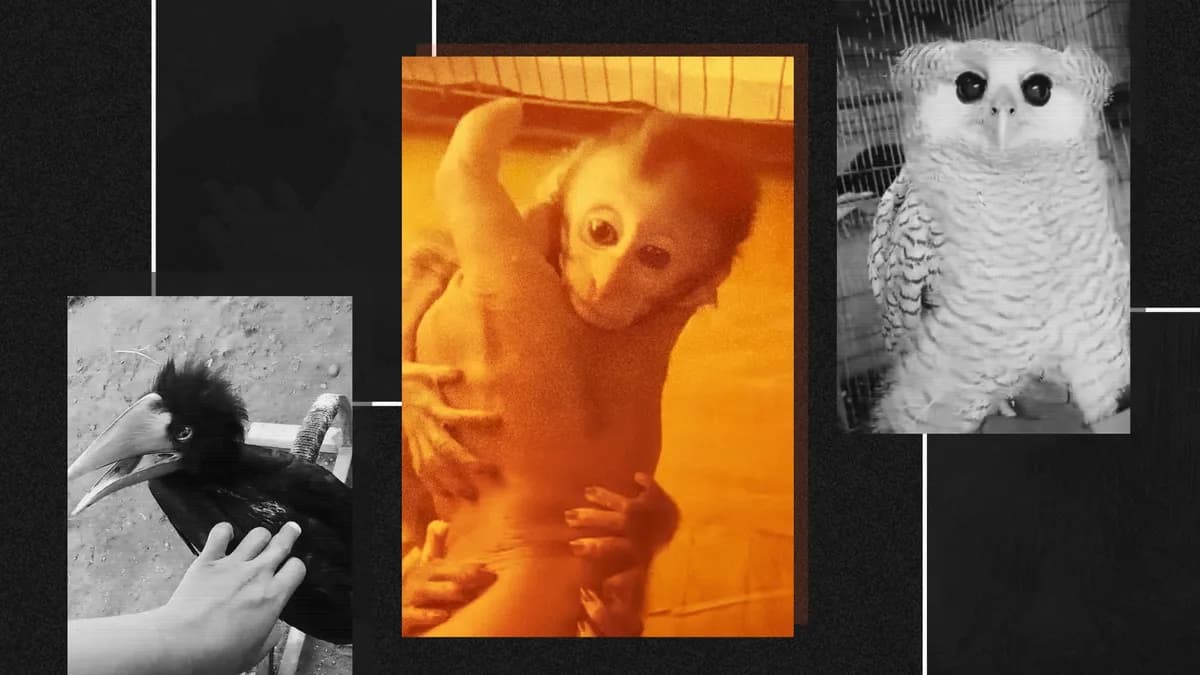
- •Bellingcat exposed nine Facebook groups trading endangered species using coded language, with a combined membership of 70,000.
- •All groups were traced back to a single broker operating in Jakarta, Indonesia.
- •Protected species including silvery gibbons, rhinoceros hornbills, and Javan endemic species were openly traded for over five years despite Meta's ban policy, exposing failures in the platform's monitoring systems.
Encrypted System That Neutralized Facebook's Ban Policy
International investigative journalism outlet Bellingcat has uncovered nine Facebook groups trading endangered wildlife using coded language. These groups have a combined membership of over 70,000 people, with some operating for more than five years.
Meta claims to prohibit all forms of animal trading on its platforms. However, in a public group brazenly named "Bogor Animal Sales and Trading Forum," advertisements openly featured the rhinoceros hornbill, classified as a vulnerable species.
When warned to "be careful not to get caught," a seller responded, "That's the risk." Under Indonesian law, capturing, trading, or possessing this bird can result in up to five years imprisonment or a fine of 100 million rupiah (approximately $8,000). For context, the average monthly salary in Indonesia is around 3 million rupiah (approximately $240).
From Java Island Endemic Species to Silvery Gibbons
All nine groups identified by Bellingcat are based in or near Jakarta, Indonesia's capital. As one of the world's most biodiverse nations, Indonesia is both a primary target for poachers and a critical transit hub for illegal wildlife trade.
Protected species traded within these groups included:
- Javan coucal
- Javan scops owl
- Javan langur
- Binturong
- Wreathed hornbill and rhinoceros hornbill
In the most active group, "Bogor Animal Sales and Trading Forum," over 200 advertisements were posted in a single week, with 18 featuring vulnerable species. Among these were two baby silvery gibbons.
With a wild population of fewer than 2,500 individuals, silvery gibbons are classified as endangered. Trading this species carries penalties of up to five years imprisonment or a 100 million rupiah fine under Indonesian law.
Otters were also frequently posted. Popular in Southeast Asian pet markets, most otter species are now protected due to declining wild populations. However, many advertisements featured otter pups, making precise species identification difficult.
Single Broker Operating Nine Groups Behind the Scenes
Bellingcat's investigation traced the operators of the nine groups to six Facebook profiles, all leading back to a single broker based in Jakarta. This suggests a large-scale trafficking network systematically managed by one intermediary.
The investigation was conducted jointly with environmental publication Mongabay.
The Gap Between Platform Policy and Reality
While Meta explicitly prohibits animal trading, transactions using coded language and slang have continued for years. Some groups operated for over five years, four for more than a year, and two were newly created in 2025.
This demonstrates that the platform's content monitoring systems have failed to function properly. The findings particularly highlight weak monitoring of non-English content posted in local languages.
Biodiversity Crisis and Digital Wildlife Trafficking [Analysis]
Indonesia faces severe biodiversity loss due to rainforest destruction and poaching. This investigation reveals how online platforms are becoming new pathways that exacerbate these problems.
Social media-based wildlife trafficking exhibits the following characteristics:
- Anonymity protection: Fake profiles and coded language make tracking difficult.
- Broad accessibility: A network of 70,000 members can reach a far larger customer base than traditional black markets.
- Low enforcement probability: Platforms lack monitoring capacity, and local law enforcement agencies have limited digital investigation capabilities.
These trafficking networks are likely to expand to other countries and platforms. Instagram, Telegram, WhatsApp, and other Meta-operated services likely share similar vulnerabilities.
The international community must demand greater accountability from platform companies and pressure them to implement AI-based multilingual monitoring systems. Simultaneously, public awareness campaigns to fundamentally reduce demand for illegal wildlife must be pursued in parallel.
댓글 (3)
Facebook 문제가 장기화되면 어떻게 될지 우려됩니다.
이 부분은 저도 주시하고 있습니다.
Groups 상황이 심각하네요. 서민들 피해가 걱정됩니다.
More in Special

How to avoid ICE agents checking your phone at the airport

주일 중국대사관 침입한 괴한, 자위대 현직 장교로 확인

New York City public hospital breaks up with Palantir... Ending controversy over commercialization of citizen health data

U.S. expands military operations in Latin America... ‘Operation total annihilation’ formalized

The Corsican Mafia Exposed: Breaking a Century of Silence

AI-Generated Fake Person Used to Sell Dubai Flight Seats
Latest News

"간부 잘 아는데 교통비 좀" 휴가 군인들 돈 뜯은 50대 구속
50대 A씨가 휴가 중인 군인들에게 부대 간부를 아는 척 접근해 돈을 사취
英 옥토퍼스, 이란 전쟁 이후 태양광 판매 50% 증가
이란 전쟁 이후 영국 옥토퍼스의 태양광 판매량 50% 증가

당정 "추경, 지방·취약계층에 더 지원되는 방식으로"
당정이 지방자치단체와 취약계층 중심의 추경 편성 방침 재확인

당정, 석유 최고가격제 손실 보전을 추경에 반영키로
당정이 석유 최고가격제 손실을 추경에 반영하기로 결정
어머니 폭행하고 금팔찌 빼앗은 30대 아들 경찰에 붙잡혀
어머니 폭행 후 금팔찌 빼앗은 30대 남성 체포

아이티 갱단 폭력사태로 10개월간 5천명 이상 사망
아이티에서 지난 10개월간 갱단 폭력으로 5천명 이상 사망

서방 정보당국 "러시아, 우크라이나 전쟁 후 이란에 드론·식량 공급"
서방 정보당국, 러시아의 이란 드론·식량 공급 작업 거의 완료 파악

6년 전 세 살 딸 살해한 30대 친모 구속송치
경찰, 6년 전 세 살 딸 살해 혐의 30대 친모를 구속송치