Global Financial Markets in 2026: AI Bubble Collapse and the End of American Exceptionalism
Overheated AI Investment and Deepening Fiscal Deficits Increase Structural Risks in U.S. Financial Markets, Emerging Markets Expected to Rebound
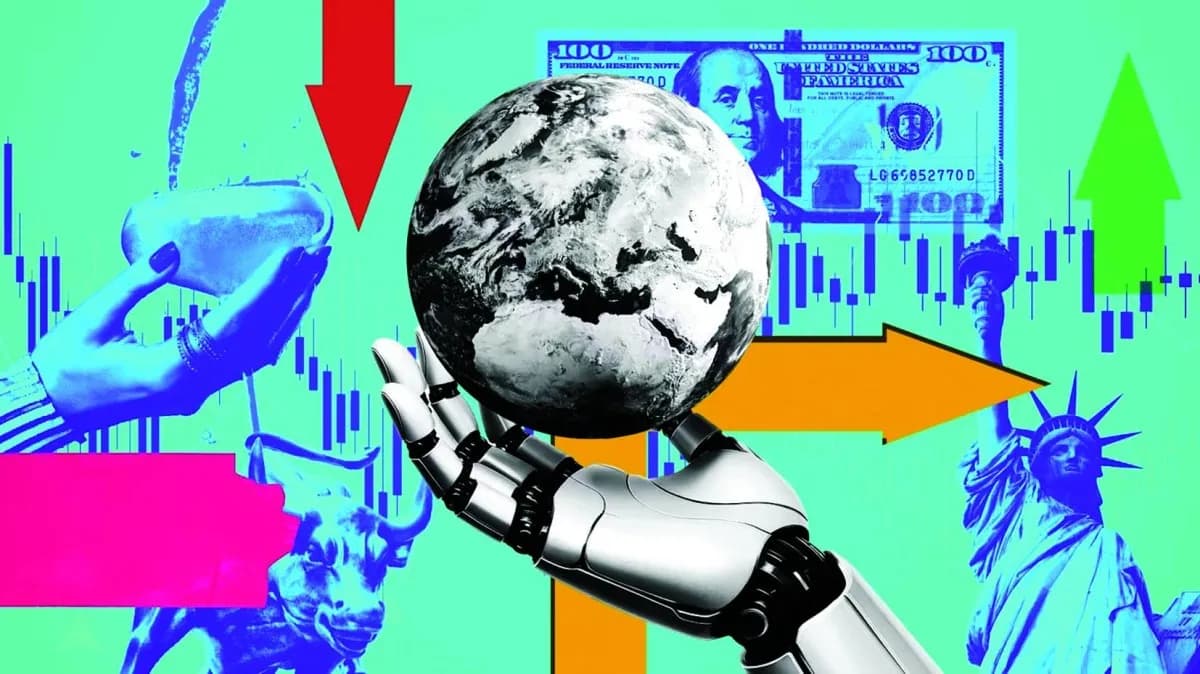
- •After America's 2025 dominance ends with competing markets achieving double the returns, conditions for an AI investment bubble collapse are falling into place.
- •America's expanding fiscal deficit and cost-of-living crisis create upward pressure on long-term rates, while dependence on $1.7 trillion in annual foreign capital inflows poses significant risks.
- •Historically, U.S. bear markets have been accompanied by emerging market strength, and the possibility of global market restructuring in 2026 is increasing.
Is the U.S. AI Bubble Meeting Conditions for Collapse?
In early 2025, global investors almost unanimously agreed that only the U.S. market was worth investing in. However, by year-end, competing markets surpassed the U.S. with returns more than double, creating cracks in America's dominant position.
The AI investment frenzy has been supporting the U.S. economy and markets, but now the critical questions are clear: When and how will the AI bubble end, and what will it mean for the global economy?
According to financial bubble tracking frameworks, the current U.S. AI market meets all conditions of a bubble: overvalued market capitalization, excessive investment, high debt levels, and most importantly, excessive ownership concentration. The U.S. is currently the only major developed nation where household equity assets exceed real estate assets.
Monetary Tightening Bursts Bubbles
Historically, financial bubbles have not deflated on their own. They required the catalyst of central bank monetary policy tightening.
Throughout the past century, all major bubble collapses—the U.S. in 1929, Japan in 1989, China in 2015—were preceded by central bank monetary tightening. Even in 1720, before most countries had central banks, the British South Sea Company mania collapsed when Dutch banks stopped issuing new loans.
In the 19th century, railway bubbles collapsed in succession across Britain and the U.S., caused by various forms of tightening measures such as stricter credit lending regulations and adoption of the gold standard.
Therefore, the AI bubble will likely continue expanding until liquidity shortages begin. This risk is not limited to the Fed raising short-term rates. If the Fed loses credibility for any reason or capital inflows to the U.S. slow down, long-term rates are likely to rise, which could become the trigger that bursts the AI bubble.
Cost-of-Living Crisis Creates Upward Pressure on Interest Rates
America's 'cost-of-living affordability crisis' has pushed housing prices to levels unaffordable for young buyers. Grocery prices have risen 30% compared to five years ago, and approximately one-third of low-income Americans spend more than 95% of their income on daily necessities alone.
As public anger grows, the Donald Trump administration faces pressure, especially with Democrats leading in polls ahead of the 2026 midterm elections. The administration is considering $2,000 relief payments per person.
However, additional spending will only further entrench inflation. The Fed has already failed to meet its 2% inflation target for 55 consecutive months.
Surprisingly, the U.S. fiscal deficit decreased in 2025, bolstered by increased tariff revenue. However, under the current administration, which is approving new tax cuts and planning additional stimulus measures, the fiscal deficit is expected to exceed 6% of GDP this year.
Other developed nations with less severe debt and deficit problems—France, the UK, and especially Japan—are also facing bond market resistance. Japan's 10-year government bond yields surged last year.
2026 could be America's turn, and given its highly financialized economic structure with excessive dependence on investor confidence, the U.S. is likely to face serious consequences.
Potential Reversal in Global Markets
The U.S. now depends on short-term capital inflows more than ever before.
In 2025, foreign investors invested $1.7 trillion annually in U.S. stocks and bonds. This is enough to fully cover the U.S. current account deficit and more, contributing to the largest balance in U.S. finances since data recording began.
However, if confidence in the U.S. is shaken, capital outflows will lead to dollar weakness.
Historically, America's longest bear markets (the Great Depression of 1929-1932, the inflationary era of 1968-1982, and the post-dot-com stagnation of 2000-2013) were all accompanied by bull markets in other markets. Emerging markets in particular significantly outperformed U.S. markets during these periods.
Future Outlook [AI Analysis]
Global financial markets in 2026 are likely positioned at a structural turning point.
The catalyst for AI bubble collapse appears more likely to be surging long-term rates or capital outflows rather than monetary policy tightening. In particular, America's expanding fiscal deficit and entrenched inflation could weaken the Fed's policy credibility, potentially leading to voluntary tightening by bond markets.
Investors should consider portfolio diversification at this juncture. A strategy of diversifying assets from U.S. market concentration to emerging markets and other developed markets is expected to be effective.
However, precisely predicting the timing of bubble collapse is impossible. As long as liquidity is sufficiently supplied, bubbles can persist longer than expected, and in the short term, AI-related investments may continue to dominate markets.
What matters is monitoring warning signs: surging long-term rates, accelerating dollar weakness, and increased selling of U.S. assets by foreign investors will be key indicators.
댓글 (3)
Global 소식 정말 안타깝습니다. 유가족분들께 깊은 위로를 전합니다.
다시는 이런 일이 없어야 합니다.
이런 일이 다시는 반복되지 않았으면 합니다. Financial 관련 대책이 시급합니다.
More in Special

How to avoid ICE agents checking your phone at the airport

주일 중국대사관 침입한 괴한, 자위대 현직 장교로 확인

New York City public hospital breaks up with Palantir... Ending controversy over commercialization of citizen health data

U.S. expands military operations in Latin America... ‘Operation total annihilation’ formalized

The Corsican Mafia Exposed: Breaking a Century of Silence

AI-Generated Fake Person Used to Sell Dubai Flight Seats
Latest News

"간부 잘 아는데 교통비 좀" 휴가 군인들 돈 뜯은 50대 구속
50대 A씨가 휴가 중인 군인들에게 부대 간부를 아는 척 접근해 돈을 사취

英 옥토퍼스, 이란 전쟁 이후 태양광 판매 50% 증가
이란 전쟁 이후 영국 옥토퍼스의 태양광 판매량 50% 증가

당정 "추경, 지방·취약계층에 더 지원되는 방식으로"
당정이 지방자치단체와 취약계층 중심의 추경 편성 방침 재확인

당정, 석유 최고가격제 손실 보전을 추경에 반영키로
당정이 석유 최고가격제 손실을 추경에 반영하기로 결정

어머니 폭행하고 금팔찌 빼앗은 30대 아들 경찰에 붙잡혀
어머니 폭행 후 금팔찌 빼앗은 30대 남성 체포

아이티 갱단 폭력사태로 10개월간 5천명 이상 사망
아이티에서 지난 10개월간 갱단 폭력으로 5천명 이상 사망

서방 정보당국 "러시아, 우크라이나 전쟁 후 이란에 드론·식량 공급"
서방 정보당국, 러시아의 이란 드론·식량 공급 작업 거의 완료 파악

6년 전 세 살 딸 살해한 30대 친모 구속송치
경찰, 6년 전 세 살 딸 살해 혐의 30대 친모를 구속송치