NVIDIA: Cost Per Token Is the Only AI Infrastructure Metric That Matters
FLOPS/dollar and GPU hourly cost are mere input metrics — real profitability is driven by token output
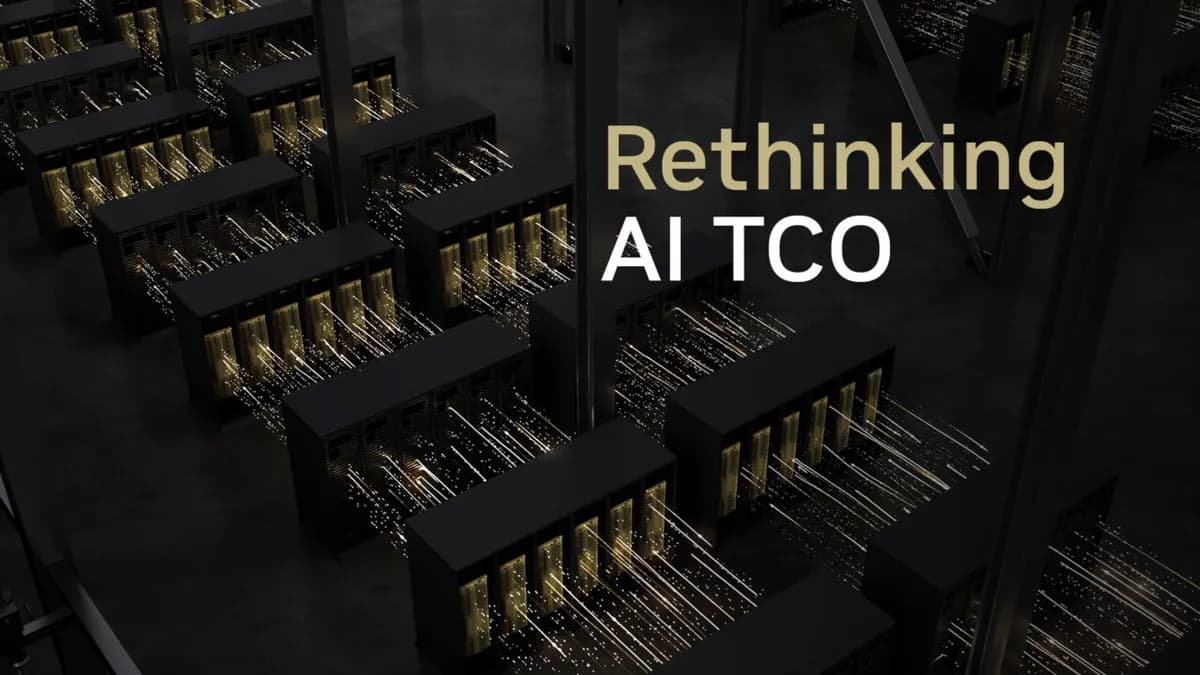
- •NVIDIA argues that 'cost per token' is the only valid TCO metric for AI infrastructure evaluation.
- •GPU hourly cost and FLOPS/dollar are input metrics only — real profitability is determined by token throughput.
- •Software ecosystem factors such as MoE model support, FP4 precision, and KV-cache optimization drive cost competitiveness.
Data Centers Have Evolved Into 'AI Token Factories'
NVIDIA has called on enterprises to fundamentally rethink how they evaluate artificial intelligence (AI) infrastructure costs. Published through NVIDIA's official blog, the argument centers on a single proposition: cost per token is the only meaningful total cost of ownership (TCO) metric for AI infrastructure.
NVIDIA argues that traditional data centers — once facilities for storing and processing data — have transformed into 'intelligence factories' that manufacture intelligence in the form of tokens. With AI inference now the dominant workload in data centers, the framework for evaluating infrastructure economics must evolve accordingly.
Enterprises Are Still Looking at the Wrong Metrics
Three metrics typically guide AI infrastructure evaluations:
- Compute cost: What enterprises pay for AI infrastructure, whether rented from cloud providers or owned on-premises
- FLOPS per dollar: Raw computing power per dollar spent
- Cost per token: The all-in cost to produce one million tokens
NVIDIA classifies the first two as 'input metrics' and argues they are insufficient. Since the business value AI generates flows from tokens — the output — optimizing only inputs represents a fundamental mismatch.
The 'Inference Iceberg' — What You See vs. What Actually Drives Cost
NVIDIA frames this using the 'inference iceberg' analogy. The GPU hourly cost, the numerator in the cost-per-token equation, sits above the waterline — visible and easy to compare. But what actually determines the unit cost is below the surface: the denominator, or real-world token throughput.
Maximizing the denominator delivers two simultaneous business effects:
- Lower token cost: Higher throughput per unit time drives down cost per token, expanding profit margins on every AI interaction served.
- Higher revenue: More tokens per megawatt means more intelligence delivered from the same infrastructure investment.
Surface vs. In-Depth Evaluation Framework
| Dimension | Surface-Level Question | In-Depth Question |
|---|---|---|
| Cost | What is the GPU hourly rate? | What is the actual cost per million tokens? |
| Compute | What are peak petaflops? | What is token throughput on real workloads? |
| Precision | What is HBM capacity? | Is FP4 supported with maintained accuracy? |
| Model support | What is FLOPS/dollar? | Can the interconnect handle MoE all-to-all traffic? |
| Optimization | — | Are speculative decoding, KV-cache offloading, and disaggregated serving supported? |
Technical Factors That Determine Real Token Cost
The factors NVIDIA identifies as critical to real-world inference performance include:
MoE (Mixture-of-Experts) model support: The most widely deployed AI model type today generates 'all-to-all' communication patterns. Scale-up interconnects that cannot handle this traffic become bottlenecks.
FP4 precision support: FP4 reduces memory usage and compute cost, but requires an inference stack capable of leveraging it without accuracy degradation.
Speculative decoding and multi-token prediction: Key optimization techniques that improve user interactivity.
Serving layer optimization: Disaggregated serving, KV-aware routing, and KV-cache offloading are central to maximizing real throughput.
Agentic AI workloads: Platforms must also handle the unique requirements of agentic pipelines that go beyond simple query-response patterns.
NVIDIA claims that when all these factors are accounted for, it delivers the lowest cost per token in the industry.
Historical Thread: The Evolution of Inference Economics
The debate over AI infrastructure costs did not emerge overnight. Following the launch of ChatGPT in 2022, enterprise AI adoption surged, and by 2023, the cost of cloud-based AI APIs had become a primary concern. OpenAI, Anthropic, Google, and others raced to simultaneously improve model performance while cutting API prices.
By 2024–2025, LLM inference workloads had become a dominant driver of data center power consumption. The rise of MoE architectures and reasoning-specialized models made simple GPU compute comparisons insufficient for predicting real-world costs.
In 2026, 'token economics' has become the central language of AI infrastructure procurement. NVIDIA's TCO reframing is both a continuation of this trend and a strategic narrative designed to differentiate from competing chips — including AMD, Intel, and custom TPU designs.
[Expert Analysis] Token Economics May Reshape Enterprise AI Strategy
NVIDIA's argument is simultaneously a technical document and a market framing strategy. Establishing 'cost per token' as the industry standard metric directly maps to the competitive advantages of its own software ecosystem — CUDA, TensorRT-LLM, NIM, and beyond.
For enterprise AI infrastructure teams, the framing is compelling. Measuring the cost per million AI responses actually delivered to customers is a more direct proxy for business profitability than a line on a cloud invoice.
However, this metric is difficult to measure in a vendor-neutral way. Cost per token varies significantly depending on the model, workload, and deployment configuration. Enterprises serious about applying this metric to purchasing decisions are likely to demand independent benchmarks based on their own actual workloads.
Looking ahead, the AI infrastructure market is likely to shift from a 'hardware spec competition' to a 'software optimization competition.' Even on identical hardware, inference stack quality can produce multi-fold differences in token throughput — a structural shift that could reshape the competitive landscape not just for NVIDIA, but for the entire AI software ecosystem.
댓글 (53)
NVIDIA: 주제로 시리즈 기사가 나오면 좋겠습니다.
좋은 정리입니다. Cost의 전문가 코멘트가 설득력 있었습니다.
Per이 일상에 어떤 영향을 줄지 생각해보게 됩니다.
깔끔한 기사입니다. AI인프라 관련 용어 설명이 친절해서 좋았습니다. 계속 지켜봐야겠습니다.
아침에 읽기 딱 좋은 분량이에요.
참고가 됩니다. NVIDIA: 관련 통계가 의외였습니다. 나중에 다시 읽어볼 만합니다.
잘 읽었습니다. Cost이 일상에 어떤 영향을 줄지 생각해보게 됩니다. 잘 정리된 기사네요.
Per에 대해 처음 접하는 정보가 있었습니다.
AI인프라에 대한 다른 매체 보도와 비교해봐도 잘 정리되어 있습니다. 계속 지켜봐야겠습니다.
LLM의 향후 전망이 궁금합니다. 해외 동향도 함께 다뤄주시면 좋겠습니다.
잘 읽었습니다. NVIDIA: 관련 통계가 의외였습니다. 후속 기사 부탁드립니다.
요즘 이 매체 기사가 제일 읽기 좋아요.
Per의 전문가 코멘트가 설득력 있었습니다.
참고가 됩니다. AI인프라 관련 해외 동향도 궁금합니다.
LLM 관련 데이터가 인상적이었습니다.
NVIDIA:에 대해 처음 접하는 정보가 있었습니다.
기자님 수고하셨습니다.
Per 관련 배경 설명이 이해하기 쉬웠습니다.
흥미로운 주제입니다. AI인프라 관련 용어 설명이 친절해서 좋았습니다. 생각이 바뀌었습니다.
LLM의 전문가 코멘트가 설득력 있었습니다. 주변에도 공유해야겠어요.
NVIDIA:의 향후 전망이 궁금합니다. 다른 시각의 분석도 읽어보고 싶습니다.
북마크해두겠습니다. Cost 기사에서 언급된 사례가 흥미로웠습니다.
흥미로운 주제입니다. Per 주제로 시리즈 기사가 나오면 좋겠습니다. 전문가 의견도 더 듣고 싶습니다.
좋은 정리입니다. AI인프라 관련 해외 동향도 궁금합니다.
매일 여기서 뉴스 보고 있어요.
NVIDIA: 관련 배경 설명이 이해하기 쉬웠습니다. 좋은 기사 감사합니다.
Cost이 앞으로 어떻게 전개될지 주목해야겠습니다.
잘 읽었습니다. Per 관련 용어 설명이 친절해서 좋았습니다.
읽기 좋은 기사입니다. AI인프라이 일상에 어떤 영향을 줄지 생각해보게 됩니다.
LLM 관련 해외 동향도 궁금합니다.
NVIDIA:이 앞으로 어떻게 전개될지 주목해야겠습니다. 생각이 바뀌었습니다.
잘 읽었습니다. Cost 관련 배경 설명이 이해하기 쉬웠습니다. 계속 지켜봐야겠습니다.
Per에 대해 주변 사람들과 이야기 나눠볼 만합니다.
북마크해두겠습니다. AI인프라에 대해 처음 접하는 정보가 있었습니다. 계속 지켜봐야겠습니다.
LLM에 대한 다른 매체 보도와 비교해봐도 잘 정리되어 있습니다. 좋은 기사 감사합니다.
유익한 기사네요. NVIDIA:의 향후 전망이 궁금합니다. 후속 기사 부탁드립니다.
Cost에 대한 다른 매체 보도와 비교해봐도 잘 정리되어 있습니다.
Per 관련 통계가 의외였습니다. 생각이 바뀌었습니다.
구독 중인데 만족합니다.
좋은 정보 감사합니다.
NVIDIA: 관련 해외 동향도 궁금합니다. 나중에 다시 읽어볼 만합니다.
Cost이 일상에 어떤 영향을 줄지 생각해보게 됩니다. 생각이 바뀌었습니다.
참고가 됩니다. Per의 향후 전망이 궁금합니다. 주변에도 공유해야겠어요.
유익한 기사네요. AI인프라 관련 배경 설명이 이해하기 쉬웠습니다. 후속 기사 부탁드립니다.
흥미로운 주제입니다. LLM에 대해 주변 사람들과 이야기 나눠볼 만합니다. 해외 동향도 함께 다뤄주시면 좋겠습니다.
잘 읽었습니다. NVIDIA: 관련 용어 설명이 친절해서 좋았습니다.
이런 시각도 있었군요. Cost 관련 통계가 의외였습니다. 다른 시각의 분석도 읽어보고 싶습니다.
유익한 기사네요. Per이 일상에 어떤 영향을 줄지 생각해보게 됩니다.
AI인프라 관련 배경 설명이 이해하기 쉬웠습니다. 계속 지켜봐야겠습니다.
흥미로운 주제입니다. LLM이 앞으로 어떻게 전개될지 주목해야겠습니다.
잘 읽었습니다. NVIDIA:이 앞으로 어떻게 전개될지 주목해야겠습니다.
Cost에 대한 다른 매체 보도와 비교해봐도 잘 정리되어 있습니다. 좋은 기사 감사합니다.
Per의 향후 전망이 궁금합니다.
More in this series
More in AI & Tech
IEA 경고: 데이터센터 전력 소비, 2030년까지 두 배…AI가 에너지 위기 촉발

Anthropic·OpenAI, '상시 작동' AI 코딩 에이전트 패권 경쟁
애플 맥북 네오 4월 물량 완판...신규 주문 5월로 밀려
OpenAI Launches GPT-Rosalind, Specialized Reasoning AI for Life Sciences... Shaking Up Drug Development Paradigm

EU Begins Direct Talks with Anthropic Over Claude Mythos AI Cybersecurity Threats
Perplexity Officially Launches Mac-Exclusive AI Agent 'Personal Computer'
Latest News

10일 연속 랠리 멈춘 글로벌 증시, S&P 500 사상 첫 7,000 돌파
MSCI 전세계 지수가 10일 연속 상승 후 사상 최고치를 기록하고 0.1% 하락 반전했다.

이란 휴전 만료 D-5, 유럽 가스 가격 2% 급등
미-이란 휴전 만료 임박에 유럽 TTF 가스 가격이 2% 급등했다.
삼성전자, 5년 만에 특별배당 포함 3조 7500억 원 지급
삼성전자가 5년 만에 특별배당 포함 총 3조 7500억 원을 지급했다.
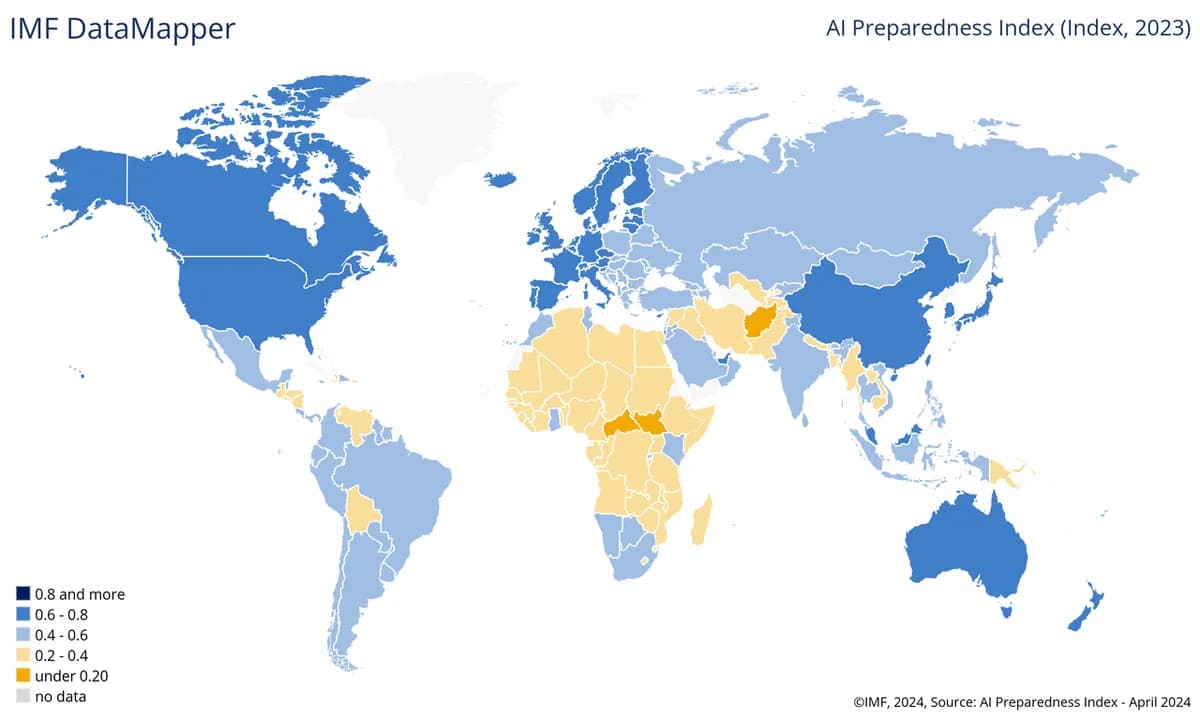
IMF 총재 "AI, 세계화의 전철 밟으면 안 된다"
IMF 게오르기에바 총재가 AI 혁명이 세계화의 실패를 반복할 위험이 있다고 경고했다.
스트라이프·패러다임 공동 개발 블록체인 '템포', 기업용 프라이버시 환경 '존' 출시
스트라이프·패러다임 공동 개발 블록체인 템포가 기업용 프라이버시 환경 '존(Zones)'을 출시했다.
중국, '인공 태양' BEST 핵융합로 건설 가속…2030년 상업 발전 도전
중국 허페이에서 BEST 핵융합 원자로 건설이 진행 중이며, 2027년 완공·2030년 발전 실증이 목표다.

ICIJ Exposes Merck's Keytruda Pricing Strategy and Patent Abuse
ICIJ's Cancer Calculus investigation exposes Merck's Keytruda pricing and patent strategies.

Iran Declares Strait of Hormuz 'Completely Open' to All Commercial Vessels
Iran's foreign minister declared the Strait of Hormuz fully open to all commercial vessels.