Foreigners Exit Chinese Bonds for 11 Consecutive Months...The Paradox of Performance and Capital Flow
Despite Yuan-Denominated Bonds Achieving Top-Tier Global Returns, Foreign Holdings Remain at 1.7% Level
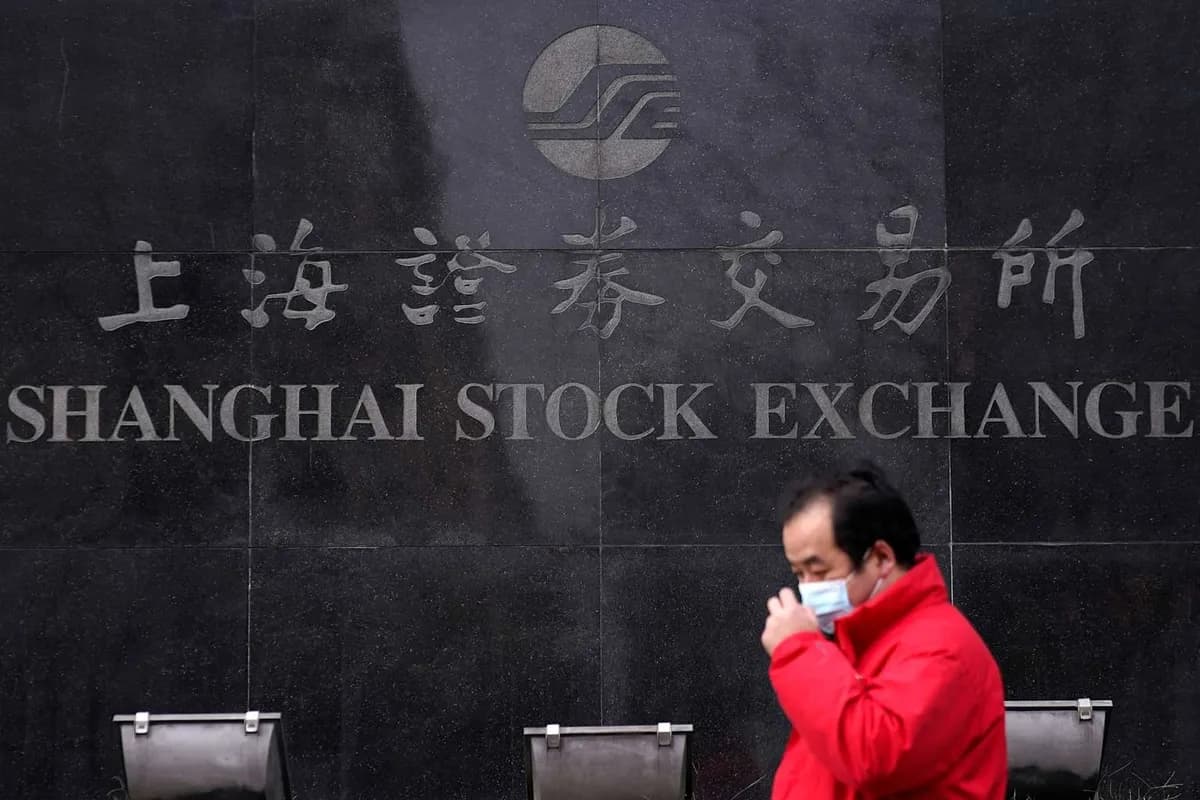
- •In March, foreigners' holdings of Chinese bonds fell to 3.19 trillion yuan, marking an 11th consecutive month of decline.
- •Despite yuan-denominated bond yields ranking among the highest globally, foreign capital outflows continue unabated.
- •Though China doubled its QFII quota limit, foreign investors' share remains at just 1.7%, signaling a disconnect between regulatory opening and actual capital inflows.
Record-Long Outflows Continue in March
Capital flight from China's bond market has extended for 11 consecutive months. According to data from the People's Bank of China (PBOC), foreign institutions' holdings in China's interbank bond market declined from 3.4 trillion yuan at the end of February to 3.19 trillion yuan at the end of March. This marks the longest consecutive decline since the PBOC began publishing regular data in April 2020.
The paradox lies in market performance. According to multiple foreign media reports, yuan-denominated bonds are recording the highest returns among major bond asset classes in 2026, bolstered by China's domestic savings surplus of $51 trillion. Yet even as bond prices rise, foreigners continue selling.
Why This Matters
The outflows are significant for two reasons. First, China's commitment to financial liberalization is being tested. Beijing doubled the investment quota for Qualified Foreign Institutional Investors (QFII) from $150 billion to $300 billion—a policy signal aimed at enhancing market access. However, foreign investors currently account for only 1.7% of China's bond market. The gap between institutional opening and actual capital inflows remains unresolved.
Second, this flow may reflect structural distrust rather than simple profit-taking. Continued selling despite top-tier global yields suggests investors are assigning greater weight to factors beyond returns—geopolitical risk, regulatory uncertainty, and currency volatility.
When Did This Begin?
Foreign investment in Chinese bonds expanded rapidly from 2017. As China introduced Bond Connect and yuan-denominated bonds were included in major global bond indices, foreign holdings exceeded 4 trillion yuan in early 2022.
However, the trend reversed after 2022. Escalating U.S.-China tensions and the West's freezing of Russian assets following Russia's invasion of Ukraine heightened perceptions of geopolitical risk in holding Chinese assets. Foreign holdings subsequently declined from their peak, and from the second half of 2025 began the record 11-month consecutive decline.
Conversely, the opposite phenomenon is occurring within China. Demand from domestic institutions for overseas asset investment has surged. Reflecting this, Chinese authorities expanded the investment quota for Qualified Domestic Institutional Investors (QDII) by $5.3 billion to $176.1 billion in March, the first increase in nine months. Some QDII funds, like Huatai-PineBridge's China-Korea semiconductor ETF, have recorded premiums of up to 25% of net asset value, signaling overheating domestic investment demand.
Outlook Ahead [Expert Analysis]
Given current structural patterns, it is unlikely that foreign capital will return to China's bond market in the near term.
First, absent resolution of geopolitical factors, regulatory opening alone has limitations in attracting foreign capital. There is already a track record of QFII quota expansion failing to translate into actual capital inflows.
On the other hand, China's domestic savings surplus and bond demand will likely support yuan-denominated bond prices in the near term. Should the bond market become structurally dependent solely on domestic demand, Beijing's financial liberalization efforts could extend without tangible results.
QDII premium overheating presents another variable. The phenomenon of domestic investors paying high premiums for overseas funds as they flock to global assets could signal overheating. Authorities may employ additional quota expansions or trading restrictions.
Ultimately, foreign capital's return to Chinese bonds hinges on trust rather than yields. How Beijing provides political predictability beyond institutional opening will likely determine the inflection point for future capital flows.
댓글 (30)
매일 여기서 뉴스 보고 있어요.
몰랐던 사실을 알게 됐습니다. Exit에 대해 더 알고 싶어졌습니다. 주변에도 공유해야겠어요.
깔끔한 기사입니다. Chinese 관련 해외 동향도 궁금합니다.
중국채권에 대한 다른 매체 보도와 비교해봐도 잘 정리되어 있습니다.
참고가 됩니다. QFII이 일상에 어떤 영향을 줄지 생각해보게 됩니다.
읽기 좋은 기사입니다. Foreigners 관련 통계가 의외였습니다. 나중에 다시 읽어볼 만합니다.
Exit 관련 데이터가 인상적이었습니다.
Chinese에 대해 처음 접하는 정보가 있었습니다.
몰랐던 사실을 알게 됐습니다. 중국채권의 전문가 코멘트가 설득력 있었습니다. 나중에 다시 읽어볼 만합니다.
잘 읽었습니다. QFII에 대해 주변 사람들과 이야기 나눠볼 만합니다.
친구한테도 추천했습니다.
Exit에 대해 처음 접하는 정보가 있었습니다. 후속 기사 부탁드립니다.
Chinese 기사에서 언급된 사례가 흥미로웠습니다. 계속 지켜봐야겠습니다.
중국채권 관련 용어 설명이 친절해서 좋았습니다.
몰랐던 사실을 알게 됐습니다. QFII 주제로 시리즈 기사가 나오면 좋겠습니다.
다른 기사도 기대하겠습니다.
Exit이 일상에 어떤 영향을 줄지 생각해보게 됩니다. 계속 지켜봐야겠습니다.
유익한 기사네요. Chinese에 대해 주변 사람들과 이야기 나눠볼 만합니다. 잘 정리된 기사네요.
객관적인 시각이 돋보이는 기사입니다.
QFII이 앞으로 어떻게 전개될지 주목해야겠습니다. 잘 정리된 기사네요.
유익한 기사네요. Foreigners 관련 데이터가 인상적이었습니다.
깔끔한 기사입니다. Exit의 향후 전망이 궁금합니다.
Chinese 관련 용어 설명이 친절해서 좋았습니다. 해외 동향도 함께 다뤄주시면 좋겠습니다.
중국채권의 향후 전망이 궁금합니다. 계속 지켜봐야겠습니다.
QFII 관련 통계가 의외였습니다.
Foreigners 관련 데이터가 인상적이었습니다.
Exit의 향후 전망이 궁금합니다.
Chinese 관련 배경 설명이 이해하기 쉬웠습니다.
중국채권 기사에서 언급된 사례가 흥미로웠습니다.
QFII에 대해 주변 사람들과 이야기 나눠볼 만합니다. 계속 지켜봐야겠습니다.
More in Economy


Latest News
Trump Issues Ultimatum: 'Iran Will Be Bombed If No Deal by April 22'
Trump warns Iran of renewed bombing if no deal is reached by April 22
트럼프, 러시아산 석유 제재 면제 전격 번복…에너지 외교 혼선
트럼프 행정부가 러시아산 석유 해상 구매 면제를 5월 16일까지 전격 갱신했다.

휴전 첫날 이스라엘 드론, 레바논 남부 민간인 사살
미국 중재 휴전 발효 직후 이스라엘 드론이 레바논 남부 민간인을 사살했다.

이스라엘군 공격에 유니세프 트럭 기사 2명 사망…가자 급수 중단
유니세프 위탁 트럭 기사 2명이 북부 가자 급수 시설에서 이스라엘군 공격으로 사망했다.

현대차그룹, 방산·레거시 부품 팔고 로보틱스·AI 기업으로 변신
현대차그룹이 방산·레거시 부품 사업을 매각하고 로보틱스 기업으로 전환 중이다.
이란, 호르무즈 해협 개방 선언 수 시간 만에 '재봉쇄' 경고
이란이 호르무즈 해협 개방을 선언했으나 수 시간 만에 미국 봉쇄 지속 시 재폐쇄를 경고했다.
이란 '곡괭이산' 핵시설, 미-이란 핵협상의 최대 변수로 부상
이란 나탄즈 인근 '곡괭이산' 지하 핵시설이 미-이란 핵협상의 핵심 쟁점으로 부상했다.

파키스탄, 이란 협상단 귀환길에 전투기 24대 호위 전격 배치
파키스탄 공군이 전투기 24대로 이란 협상단 귀환을 호위, 이스라엘 공격 위협에 대응했다.