Was the US Navy Built to Fight Pirates? History Says It Was a Major Reason
Rep. Donalds' claim linking the Navy's origins to Barbary pirates holds historical weight — but tells only part of the story
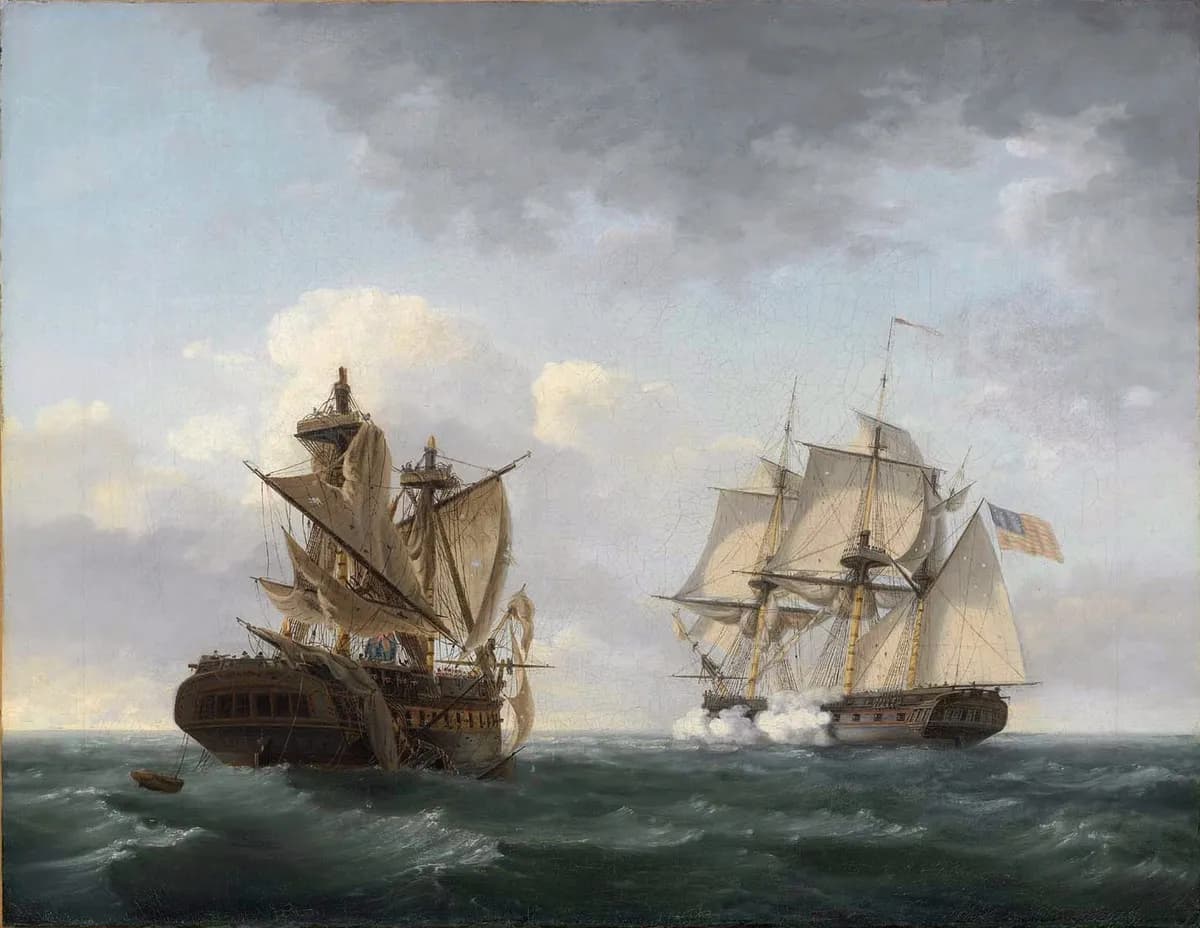
- •Rep. Donalds claimed the U.S. Navy was created specifically to fight Barbary pirates.
- •Historians confirm the Barbary threat was critical to the Navy's founding, but not the sole reason.
- •Trump's Hormuz blockade echoes past maritime toll disputes, though the stakes are far higher today.
A 19th-Century Precedent Invoked for a 21st-Century Crisis
When President Donald Trump announced a naval blockade of the Strait of Hormuz to cut off Iranian oil and cargo shipments, Florida Republican Rep. Byron Donalds stepped forward with a historical defense. Appearing on NBC's 'Meet the Press' on April 12, Donalds declared: 'Our Navy — its creation was actually to free international waters from the Barbary pirates. That's why we have the U.S. Navy.' The claim invoked conflicts stretching from 1801 to 1815, now known as the Barbary Wars. But how accurate is it?
Iran Controls the Strait — and the U.S. Responds
Iran has exercised de facto control over the Strait of Hormuz since U.S. and Israeli strikes on February 28. When Tehran threatened to charge tolls for passage, Trump first condemned the move, then floated a joint tolling venture, and ultimately settled on a blockade. Donalds, currently seeking the Republican nomination for Florida governor, drew a parallel between Iran's toll demands and the tribute payments Ottoman-affiliated Barbary states extracted from American merchant ships in the early 19th century.
How the U.S. Navy Was Born — and Reborn
The United States had a navy during the Revolutionary War, but postwar debt and a weak central government led to its dissolution. The continental navy effectively ended when the frigate Alliance was sold to a private merchant in 1785.
Under the 1788 Constitution, President George Washington did not immediately push for a new navy. But the threat from Barbary states — Algiers, Tunis, and Tripoli — grew steadily. These states operated what historians describe as a sophisticated protection racket: nations paid 'tribute' for safe passage through the Mediterranean, while those who refused risked having their ships seized, crews held hostage, and cargo confiscated. Technically this was not piracy but government-backed corsairing.
Washington lobbied Congress to authorize six warships, but before construction was complete, the U.S. struck a large tribute deal with Algiers, easing pressure and prompting lawmakers to scale back to three ships. This modest fleet fought France in the Quasi War of 1798–1801 before Jefferson, upon taking office, rejected Tripoli's tribute demands — triggering a declaration of war and the first sustained U.S. naval campaign abroad.
Historians: A Major Reason, Not the Only One
Frederick C. Leiner, author of 'The End of Barbary Terror,' stated plainly: 'The threat from the Barbary regimes was critical for the creation of the U.S. Navy.' Historian Adrian Tinniswood echoed this, noting the Barbary declaration of American ships as legitimate targets drew the Navy into the Mediterranean. But historians also point to trade rivalry with France, British threats on the high seas, and the new republic's need to project international credibility — a more complex origin story than Donalds suggested.
Then and Now: Echoes and Divergences [Expert Analysis]
Historians acknowledge structural parallels between the Barbary Wars and the current Hormuz crisis: a critical maritime chokepoint, demands for passage fees, and U.S. military force as a response. But the differences are significant. The Barbary states were peripheral Ottoman vassals; Iran is a major regional power with a nuclear program. The Strait of Hormuz carries roughly 20% of global seaborne oil — a far greater strategic weight than the Mediterranean lanes at stake in 1801.
Should the U.S. enforce a blockade, analysts suggest friction with China, India, South Korea, and Japan — all heavily dependent on Gulf energy — is likely. Some experts assess that unilateral action could isolate the U.S. diplomatically rather than coerce Iran into negotiations, while others argue sustained military pressure remains an effective tool for forcing Tehran back to the table.
Whether Donalds' historical analogy will carry policy weight beyond political rhetoric remains to be seen.
댓글 (38)
Was에 대해 다양한 보도를 더 봐야 판단할 수 있습니다.
친구한테도 추천했습니다.
차분한 논의가 필요합니다. US의 책임이 어디에 있는지 객관적으로 따져봐야 합니다.
여론에 휩쓸리지 말아야 합니다. 미 해군에 대한 법적 판단이 나올 때까지 기다려야 합니다. 더 공부해야겠습니다.
바르바리 전쟁의 역사적 맥락을 함께 봐야 전체 그림이 보입니다. 팩트체크가 중요한 시점입니다.
Was 사안에서 미디어의 역할이 중요합니다.
요즘 이 매체 기사가 제일 읽기 좋아요.
팩트에 집중해야 합니다. US에 대해 전문가마다 의견이 다른 게 흥미롭습니다.
미 해군 논란의 핵심이 뭔지 정리가 필요합니다.
좋은 기사 감사합니다.
쉽게 판단할 문제가 아닙니다. Was에 대해 냉정한 분석이 필요한 시점입니다.
팩트에 집중해야 합니다. the 배경을 잘 설명해준 기사네요.
US 논란의 핵심이 뭔지 정리가 필요합니다.
매일 여기서 뉴스 보고 있어요.
댓글 보는 재미도 있네요.
Was 관련 여론이 급변하고 있습니다.
여론에 휩쓸리지 말아야 합니다. the 관련 여론이 급변하고 있습니다. 신중한 판단이 필요합니다.
팩트에 집중해야 합니다. US의 책임이 어디에 있는지 객관적으로 따져봐야 합니다.
미 해군 문제가 이렇게까지 커질 줄은 몰랐습니다. 타임라인 정리 기사도 있으면 좋겠습니다.
바르바리 전쟁 논란의 핵심이 뭔지 정리가 필요합니다. 타임라인 정리 기사도 있으면 좋겠습니다.
Was 배경을 잘 설명해준 기사네요.
다른 기사도 기대하겠습니다.
US 논란의 핵심이 뭔지 정리가 필요합니다. 타임라인 정리 기사도 있으면 좋겠습니다.
신중하게 접근해야 합니다. 미 해군에 대한 법적 판단이 나올 때까지 기다려야 합니다. 국제 비교도 궁금합니다.
바르바리 전쟁에 대해 다양한 보도를 더 봐야 판단할 수 있습니다.
양쪽 입장을 들어봐야 합니다. Was 논란이 사회 분열로 이어지지 않았으면 합니다.
기사 퀄리티가 좋습니다.
US에 대한 법적 판단이 나올 때까지 기다려야 합니다. 간과되는 부분이 있다고 생각합니다.
양쪽 입장을 들어봐야 합니다. 미 해군 배경을 잘 설명해준 기사네요.
쉽게 판단할 문제가 아닙니다. 바르바리 전쟁 논란의 핵심이 뭔지 정리가 필요합니다.
다양한 시각이 필요합니다. Was의 책임이 어디에 있는지 객관적으로 따져봐야 합니다.
the이 전개되는 방향을 좀 더 지켜봐야 할 것 같습니다.
여론에 휩쓸리지 말아야 합니다. US에 대한 법적 판단이 나올 때까지 기다려야 합니다. 신중한 판단이 필요합니다.
기자님 수고하셨습니다.
바르바리 전쟁에 대해 전문가마다 의견이 다른 게 흥미롭습니다.
냉정한 판단이 필요합니다. Was의 역사적 맥락을 함께 봐야 전체 그림이 보입니다.
감정적 반응은 자제해야 합니다. the에 대한 법적 판단이 나올 때까지 기다려야 합니다.
US 문제는 양쪽 입장을 모두 들어봐야 합니다.
More in Global
ICE Acting Director Todd Lyons to Resign at End of May, DHS Confirms
Trump Maintains Naval Blockade as Iran Declares Full Opening of Strait of Hormuz
호르무즈 봉쇄가 바꾼 에너지 지도, 재생에너지 전환 가속
Iran Declares Strait of Hormuz 'Fully Open,' Oil Prices Plunge 11%
트럼프, 이란 해상봉쇄 '합의 때까지 완전 유지' 선언
북한 미사일의 민낯: 50년 뒤처진 기술로 만들어진 KN-23·KN-24
Latest News
Buy in Fear, Sell in Greed — Retail Investors Credited for Defending KOSPI 5000
Donghak Ants absorb foreign selloffs, playing a key role in defending KOSPI 5000
이란 전쟁發 에너지 위기, EU 스태그플레이션 경계선에 서다
IMF가 이란 전쟁發 에너지 위기로 EU 경기침체 가능성을 경고했다.
호르무즈 재개방 선언에도 파나마 운하 적체 해소 '요원'
이란이 호르무즈 해협 완전 개방을 선언했지만 미 해군 봉쇄는 유지됐다.
호르무즈 해협 재개방에 금값 급등·유가 폭락
이란의 호르무즈 해협 재개방 선언에 금값이 3월 이후 최고치로 상승했다.
IEA 경고: 데이터센터 전력 소비, 2030년까지 두 배…AI가 에너지 위기 촉발
IEA 보고서에 따르면 2025년 전 세계 데이터센터 전력 소비가 17% 급증했으며 2030년 945TWh에 달할 전망이다.

호르무즈 봉쇄에 AD 포츠, UAE 사상 최대 물류 재배치
AD 포츠 그룹이 5만 4,000TEU를 4개 운송 수단으로 우회 수송했다.