Western Companies Collaborated in Building Russia's Nuclear Defense Network
Despite international sanctions, Italian, American, and Japanese firms supplied critical components through bypass routes
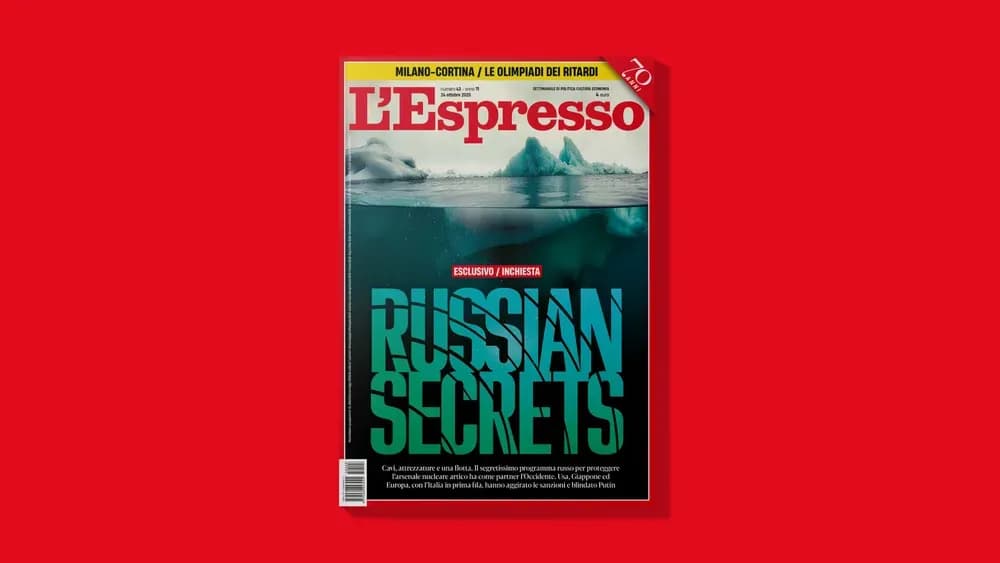
- •Italian weekly magazine L'Espresso exposed that Western companies have been supplying components needed for building Russia's nuclear weapons defense network through bypass routes.
- •More than 100 Italian companies operating in Russia paid $1 billion in taxes over the past three years, with 40% flowing into the military sector.
- •The joint investigation with ICIJ confirmed the reality of evading international sanctions through methods such as complex corporate structures and routing through third countries.
Military Supplies Flowing Through Sanctions Network
A joint investigation by Italian weekly magazine L'Espresso and the International Consortium of Investigative Journalists (ICIJ) has revealed that Western companies have been supplying critical components needed for Russia's nuclear weapons defense system. Equipment such as cables and submarines provided by American, Japanese, and European firms has been used to protect Moscow's nuclear defense infrastructure, with Italian companies playing a particularly active role.
This report demonstrates that economic sanctions imposed by the West following Russia's 2022 invasion of Ukraine have effectively been neutralized through bypass routes. The complexity of global supply chains combined with corporate profit-seeking has exposed serious vulnerabilities in the international sanctions regime.
Over 100 Italian Companies Paid $1 Billion in Taxes
According to L'Espresso's investigation, more than 100 Italian companies continue to operate businesses in Russia. Over the past three years, they have paid approximately $1 billion in taxes to the Russian government, with 40% of this flowing into the military sector.
Gloria Riva's in-depth reporting exposes the reality of a "covert war where decisive battles are fought without firing a single bullet." Companies have evaded sanctions by secretly signing contracts, triangulating transactions through complex corporate structures, and falsely declaring export items.
Specific Mechanisms of Sanctions Evasion
The methods used by Western companies to circumvent sanctions are diverse and sophisticated:
- Bypass exports: Concealing final destinations by routing through third countries
- Corporate structure manipulation: Blocking tracking through transactions via subsidiaries in multiple countries
- False item declarations: Disguising military equipment as civilian goods
- Use of intermediaries: Employing agents to erase direct transaction traces
Emilio Carelli, editor of L'Espresso, pointed out in an editorial that "this is a war without gunfire, but the battles that determine victory or defeat here are as decisive as those on actual battlefields."
Russia's Indoctrination Education System
A report by Federica Urzo in the same issue covers the reality of "patriotic schools" that Russia operates in mainland Russia and occupied Ukrainian territories. These facilities aim to cultivate a new generation "patriotically oriented" and conduct systematic political propaganda education.
Connections with Kremlin-friendly authoritarian regimes were also confirmed. Investigation by Marta Aba and Stefano Vergine revealed that Stefano Bonaccini, an Italian publisher from the Northern League, has been publishing books aligned with the Russian government's agenda and signing contracts with authoritarian regimes.
Structural Limitations of International Sanctions [AI Analysis]
This exposure reveals fundamental problems facing the current international sanctions regime. In a situation where global supply chains are highly complexly intertwined, completely isolating a specific country is virtually impossible.
For effective sanctions going forward, the following will be necessary:
- Strengthening end-use tracking systems
- Enhancing international cooperation on bypass export routes
- Introducing practical penalty mechanisms for violating companies
- Ensuring transparency across the entire supply chain
However, it remains unclear how quickly such improvements will be implemented given the reality where economic interests clash with security logic. How to bridge the gap between companies' short-term profit pursuit and nations' long-term security strategies is likely to become a key challenge for the international community going forward.
댓글 (4)
기사 잘 봤습니다. 다른 시각의 분석도 읽어보고 싶네요.
Companies에 대해 더 알고 싶어졌습니다. 후속 기사 부탁드립니다.
공감합니다. 참고하겠습니다.
Collaborated 관련 기사 잘 읽었습니다. 유익한 정보네요.
More in Special

How to avoid ICE agents checking your phone at the airport
주일 중국대사관 침입한 괴한, 자위대 현직 장교로 확인

New York City public hospital breaks up with Palantir... Ending controversy over commercialization of citizen health data
U.S. expands military operations in Latin America... ‘Operation total annihilation’ formalized

The Corsican Mafia Exposed: Breaking a Century of Silence

AI-Generated Fake Person Used to Sell Dubai Flight Seats
Latest News
"간부 잘 아는데 교통비 좀" 휴가 군인들 돈 뜯은 50대 구속
50대 A씨가 휴가 중인 군인들에게 부대 간부를 아는 척 접근해 돈을 사취

英 옥토퍼스, 이란 전쟁 이후 태양광 판매 50% 증가
이란 전쟁 이후 영국 옥토퍼스의 태양광 판매량 50% 증가
당정 "추경, 지방·취약계층에 더 지원되는 방식으로"
당정이 지방자치단체와 취약계층 중심의 추경 편성 방침 재확인
당정, 석유 최고가격제 손실 보전을 추경에 반영키로
당정이 석유 최고가격제 손실을 추경에 반영하기로 결정

어머니 폭행하고 금팔찌 빼앗은 30대 아들 경찰에 붙잡혀
어머니 폭행 후 금팔찌 빼앗은 30대 남성 체포
아이티 갱단 폭력사태로 10개월간 5천명 이상 사망
아이티에서 지난 10개월간 갱단 폭력으로 5천명 이상 사망
서방 정보당국 "러시아, 우크라이나 전쟁 후 이란에 드론·식량 공급"
서방 정보당국, 러시아의 이란 드론·식량 공급 작업 거의 완료 파악

6년 전 세 살 딸 살해한 30대 친모 구속송치
경찰, 6년 전 세 살 딸 살해 혐의 30대 친모를 구속송치