Who Are We at the Airport: The Hidden Psychology of Travelers
The moment we shed our everyday masks and head toward the unknown, the psychological transformations occurring within us
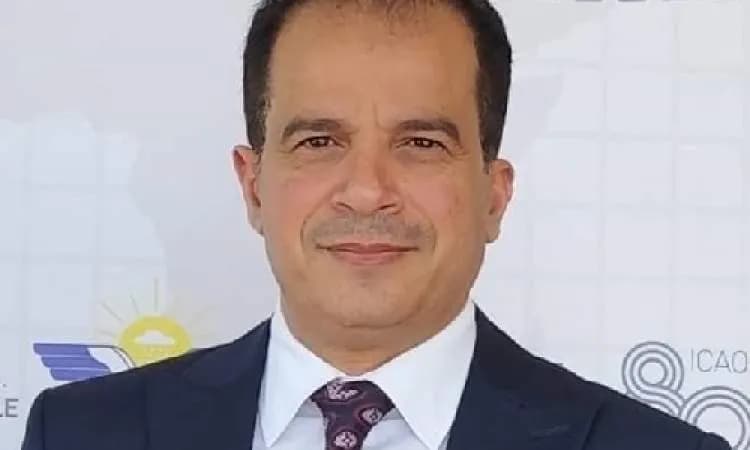
- •Jordanian psychologist Dr. Mazen Ahmed Ghanem has proposed the 'Journey of Consciousness' project, which analyzes the psychological changes travelers experience at airports.
- •Repeatedly checking passports and tension during security screening are psychological control mechanisms against uncertainty, while the moment of takeoff is a symbolic test that triggers inner self-questioning.
- •Passenger psychological states are variables directly affecting airport operational efficiency, and airport design integrating psychological support can improve both safety and profitability.
The Airport: A Space Where Identity Wavers
Airports are not mere transit spaces. They are transition points where we leave the familiar world for the unknown, and stages where our psychological identity is reconstructed. As French anthropologist Marc Augé described, airports are 'non-places' where everyday roles and relationships are temporarily suspended.
The 'Journey of Consciousness (رحلة وعي)' project proposed by Jordanian psychologist Dr. Mazen Ahmed Ghanem is the first integrated framework in the Arab world to systematically analyze traveler psychology and transform airport environments into psychologically safer spaces.
Why Checking Your Passport Makes You Anxious
Many travelers experience specific behavioral patterns: repeatedly checking passports, touching boarding passes dozens of times, and unnecessarily tightening bag straps. These are not simple habits but psychological control mechanisms against uncertainty.
The tension felt before security checkpoints is even more complex. Why does your heart race when you've done nothing wrong? This is an instinctive response to authority and social anxiety from feeling judged. At this moment, travelers intuitively recognize they have lost control.
The Inner Test of Takeoff
What many passengers experience as the aircraft races down the runway is not merely physical tension. Dr. Ghanem describes this as an "inner test." Takeoff literally means leaving the ground, and psychologically represents a symbolic moment of departing the safety zone.
At this moment, we ask ourselves: "Am I really ready to leave? Or am I running away from something?" These questions become psychological mirrors revealing the true motivations behind our travel.
The Psychological Drama Created by Airports
Airports are vast stages where thousands of individual dramas unfold simultaneously. Under cold lighting, in long queues, people show sides of themselves different from usual.
Key Psychological Changes:
- Suspension of Identity - Workplace roles and family positions are all put on hold
- Distortion of Time Perception - Waiting time feels longer than it actually is
- Emotional Amplification - Small delays lead to excessive anxiety
- Ritualistic Behaviors - Repetitive actions like passport checks and luggage inspections increase
Stress as an Operational Efficiency Issue
Dr. Ghanem emphasizes that travelers' psychological states are not merely matters of personal emotion but variables directly affecting airport operational efficiency. Tense passengers slow down security screening, cause mistakes, and disrupt the flow of the entire system.
Therefore, passenger psychological stability is an operational factor as important as fuel or technical safety. This should be a core airport management strategy, not just academic curiosity.
What the 'Journey of Consciousness' Project Proposes
Dr. Ghanem's project attempts to reconstruct airports not as mere transit points but as spaces where humans are understood and supported. Key proposals include:
Integrating Psychological Support:
- Providing simple relaxation spaces before security screening
- Placing visual and auditory elements in waiting areas to promote psychological stability
- Training staff to understand passenger psychology
Technology Utilization:
- Real-time psychological state monitoring systems (based on voluntary participation)
- Personalized route guidance to reduce anxiety
- Virtual reality (VR)-based programs to alleviate flight phobia
Answers to Hidden Questions
The fundamental questions this research raises include:
- Who are we during flight?
- Why do we feel tense before passport control officers?
- Why does the moment of takeoff become an inner test?
These questions provide direct implications beyond individual self-understanding for airport design, security procedures, and customer service strategies.
Future Prospects [AI Analysis]
Dr. Ghanem urges international organizations, including the Arab Civil Aviation Commission (ACAC), to adopt this framework and develop it into empirical research. Systematic understanding of passenger psychology is likely to bring the following changes:
Expected Development Directions:
- Paradigm Shift in Airport Design - Movement from efficiency-centered to human-centered design
- Expansion of Customized Services - Differentiated routes and services based on individual psychological types may be provided
- Security Procedure Improvements - New protocols that reduce psychological burden while enhancing safety are expected to be developed
If this approach spreads to the global aviation industry starting in the Middle East, airports will be redefined beyond simple transit spaces as transitional spaces where human dignity is protected. This can lead not only to improved passenger satisfaction but also to enhanced operational efficiency and economic profitability.
Conclusion
We lose something at airports: familiar roles, stable identity, and control. But we can also gain something: opportunities to rediscover ourselves, courage to embrace change, and openness to new possibilities.
If airports become spaces that understand humans rather than mere machines for transporting people, travel will no longer be stressful but a journey in the truest sense.
댓글 (4)
Who 관련 기사 잘 읽었습니다. 유익한 정보네요.
공감합니다. 참고하겠습니다.
기사 잘 봤습니다. 다른 시각의 분석도 읽어보고 싶네요.
공감합니다. 참고하겠습니다.
More in Life
브라질 볼소나로 전 대통령, 건강 악화로 임시 가택연금 조치

The decline of university bars, the end of the ‘pour and drink’ era

NASA appoints Jennifer Lyons as new director of Launch Services Program

NASA Shared Services Center Releases Fiscal Year 2026 Service Catalog and Performance Report

James Webb Telescope captures Saturn's icy rings in infrared light

Japanese elementary school students' #1 future wish is to be a 'streamer'... surpassing doctors and teachers
Latest News
"간부 잘 아는데 교통비 좀" 휴가 군인들 돈 뜯은 50대 구속
50대 A씨가 휴가 중인 군인들에게 부대 간부를 아는 척 접근해 돈을 사취

英 옥토퍼스, 이란 전쟁 이후 태양광 판매 50% 증가
이란 전쟁 이후 영국 옥토퍼스의 태양광 판매량 50% 증가

당정 "추경, 지방·취약계층에 더 지원되는 방식으로"
당정이 지방자치단체와 취약계층 중심의 추경 편성 방침 재확인

당정, 석유 최고가격제 손실 보전을 추경에 반영키로
당정이 석유 최고가격제 손실을 추경에 반영하기로 결정
어머니 폭행하고 금팔찌 빼앗은 30대 아들 경찰에 붙잡혀
어머니 폭행 후 금팔찌 빼앗은 30대 남성 체포

아이티 갱단 폭력사태로 10개월간 5천명 이상 사망
아이티에서 지난 10개월간 갱단 폭력으로 5천명 이상 사망

서방 정보당국 "러시아, 우크라이나 전쟁 후 이란에 드론·식량 공급"
서방 정보당국, 러시아의 이란 드론·식량 공급 작업 거의 완료 파악

6년 전 세 살 딸 살해한 30대 친모 구속송치
경찰, 6년 전 세 살 딸 살해 혐의 30대 친모를 구속송치