WHO Calls for Global Unity on World Health Day: 'Together for Health. Stand with Science.'
Amid climate crises and geopolitical tensions, scientific cooperation is declared humanity's most vital defense
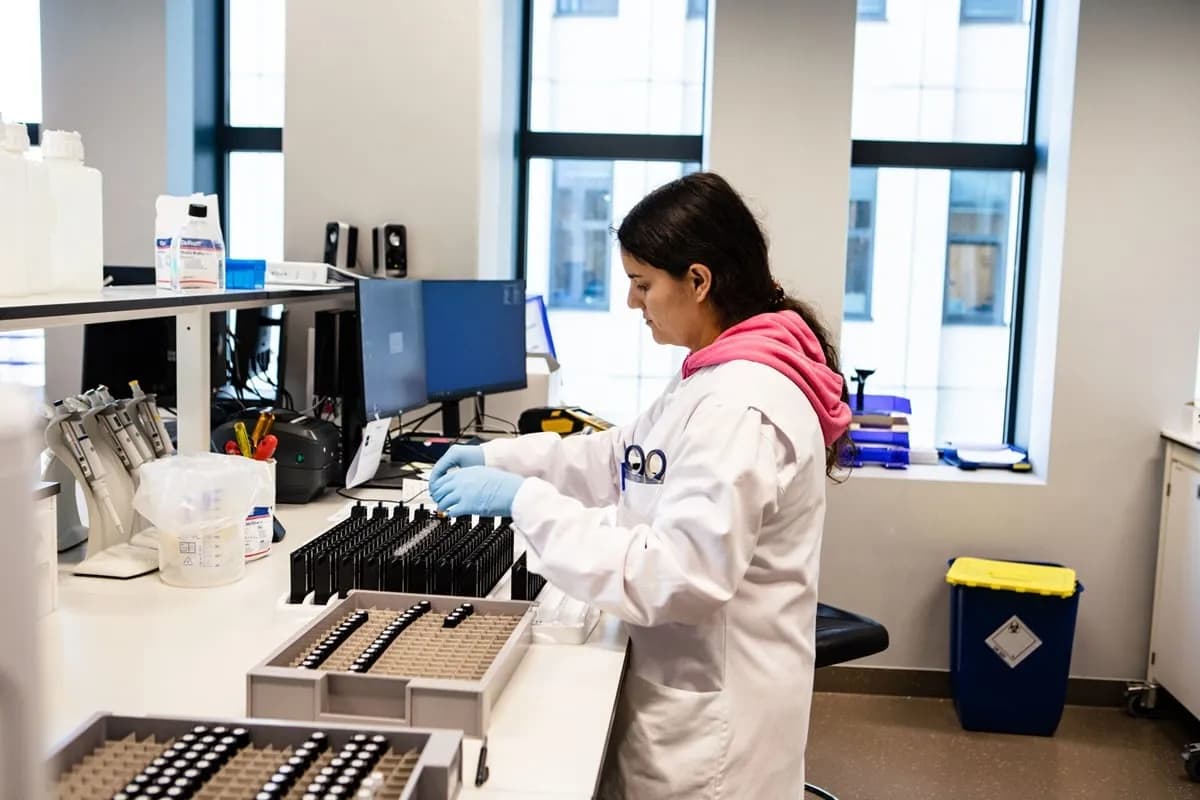
- •WHO launched its World Health Day 2026 campaign calling for unity behind science and global cooperation.
- •Scientific advances have cut maternal mortality by 40% and saved 154 million children through vaccination.
- •Science skepticism, climate-health links, and tech inequality pose the next frontiers for global health.
A Call to Stand Together
The World Health Organization (WHO) marked World Health Day on April 7 with a rallying cry: 'Together for health. Stand with science.' The campaign, launched on the anniversary of WHO's founding in 1948, initiates a year-long global public health initiative urging governments and citizens alike to recommit to evidence-based international cooperation.
Why This Matters Now
The urgency behind this call is unmistakable. WHO has warned that climate change, environmental degradation, geopolitical tensions, and shifting demographics are simultaneously straining health systems around the world. Emerging infectious diseases with pandemic potential, rising chronic illness burdens, and weakened healthcare infrastructure form a convergence of threats that no single nation can face alone.
WHO Director-General Tedros Adhanom Ghebreyesus underscored the stakes: "Vaccines, penicillin, germ theory, MRI machines, and the mapping of the human genome are just some of the achievements that science has delivered that have saved lives and transformed health for billions of people."
The Numbers That Tell the Story
Maternal and Child Health Gains
Since 2000, global maternal mortality has fallen by more than 40%, and deaths among children under five have been cut by over 50%—a direct consequence of scientific advancement and international health cooperation.
Five Decades of Immunization
Global immunization efforts over the past 50 years have saved more than 154 million children from infectious diseases. Vaccines have contributed to a 40% reduction in infant mortality; the measles vaccine alone has saved over 90 million children's lives.
Surgery and Diagnostics for All
Advances in anesthesia transformed surgery from a harrowing ordeal into a widely accessible, life-saving procedure. From electronic blood pressure monitors to mammography for early breast cancer detection, diagnostic tools are now reaching communities that once had no access to such care.
SARS 2003: The Collaboration Template
When Severe Acute Respiratory Syndrome (SARS) emerged in 2003, WHO coordinated a global laboratory network sharing real-time data across borders. That cooperation model became the foundation for responses to Ebola, and later COVID-19.
A Historical Thread: Eight Decades of Global Health Architecture
International health cooperation traces its institutional roots to the 19th century, when cholera outbreaks drove European nations to convene the first International Sanitary Conferences. The catastrophic Spanish Flu pandemic of 1918–1920 exposed the limits of unilateral national responses and laid the groundwork for WHO's establishment in 1948.
Even during the Cold War, scientific collaboration transcended ideology. The 1967–1980 smallpox eradication campaign—carried out under U.S.-Soviet cooperation—remains the only instance in history where science has completely eliminated a human disease.
The SARS, Ebola, and COVID-19 crises of the 21st century repeatedly revealed the fragility of international health governance: delayed information sharing, vaccine nationalism, and political friction amplified each crisis in turn. In 2026, as currents of fragmentation and distrust resurface globally, WHO has chosen 'science' and 'solidarity' as its twin anchors.
Looking Ahead [Expert Analysis]
Three structural challenges give this campaign its weight beyond symbolism.
First, the rise of science skepticism. Anti-vaccine and anti-science narratives spreading via social media are eroding the implementation of public health policies in both high-income and developing nations. WHO's explicit framing of 'Stand with science' is a direct counteroffensive.
Second, the deepening climate-health nexus. Rising temperatures are pushing tropical infectious diseases into new latitudes, intensifying cardiovascular risks from heat events, and compounding food insecurity. Future WHO health policy is likely to become increasingly integrated with climate adaptation strategies.
Third, widening health technology inequality. As AI-powered diagnostics, gene therapies, and personalized medicine accelerate, the gap in access between wealthy and low-income nations may widen rather than close. WHO's vision of 'democratizing science' will require concrete international redistribution mechanisms—or risk remaining aspirational.
Implications for South Korea
South Korea, with its world-class medical infrastructure and demonstrated COVID-19 response capacity, has expanded its role in international health cooperation. Yet rapid aging, a mental health crisis, and demographic contraction driven by record-low birth rates impose structural pressure on the domestic health system. The science-based preventive care and international knowledge-sharing that WHO champions represent tangible resources for Korea's response to these challenges. Strategically linking Korea's digital health technology and pandemic response expertise to the global health cooperation agenda is likely to become an increasingly important dimension of Korean health diplomacy.
댓글 (43)
읽기 좋은 기사입니다. WHO에 대해 주변 사람들과 이야기 나눠볼 만합니다.
Calls 관련 데이터가 인상적이었습니다. 계속 지켜봐야겠습니다.
for에 대한 다른 매체 보도와 비교해봐도 잘 정리되어 있습니다.
북마크해두겠습니다. 세계보건의날 관련 배경 설명이 이해하기 쉬웠습니다.
유익한 기사네요. WHO 관련 통계가 의외였습니다. 좋은 기사 감사합니다.
흥미로운 주제입니다. Calls이 일상에 어떤 영향을 줄지 생각해보게 됩니다. 생각이 바뀌었습니다.
for에 대해 처음 접하는 정보가 있었습니다.
구독 중인데 만족합니다.
WHO에 대해 주변 사람들과 이야기 나눠볼 만합니다.
Calls 관련 해외 동향도 궁금합니다. 나중에 다시 읽어볼 만합니다.
깔끔한 기사입니다. for 관련 데이터가 인상적이었습니다. 해외 동향도 함께 다뤄주시면 좋겠습니다.
읽기 좋은 기사입니다. 세계보건의날이 일상에 어떤 영향을 줄지 생각해보게 됩니다.
북마크해두겠습니다. WHO 관련 용어 설명이 친절해서 좋았습니다.
Calls이 일상에 어떤 영향을 줄지 생각해보게 됩니다.
for이 일상에 어떤 영향을 줄지 생각해보게 됩니다. 잘 정리된 기사네요.
유익한 기사네요. 세계보건의날 관련 용어 설명이 친절해서 좋았습니다. 전문가 의견도 더 듣고 싶습니다.
잘 읽었습니다. WHO에 대한 다른 매체 보도와 비교해봐도 잘 정리되어 있습니다.
Calls 관련 배경 설명이 이해하기 쉬웠습니다.
for의 전문가 코멘트가 설득력 있었습니다.
세계보건의날에 대해 처음 접하는 정보가 있었습니다. 계속 지켜봐야겠습니다.
WHO에 대해 처음 접하는 정보가 있었습니다. 해외 동향도 함께 다뤄주시면 좋겠습니다.
북마크해두겠습니다. Calls에 대해 처음 접하는 정보가 있었습니다.
깔끔한 기사입니다. for에 대해 처음 접하는 정보가 있었습니다. 해외 동향도 함께 다뤄주시면 좋겠습니다.
세계보건의날이 앞으로 어떻게 전개될지 주목해야겠습니다.
객관적인 시각이 돋보이는 기사입니다.
잘 읽었습니다. Calls에 대해 주변 사람들과 이야기 나눠볼 만합니다.
잘 읽었습니다. for이 앞으로 어떻게 전개될지 주목해야겠습니다.
유익한 기사네요. 세계보건의날 관련 통계가 의외였습니다.
잘 읽었습니다. WHO 관련 해외 동향도 궁금합니다.
읽기 좋은 기사입니다. Calls에 대해 처음 접하는 정보가 있었습니다. 주변에도 공유해야겠어요.
for에 대해 주변 사람들과 이야기 나눠볼 만합니다.
좋은 정리입니다. 세계보건의날 관련 배경 설명이 이해하기 쉬웠습니다. 잘 정리된 기사네요.
WHO에 대한 다른 매체 보도와 비교해봐도 잘 정리되어 있습니다. 후속 기사 부탁드립니다.
잘 읽었습니다. Calls 관련 해외 동향도 궁금합니다. 다른 시각의 분석도 읽어보고 싶습니다.
for 기사에서 언급된 사례가 흥미로웠습니다.
좋은 정보 감사합니다.
WHO 관련 해외 동향도 궁금합니다.
유익한 기사네요. Calls 관련 통계가 의외였습니다. 잘 정리된 기사네요.
for에 대해 주변 사람들과 이야기 나눠볼 만합니다. 계속 지켜봐야겠습니다.
세계보건의날에 대한 다른 매체 보도와 비교해봐도 잘 정리되어 있습니다.
이런 시각도 있었군요. WHO에 대해 처음 접하는 정보가 있었습니다.
읽기 좋은 기사입니다. Calls에 대한 다른 매체 보도와 비교해봐도 잘 정리되어 있습니다.
흥미로운 주제입니다. for 관련 용어 설명이 친절해서 좋았습니다. 잘 정리된 기사네요.
More in Global

Latest News
IMF, 7년 만에 베네수엘라와 관계 재개…49억 달러 동결 해제 가능성
IMF가 7년 만에 베네수엘라와 공식 협력을 재개하기로 결정했다.
경상흑자 역대 최대인데 원화는 왜 약해지나
한국은행, 경상흑자에도 원화 약세 이어지는 구조적 원인 공식 분석.

금융당국, 미래에셋에 SpaceX IPO 조기 마케팅 경고
금융당국이 미래에셋증권의 SpaceX IPO 조기 마케팅에 구두 경고를 내렸다.
96년 전통 깬다…월드컵 결승전, 사상 첫 하프타임 쇼
FIFA가 96년 만에 처음으로 월드컵 결승전 하프타임 쇼를 도입한다.
이란 전쟁 속 걸프 3국, 사모채권으로 100억 달러 조달
걸프 3국이 이란 전쟁 이후 처음으로 사모채권 발행에 나서 약 100억 달러를 조달했다.
OpenAI, 생명과학 전용 추론 AI 'GPT-Rosalind' 출시… 신약 개발 패러다임 흔든다
OpenAI가 유전체학·신약 개발 특화 추론 AI 'GPT-Rosalind'를 출시하며 생명과학 분야에 첫 발을 내딛었다.

EU, Anthropic의 Claude Mythos AI 사이버 위협 놓고 직접 협의 개시
EU 집행위원회가 Claude Mythos Preview의 사이버 위협을 이유로 Anthropic과 직접 협의를 시작했다.