Getty Museum Unveils Major Exhibition Spanning 200 Years of LGBTQ+ Photography
'Queer Lens' features 270+ works illuminating both history and present of sexual minority representation
- •The Getty Museum has opened 'Queer Lens,' a major exhibition surveying 200 years of LGBTQ+ photographic history.
- •The approximately 270 works treat masters and unknown artists equally, capturing intimacy amid oppression through images like photo booth kisses.
- •Opening at a time when 597 anti-LGBTQ+ bills have been introduced across America, this exhibition is evaluated as a courageous social statement.
Queer History Beginning with the Invention of Photography
The Getty Museum in Los Angeles has unveiled an ambitious exhibition for Pride Month. 'Queer Lens: A History of Photography' is a major survey showing how expressions of gender and sexual identity have evolved through the camera over the past 200 years.
The exhibition features approximately 270 works. Alongside pieces by masters like Berenice Abbott, Robert Mapplethorpe, and Man Ray, works by more than a dozen unknown photographers are displayed with equal prominence. Getty Museum officials emphasize that this exhibition has been in preparation for years (since 2020), and its significance at this particular moment is extraordinary.
There's a fascinating historical fact: the binary concepts of heterosexual and homosexual first appeared in 1869—just one generation after the camera's invention in 1839. Photographic technology and the social conceptualization of sexual identity developed almost simultaneously.
A Photo Booth Kiss Capturing a History of Oppression
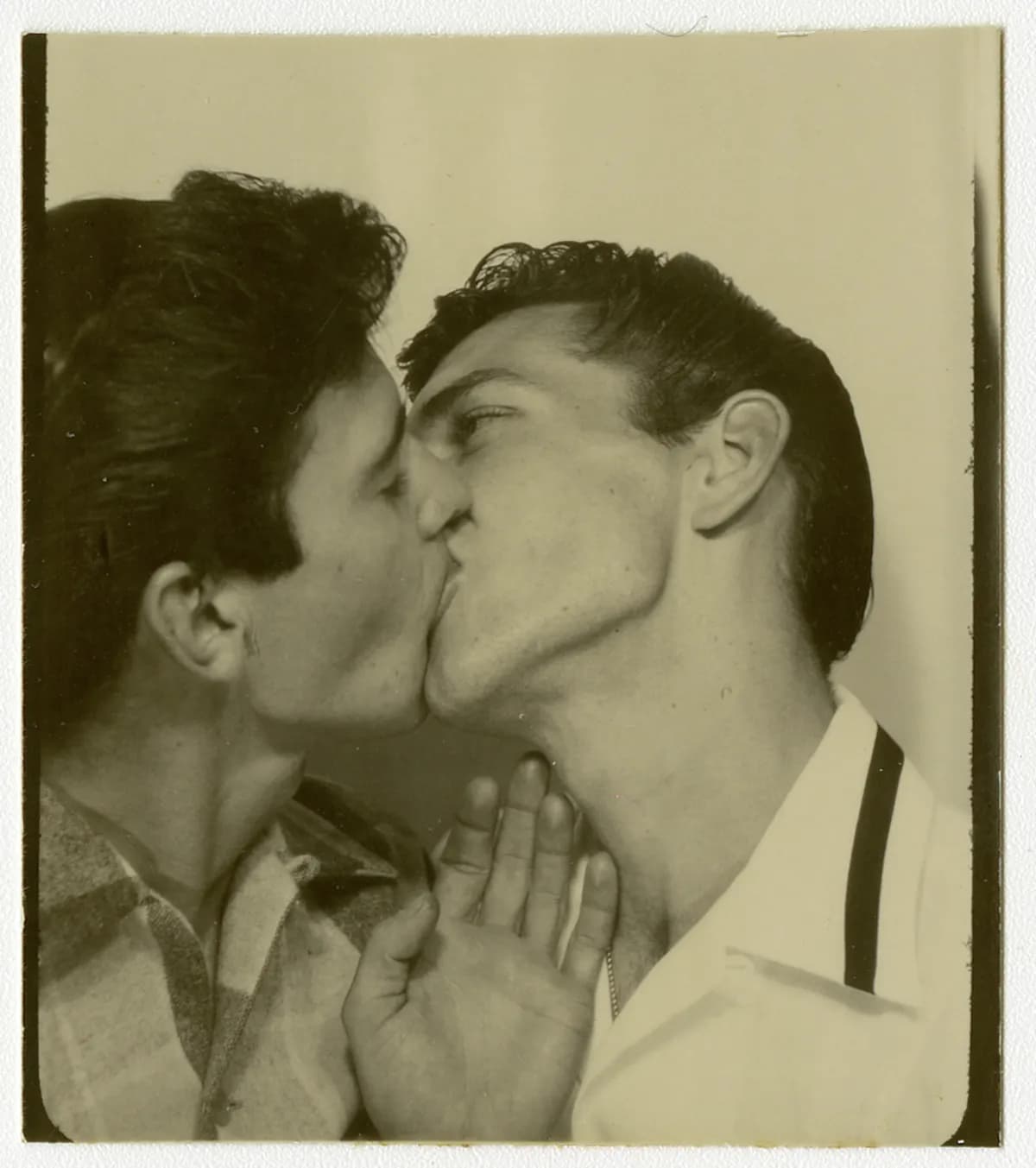
One of the exhibition's most notable works is a black-and-white photograph taken around 1953 by Canadian-American photographer Joseph John Bertrand Belanger. Shot inside a photo booth at Vancouver's Playland amusement park, it captures two men appearing to be in their twenties sharing a deep kiss.
One man, eyes closed, has his hand on the other's neck, while the other gazes at him with a weighted look. The narrow frame of the photo booth emphasizes the private intimacy between the two.
However, Los Angeles Times critic Christopher Knight points out: What if they had stepped outside the curtain and shared the same kiss in the amusement park? Under Canadian criminal law at the time, they could have been arrested and imprisoned for "gross indecency." This law remained in effect until 1969.
Belanger was a World War II veteran. He fought against the fascist German regime that ravaged Europe—the same Nazi regime that in 1933 began its reign of terror by burning the libraries of homosexuals in Berlin's public squares. In 1944, a fellow pilot with whom Belanger had fallen in love during the war was killed in combat.
Knight evaluates that this modest postwar photograph resonates powerfully by "turning the photo booth into a closet." The deep kiss is profoundly personal, yet simultaneously exotic because such queer images were rarely seen and never celebrated. This fusion appears repeatedly throughout the exhibition.
A Museum Standing on Rainbow Steps
The exhibition's symbolism begins at the entrance. The Getty Museum's front steps are painted with bright rainbow flags, visually placing the museum on a "queer pedestal."
The exhibition's promotional billboard features work by Frederick Spalding, a self-taught British portrait photographer. The image shows two women in hoop skirts, "Fanny and Stella," in a warm embrace. They were actually middle-class men named Thomas Ernest Boulton and Frederick William Park.
Opening at a Time of 597 Anti-LGBTQ+ Bills Across America
While the exhibition has been in preparation since 2020, it coincidentally opens during a "national emergency." The American Civil Liberties Union (ACLU) is currently tracking 597 anti-LGBTQ+ bills across the United States. Six have been introduced in California, with Texas leading at 88.
Most will not pass. However, the introductions themselves are messages of threat. The exhibition repeatedly evokes this oppressive social context.
Knight assessed, "This exhibition is provocative, important, and powerfully timed." It represents a courageous exhibition that only the Getty Museum would dare to stage.
Future Prospects [AI Analysis]
This exhibition demonstrates that museums can be more than spaces for storing artworks—they can serve as venues for social discourse. Particularly during politically sensitive times, providing historical context offers visitors opportunities to understand current situations more deeply.
Other major museums will likely plan similar exhibitions illuminating marginalized histories. The Getty Museum's precedent could serve as a model for how cultural institutions can practice social responsibility.
Furthermore, this exhibition proves that photography has functioned beyond mere documentation as a tool for identity expression and social change. As images become increasingly important in the digital age, the work of examining how past photographs resisted oppression and affirmed existence will continue.
댓글 (3)
Getty에 대해 더 알고 싶어졌습니다. 후속 기사 부탁드립니다.
그 부분은 저도 궁금했습니다.
기사 잘 봤습니다. 다른 시각의 분석도 읽어보고 싶네요.
More in Life

Beyond Vaccines: Refusal of Newborn Vitamin K Shots Spreads

NASA Restores Historic 80-Year-Old 'Hangar One' at Ames Research Center

NASA X-59 Supersonic Experimental Aircraft Completes Second Test Flight Successfully

Australian Researchers Develop World's First Quantum Battery Prototype

The Ocean Was the True Driver of 3 Million Years of Climate Change

Heat Waves to Cause 700,000 Premature Deaths by 2050… Climate Crisis Undermines Exercise Habits
Latest News

이스라엘, 헤즈볼라 무기 통로 레바논 다리 공습
이스라엘군, 헤즈볼라 무기 통로 레바논 다리 공습
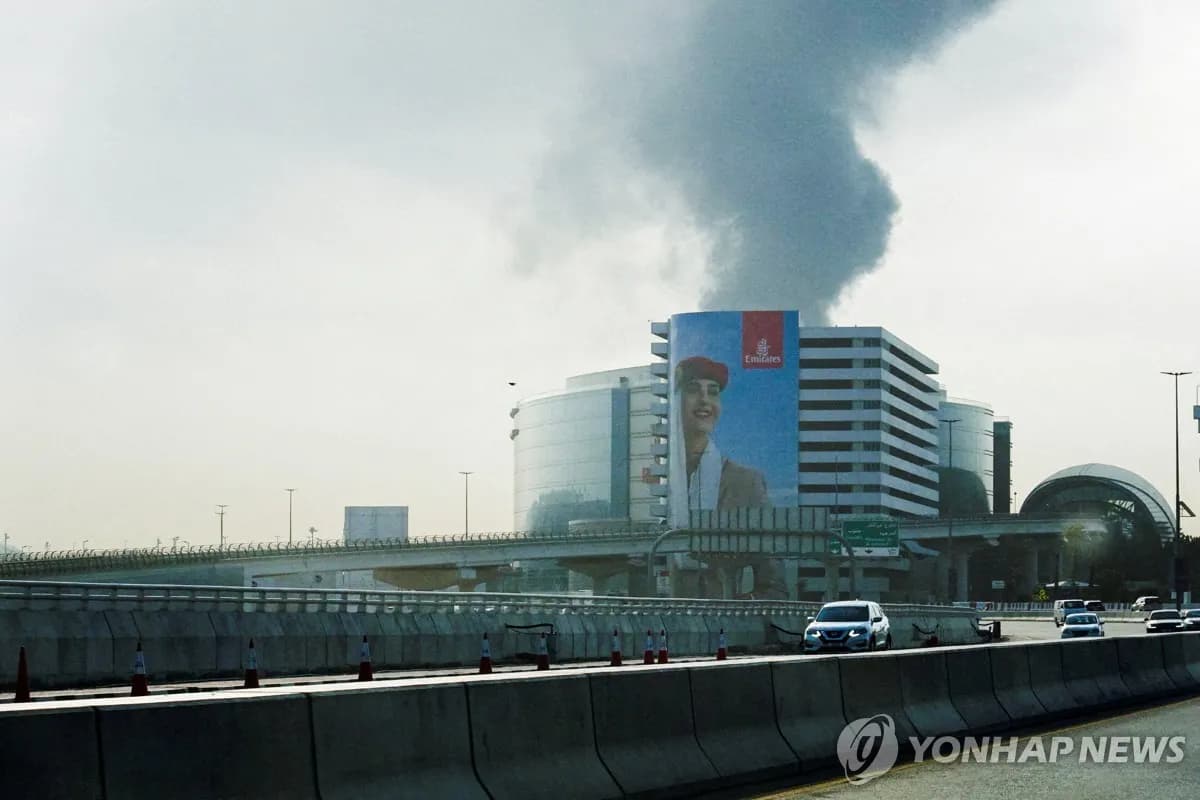
중동행 전세기 전쟁보험료 최고 7천500만원
중동행 전세기 전쟁보험료가 최고 5만달러(7천500만원)로 상승

이란 탄도미사일, 이스라엘 방어망 뚫고 160명 부상
이란 탄도미사일이 이스라엘 방공망을 통과해 160명 부상
Middle East Conflict Drives Manufacturing Outlook to 10-Month Low
The Korea Institute for Industrial Economics & Trade survey shows April manufacturing outlook PSI plummeted to 88, falling below baseline for the first time in 10 months.

Lee Jae-myung Administration Excludes Multi-Home Officials from Real Estate Policymaking
President Lee Jae-myung has ordered the exclusion of multi-home owning public officials from all real estate policy processes.
Southeast Asia Growth Forecasts Cut Amid Oil Price Surge, Threatening Korean Exports
Maybank Research has downgraded ASEAN-6's 2026 growth forecast from 4.8% to 4.5%.

Volkswagen CEO Says Germany Should Learn from China's Industrial Strategy
Volkswagen CEO stated that Germany should learn from China's systematic industrial planning approach.

Reddit Considers Face ID to Block Bots While Maintaining Anonymity
Reddit is considering implementing biometric authentication systems such as Face ID and Touch ID to block AI bots while maintaining anonymity.