Southeast Asia Growth Forecasts Cut Amid Oil Price Surge, Threatening Korean Exports
ASEAN-6 Outlook Drops 0.3%p Due to Hormuz Strait Blockade, Philippines and Vietnam Face Biggest Impact

- •Maybank Research has downgraded ASEAN-6's 2026 growth forecast from 4.8% to 4.5%.
- •The Strait of Hormuz blockade and surging oil prices are raising regional stagflation concerns.
- •Decreased Korean exports to ASEAN and increased inflationary pressure are anticipated.
Southeast Asian Economic Outlook Deteriorates Across the Board
Economic growth forecasts for Southeast Asia are being downgraded across the region amid escalating Middle East tensions and concerns over the Strait of Hormuz blockade. Maybank Research has lowered its 2026 GDP growth forecast for ASEAN-6 (Indonesia, Malaysia, Philippines, Singapore, Thailand, and Vietnam) from 4.8% to 4.5%, a reduction of 0.3 percentage points.
The countries expected to suffer the most severe impact are the Philippines and Vietnam. Both nations saw their growth forecasts cut by 0.4 percentage points each, while Thailand's outlook was lowered by 0.3 percentage points. Singapore's 2026 growth forecast stands at 3.4%.
Stagflation Concerns Triggered by Soaring Oil Prices
Capital Economics analyzes that oil prices exceeding $100 per barrel are delivering a double blow to regional economies. High oil prices increase inflationary pressure while simultaneously expanding fiscal deficits, limiting governments' capacity for economic stimulus.
The Philippines in particular has seen Capital Economics slash its 2026 growth forecast from 4.5% to 3.8%, a significant downward revision of 0.7 percentage points—the largest adjustment in the region. The Philippines has a structure particularly vulnerable to oil price increases due to its heavy dependence on petroleum imports.
Nomura has warned of a regional "stagflation shock," raising the possibility of simultaneous price increases and growth slowdown. Fitch Ratings has also pointed out that India and the Philippines face the greatest risks.
Complex Crisis Created by Hormuz Strait Blockade
The direct cause of these downward revisions is the prolonged U.S.-Israel war with Iran and the effective blockade of the Strait of Hormuz. Disruptions to this strait, through which approximately 20% of global oil shipments pass, have immediate impacts on the global supply chain.
Southeast Asia has many manufacturing-based economies, meaning rising energy prices directly translate into increased production costs. This is compounded by economic slowdowns in major export markets China and the United States, further darkening export prospects.
Maybank Research has also slightly lowered its 2027 forecast from 4.8% to 4.7%. This reflects expectations that the energy crisis will not be resolved in the short term.
Impact on South Korea [AI Analysis]
The Southeast Asian economic slowdown is likely to deliver a direct blow to Korean exports. ASEAN is South Korea's second-largest export destination, accounting for approximately 16% of total exports as of 2024.
Korean flagship export products such as semiconductors, displays, and automobiles are particularly dependent on intermediate goods demand from Southeast Asian manufacturers. Analysis suggests that a 0.3 percentage point decline in regional growth could reduce Korean exports to ASEAN by 1-2%.
A bigger concern is that global supply chain restructuring may be delayed. Korean companies have been relocating production bases to Vietnam, Thailand and other countries to diversify China risks, but growing economic uncertainty in these nations is expected to affect investment decisions.
Rising oil prices also create inflationary pressure for South Korea. With oil import dependence exceeding 95%, a $10 per barrel increase is estimated to worsen the trade balance by approximately $5 billion. Like Southeast Asia, the possibility of exposure to stagflation risks cannot be ruled out.
댓글 (5)
Southeast 정말 대단하네요! 좋은 소식입니다.
좋은 소식에 기분이 좋아지네요.
Asia 소식 반갑습니다. 앞으로가 더 기대됩니다.
이런 긍정적인 뉴스가 더 많았으면 좋겠습니다.
동의합니다. 앞으로가 더 기대됩니다.
More in Global



Latest News
Middle East Conflict Drives Manufacturing Outlook to 10-Month Low
The Korea Institute for Industrial Economics & Trade survey shows April manufacturing outlook PSI plummeted to 88, falling below baseline for the first time in 10 months.

Lee Jae-myung Administration Excludes Multi-Home Officials from Real Estate Policymaking
President Lee Jae-myung has ordered the exclusion of multi-home owning public officials from all real estate policy processes.

Volkswagen CEO Says Germany Should Learn from China's Industrial Strategy
Volkswagen CEO stated that Germany should learn from China's systematic industrial planning approach.

Reddit Considers Face ID to Block Bots While Maintaining Anonymity
Reddit is considering implementing biometric authentication systems such as Face ID and Touch ID to block AI bots while maintaining anonymity.

BTS Tops March Artist Brand Reputation Rankings with First Full Group Comeback in 4 Years
BTS ranked first in the Korean Corporate Reputation Research Institute's March Artist Brand Reputation Rankings based on 99 million data points.

Santo Domingo's Malecón Sports Park Construction Progressing Smoothly
Construction of a soccer field and skate park is progressing smoothly in the Malecón area of Santo Domingo, Dominican Republic.

Pogačar Overcomes Crash to Win Milano-Sanremo, Achieves Four Monument Victories
Tadej Pogačar defeated Tom Pidcock to win Milano-Sanremo, achieving his fourth Monument victory.
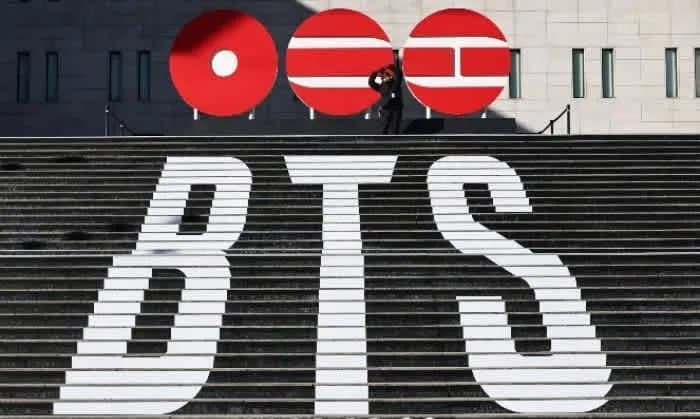
BTS's New Album 'ARIRANG' Sweeps Spotify Global Chart Positions 1-14
BTS's new album 'ARIRANG' monopolized Spotify Global Chart positions 1-14 on its first day, establishing the largest album debut record in K-POP history.