Breaking the Idols of Thought: Middle Eastern Intellectuals on Religion, Reason, and Scientific Thinking
18 Middle Eastern thinkers engage in profound debates on religion, reason, and scientific thought
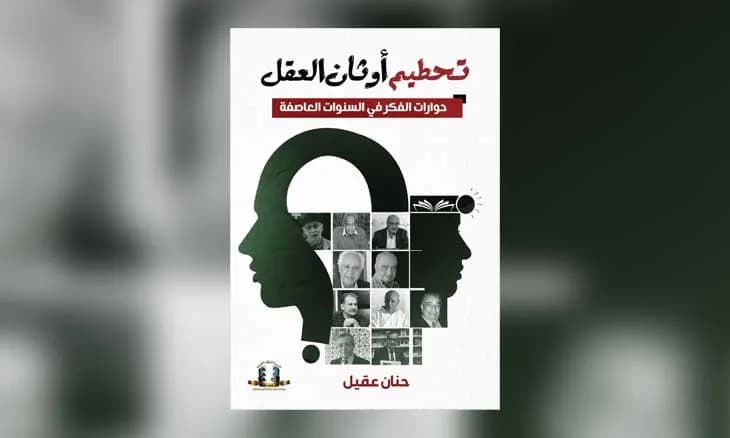
- •A book published in Australia explores the relationship between religion and reason through conversations with 18 Middle Eastern thinkers conducted between 2016 and 2022.
- •Key themes include the sanctification of religious thinking, the possibility of coexistence between secularism and faith, and the influence of Wahhabism.
- •Intellectuals emphasize that establishing scientific thinking and guaranteeing freedom of thought are essential conditions for social development.
Shattering the Idols of Thought
Breaking the Idols of Thought: Conversations with Intellectuals in a Time of Turmoil, published by the Arab Intellectuals Foundation in Sydney, Australia, contains in-depth interviews with 18 thinkers from the Middle East. These conversations, conducted between 2016 and 2022, examine from multiple angles the intellectual crisis faced by Middle Eastern societies after the Arab Spring.
This project, led by researcher Hanan Aqil, is not merely a collection of interviews. The questions posed after thoroughly analyzing each interviewee's major works touch on universal themes: the relationship between religion and reason, and between scientific thinking and faith.
Why Is Religious Thinking Sanctified?
Egyptian thinker Sayyed al-Qimany sharply criticizes "the phenomenon of equating religious thinking with religion itself." He shares his experience of being condemned as if he had attacked religion itself, when he had merely criticized religious interpreters.
Al-Qimany's core argument is clear: scientific methodology is the true path to improvement. He tells those who claim scientific miracles in the Quran that "new scientific discoveries cannot be found in scripture," pointing out that such attempts actually distance people from effort and learning.
Particularly telling is his question to those demanding the application of Sharia (Islamic law): "Does it make sense to apply religious law first when civil rights are not fully guaranteed?"
Can Secularism and Faith Coexist?
Ahmad Subhy Mansour, an Egyptian scholar who sought asylum in the United States, presents a unique concept of "secularism with faith." The Quranism movement he leads interprets Islam as an inherently secular religion.
According to Mansour, the Day of Judgment in Islam means that each individual takes responsibility for choosing their own faith. Therefore, interfering with someone's religious choice is "an invasion of God's domain."
He experienced imprisonment and surveillance in Egypt before settling in the United States after 2001. However, he emphasizes that "ideas cannot be suppressed in the internet age," noting that physical repression cannot stop ideas.
Marxist Thinkers' Reflections
Palestinian-born Salamah Kaileh analyzes why the left failed to gain leadership after the failure of the Arab Spring. He points to a complex combination of factors: the collapse of the Soviet Union, Arab states' reconciliation with Israel, and the rise of fundamentalist forces sponsored by governments.
Jordanian thinker Hisham Ghassib argues that we must start from the work of Marxist scholars like Sadiq Jalal al-Azm, Mahdi Amel, Hussein Muruwwa, and Samir Amin. He maintains that the analytical frameworks they presented remain valid.
The Role and Limits of Intellectuals
One recurring theme in this 340-page book is the definition of a true intellectual. Al-Qimany emphasizes "not the intellectuals spoken of on social media, but intellectuals in the philosophical sense." Only those who have mastered not just the latest scientific developments but also geography and history can be true intellectuals.
Mansour believes that repression of intellectuals is ineffective. "Trials, imprisonment, and publication bans cannot erase ideas. This is especially true in the age of globalization."
The Dilemma of Religious Discourse Reform
Several interviewees take issue with the very expression "religious discourse reform." Mansour calls it a "politically incorrect term." Just as the word "change" can include change for the worse, the word "reform" lacks clear direction.
Instead, he argues that religious reform and political reform cannot be separated. He calls for legislative reform at the constitutional and legal level to remove all elements that restrict freedom of thought and religion.
The Shadow of Wahhabism
Nearly all interviewees point to the negative influence of Wahhabism. They argue that this radical Islamic interpretation has contributed to intellectual regression and the spread of terrorism. However, since the interviews were conducted between 2016 and 2022, recent changes in Saudi Arabia are not reflected.
Questions for Us [AI Analysis]
The tension between religion and reason addressed in this book is not unique to the Middle East. The clash between scientific thinking and traditional belief systems, the possibility of coexistence between secularism and religious values, and the social role of intellectuals are universal questions.
In particular, as the title "Breaking the Idols of Thought" suggests, it has the power to make us reexamine concepts we take for granted - religious modes of thinking, blind obedience to authority, and the absence of critical thinking.
Now that thought control has become impossible in the digital age, each society must consider how to guarantee pluralism and freedom of thought. This fierce debate among Middle Eastern intellectuals is likely to be a starting point for that discussion.
댓글 (2)
Breaking에 대해 더 알고 싶어졌습니다. 후속 기사 부탁드립니다.
기사 잘 봤습니다. 다른 시각의 분석도 읽어보고 싶네요.
More in Life

Beyond Vaccines: Refusal of Newborn Vitamin K Shots Spreads

NASA Restores Historic 80-Year-Old 'Hangar One' at Ames Research Center

NASA X-59 Supersonic Experimental Aircraft Completes Second Test Flight Successfully

Australian Researchers Develop World's First Quantum Battery Prototype

The Ocean Was the True Driver of 3 Million Years of Climate Change

Heat Waves to Cause 700,000 Premature Deaths by 2050… Climate Crisis Undermines Exercise Habits
Latest News

이스라엘, 헤즈볼라 무기 통로 레바논 다리 공습
이스라엘군, 헤즈볼라 무기 통로 레바논 다리 공습

중동행 전세기 전쟁보험료 최고 7천500만원
중동행 전세기 전쟁보험료가 최고 5만달러(7천500만원)로 상승
이란 탄도미사일, 이스라엘 방어망 뚫고 160명 부상
이란 탄도미사일이 이스라엘 방공망을 통과해 160명 부상

Middle East Conflict Drives Manufacturing Outlook to 10-Month Low
The Korea Institute for Industrial Economics & Trade survey shows April manufacturing outlook PSI plummeted to 88, falling below baseline for the first time in 10 months.

Lee Jae-myung Administration Excludes Multi-Home Officials from Real Estate Policymaking
President Lee Jae-myung has ordered the exclusion of multi-home owning public officials from all real estate policy processes.

Southeast Asia Growth Forecasts Cut Amid Oil Price Surge, Threatening Korean Exports
Maybank Research has downgraded ASEAN-6's 2026 growth forecast from 4.8% to 4.5%.

Volkswagen CEO Says Germany Should Learn from China's Industrial Strategy
Volkswagen CEO stated that Germany should learn from China's systematic industrial planning approach.

Reddit Considers Face ID to Block Bots While Maintaining Anonymity
Reddit is considering implementing biometric authentication systems such as Face ID and Touch ID to block AI bots while maintaining anonymity.