U.S. Big Banks Begin Earnings Season, Setting Direction for 2026 Financial Markets
Major Banks Including JPMorgan and Bank of America to Report Q4 2025 Results Starting January 13

- •Major U.S. banks begin reporting Q4 2025 earnings on January 13, marking the first major assessment since the Fed's rate cuts.
- •JPMorgan achieved over $10 billion in investment banking fees but faces scrutiny over its $105 billion AI investment burden.
- •Bank of America expects 5-7% NII growth due to rate sensitivity, while Wells Fargo enters its first expansion phase after asset cap removal.
First Major Test After Fed's 'Soft Landing'
Major U.S. banks will begin reporting their fourth quarter 2025 earnings starting January 13. This earnings season represents the first major checkpoint since the Federal Reserve successfully achieved a 'soft landing' after lowering the federal funds rate to 3.50-3.75% by the end of 2025.
Wall Street analysts view this earnings season as an 'inflection point' for the U.S. financial sector. As the two-year high interest rate environment comes to an end, banks are shifting their growth strategies from defending net interest income (NII) to expanding lending and investment banking (IB) fees.
Major Banks to Report Results January 13-14
The earnings release schedule is as follows:
- January 13 (Tuesday): JPMorgan Chase (NYSE: JPM)
- January 14 (Wednesday): Bank of America (NYSE: BAC), Wells Fargo (NYSE: WFC), Citigroup (NYSE: C)
These banks experienced significant environmental changes throughout 2025, including a recovery in the M&A market to $5.1 trillion, surging investment banking fees, and the Fed's rate-cutting cycle as inflation approached the 2% target.
With Fed Chair Jerome Powell's term expiring in May 2026, uncertainty about future monetary policy direction has become a key focal point for this earnings season.
JPMorgan: Massive Investment Burden vs. Dominant Scale
JPMorgan solidified its industry-leading position by surpassing $10 billion in investment banking fees in 2025. Analysts expect earnings per share (EPS) of $4.87 to $5.01.
However, the bank announced plans for $105 billion in operating expenses for 2026. A significant portion will be allocated to artificial intelligence (AI) infrastructure development and integrating the Apple Card business acquired from Goldman Sachs. How CEO Jamie Dimon explains revenue growth relative to technology investments is the market's key focus.
Bank of America: Expected to Benefit from Rate Sensitivity
Bank of America projected confidence by setting a 5-7% net interest income (NII) growth target for 2026. With the most rate-sensitive structure among major U.S. banks, BAC is benefiting from recovering loan demand, with corporate lending up 13% by the end of 2025.
CEO Brian Moynihan has maintained that the yield curve's steepening in favor of long-term loans provides sufficient margin improvement potential, despite deposit rate competition pressures.
Wells Fargo: First Expansion Phase After Asset Cap Removal
Wells Fargo entered its first major expansion phase after the $1.95 trillion asset cap imposed in 2018 was lifted. This regulatory constraint resulted from the fake accounts scandal, and since its removal, Wells Fargo has actively pursued lending expansion and new customer acquisition.
The market is watching how Wells Fargo will unleash its previously suppressed growth potential and how quickly it can recover market share compared to competitors.
Market Awaits 'Aggressive Expansion' Signals
In the first week of January 2026, bank stocks showed gains outpacing the S&P 500 index, reflecting investor optimism. The market has already priced in a 'pro-growth' environment and seeks confirmation that this earnings season can support those expectations.
Key factors include NII stabilization, loan growth momentum, and investment banking fee growth based on M&A recovery. If major banks provide conservative guidance or cost increases offset revenue improvements, short-term correction pressure cannot be ruled out.
Banking Industry Trajectory: 2022-2026 Inflection Points
In 2022, the Fed declared war on inflation and rapidly raised rates. Banks enjoyed a short-term boom of net interest margin (NIM) expansion, but loan demand plummeted.
In March 2023, the Silicon Valley Bank (SVB) collapse highlighted liquidity crises at small and mid-sized banks, intensifying deposit concentration at large banks. Subsequently, the Fed maintained a 'higher-for-longer' stance, supporting bank profitability.
In the second half of 2025, as inflation stabilized and recession fears eased, the Fed implemented rate cuts. Banks now face the challenge of offsetting NII reduction pressure through loan expansion and fee income diversification.
2026 will be the year when this transformation must be proven through actual results. This is the period when banks must demonstrate that operational capabilities and technology investments translate into profits, rather than relying simply on interest rate benefits.
Future Outlook [AI Analysis]
The U.S. banking industry in 2026 is likely to experience a transition from 'defense' to 'offense'. If the Fed's rate-cutting trajectory continues, corporate lending and mortgage markets will recover, leading to loan asset growth.
Particularly, if the M&A market maintains or expands from 2025 levels, fee income for major investment banks like JPMorgan and Goldman Sachs is expected to increase further. Conversely, small and mid-sized banks may face profitability pressures due to deposit rate competition and widening scale gaps with large banks.
AI investment is expected to significantly improve the banking industry's cost efficiency and customer experience in the long term, but massive capital expenditures may burden stock prices in the short term. The technology investment-to-profitability roadmap presented by each bank during this earnings season will be a key variable influencing investor sentiment.
The possibility of Fed chair replacement also increases policy uncertainty. If a new chair returns to a tightening stance, banks' expansion strategies will require inevitable readjustment.
댓글 (2)
기사 잘 봤습니다. 다른 시각의 분석도 읽어보고 싶네요.
Banks에 대해 더 알고 싶어졌습니다. 후속 기사 부탁드립니다.
More in Economy

Middle East Conflict Drives Manufacturing Outlook to 10-Month Low

Lee Jae-myung Administration Excludes Multi-Home Officials from Real Estate Policymaking
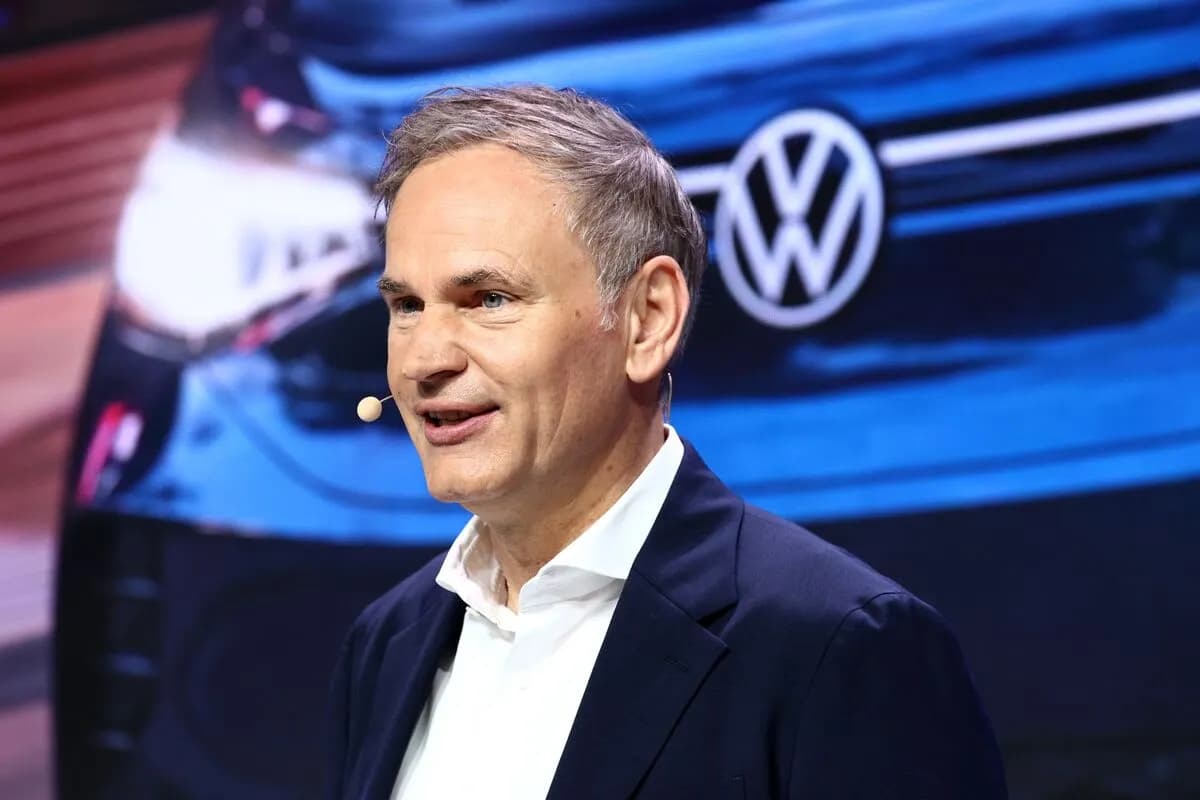
Volkswagen CEO Says Germany Should Learn from China's Industrial Strategy

Russia Anticipates Economic Gains from US-Iran Conflict
U.S. Federal Reserve Unveils Bank Capital Regulation Modernization Plan
Federal Reserve Announces Enforcement Actions Against Two Former Bank Employees
Latest News

이스라엘, 헤즈볼라 무기 통로 레바논 다리 공습
이스라엘군, 헤즈볼라 무기 통로 레바논 다리 공습

중동행 전세기 전쟁보험료 최고 7천500만원
중동행 전세기 전쟁보험료가 최고 5만달러(7천500만원)로 상승

이란 탄도미사일, 이스라엘 방어망 뚫고 160명 부상
이란 탄도미사일이 이스라엘 방공망을 통과해 160명 부상

Southeast Asia Growth Forecasts Cut Amid Oil Price Surge, Threatening Korean Exports
Maybank Research has downgraded ASEAN-6's 2026 growth forecast from 4.8% to 4.5%.

Reddit Considers Face ID to Block Bots While Maintaining Anonymity
Reddit is considering implementing biometric authentication systems such as Face ID and Touch ID to block AI bots while maintaining anonymity.

BTS Tops March Artist Brand Reputation Rankings with First Full Group Comeback in 4 Years
BTS ranked first in the Korean Corporate Reputation Research Institute's March Artist Brand Reputation Rankings based on 99 million data points.

Santo Domingo's Malecón Sports Park Construction Progressing Smoothly
Construction of a soccer field and skate park is progressing smoothly in the Malecón area of Santo Domingo, Dominican Republic.

Pogačar Overcomes Crash to Win Milano-Sanremo, Achieves Four Monument Victories
Tadej Pogačar defeated Tom Pidcock to win Milano-Sanremo, achieving his fourth Monument victory.