How American Gardens Became World-Class Destinations
From 19th-Century Private Estates of Industrial Magnates to Cultural Heritage Sites Attracting Visitors Across Continents

- •Major American botanical gardens evolved from 19th-century industrialists' private estates into world-class cultural heritage sites.
- •Longwood, the New York Botanical Garden, Biltmore, and others were designed as integrated spaces combining science, art, and engineering.
- •These gardens are now evolving as centers for ecological conservation and education, offering models for sustainable urban development.
The History of American Gardens: Beginning with Private Collections
America's major botanical gardens have a distinct origin story compared to typical public parks. Starting in the late 19th and early 20th centuries, railroad tycoons and industrial magnates invested enormous capital to create private estates.
These visionaries sought to create comprehensive works of art that combined rare plant collections, cutting-edge landscaping techniques, and architectural excellence—not merely walking paths. Over time, these private estates opened to the public and have evolved into outdoor museums encompassing science, aesthetics, and history.
Longwood Gardens: Where Engineering Meets Art
Longwood Gardens in Pennsylvania began in 1906 when Pierre du Pont purchased a farm to preserve its old-growth trees. Going beyond simple conservation, he created large-scale conservatories, fountains, and water gardens that blended Italian and French traditions.
Longwood Gardens symbolizes the technical and artistic ambitions of early 20th-century American landscaping through its vast acreage, complex hydraulic systems, and plant collections gathered from around the world. Today, it remains one of the largest botanical gardens globally.
New York Botanical Garden: A Scientific Hub in the City
The New York Botanical Garden in the Bronx was established with science and education as its core mission. Its founders, inspired by London's Kew Gardens, sought to create a research institution of equivalent caliber in New York.
The Enid A. Haupt Conservatory serves as the architectural centerpiece and is now designated a New York City landmark. The garden simultaneously fulfills three roles—research, exhibition, and urban ecosystem preservation—becoming a model for green spaces within major cities.
Biltmore Estate: Pioneer of Natural Resource Management
Biltmore Estate in North Carolina represents one of landscape architect Frederick Law Olmsted's masterworks. Olmsted designed not just the gardens but the entire surrounding forest as a manageable natural environment.
Italian terraces, rose gardens, and waterways formed part of an integrated, self-sustaining system. Biltmore is currently designated a National Historic Landmark and attracts millions of visitors annually as a major tourist destination.
Huntington and Getty: Cross-Cultural Dialogue
The Huntington in California unifies botany, art, and cultural diversity. Different traditions—from Japanese gardens to desert landscapes—coexist within a single space.
In contrast, the Getty Center Central Garden demonstrates a contemporary approach. Here, landscaping is treated as an artistic medium equal to architecture, functioning as a living installation that transforms with seasons and time.
Historical Context: Legacy of the Gilded Age
These gardens were created during the Gilded Age of the late 19th to early 20th centuries, when wealth accumulated through industrialization flowed into cultural and scientific patronage.
The era's wealthy elite created large private estates mimicking European aristocratic traditions, which later transitioned into public assets. This transformation process formed a crucial pillar of today's American cultural heritage.
Future Implications [AI Analysis]
America's historic gardens are evolving beyond mere tourist attractions into multifaceted spaces for urban ecosystem preservation, scientific research, and cultural education.
In an era of accelerating climate change and urbanization, these spaces are likely to serve as hubs for biodiversity conservation and environmental education. As reference models for contemporary landscape design, they will also inspire sustainable urban planning.
Considering that similar multifaceted cultural spaces are being developed worldwide, the operational models and historical experiences of American gardens are expected to continue functioning as global benchmarks.
댓글 (3)
간결하면서도 핵심을 잘 정리한 기사네요.
좋은 의견이십니다.
American에 대해 더 알고 싶어졌습니다. 후속 기사 부탁드립니다.
More in Culture & Art

Government Provides 1 Billion Won in Emergency Disaster Funds for Daejeon Factory Fire Recovery

Existence Blooming Through Vulnerability: Massimo Lagrotteria Solo Exhibition

Milan Design Week 2026: Hotels Transform into Laboratories of Dreams
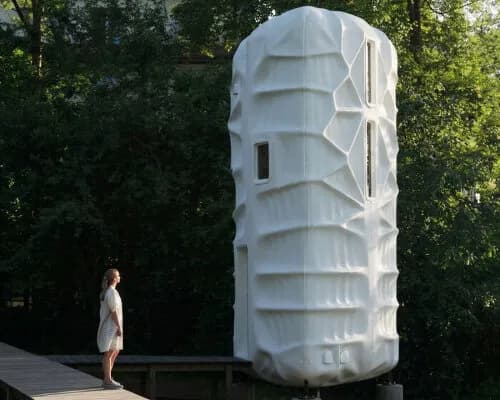
The Future of Living on the Moon, Mars, and Deep Sea: Houses Designed by Architects

15,000-Year-Old Clay Beads Made by Children Rewrite Prehistoric Art History

Reuters Reports Banksy's Identity Revealed, Reigniting Anonymity Debate
Latest News

이스라엘, 헤즈볼라 무기 통로 레바논 다리 공습
이스라엘군, 헤즈볼라 무기 통로 레바논 다리 공습

중동행 전세기 전쟁보험료 최고 7천500만원
중동행 전세기 전쟁보험료가 최고 5만달러(7천500만원)로 상승

이란 탄도미사일, 이스라엘 방어망 뚫고 160명 부상
이란 탄도미사일이 이스라엘 방공망을 통과해 160명 부상

Middle East Conflict Drives Manufacturing Outlook to 10-Month Low
The Korea Institute for Industrial Economics & Trade survey shows April manufacturing outlook PSI plummeted to 88, falling below baseline for the first time in 10 months.

Lee Jae-myung Administration Excludes Multi-Home Officials from Real Estate Policymaking
President Lee Jae-myung has ordered the exclusion of multi-home owning public officials from all real estate policy processes.

Southeast Asia Growth Forecasts Cut Amid Oil Price Surge, Threatening Korean Exports
Maybank Research has downgraded ASEAN-6's 2026 growth forecast from 4.8% to 4.5%.

Volkswagen CEO Says Germany Should Learn from China's Industrial Strategy
Volkswagen CEO stated that Germany should learn from China's systematic industrial planning approach.

Reddit Considers Face ID to Block Bots While Maintaining Anonymity
Reddit is considering implementing biometric authentication systems such as Face ID and Touch ID to block AI bots while maintaining anonymity.