Venice Commission Issues Specific Recommendations on Ukraine's Three Judicial Reform Bills
Analysis of Judicial Discipline and Integrity Vetting Reform Proposals…Urges Implementation of European Court of Human Rights Rulings
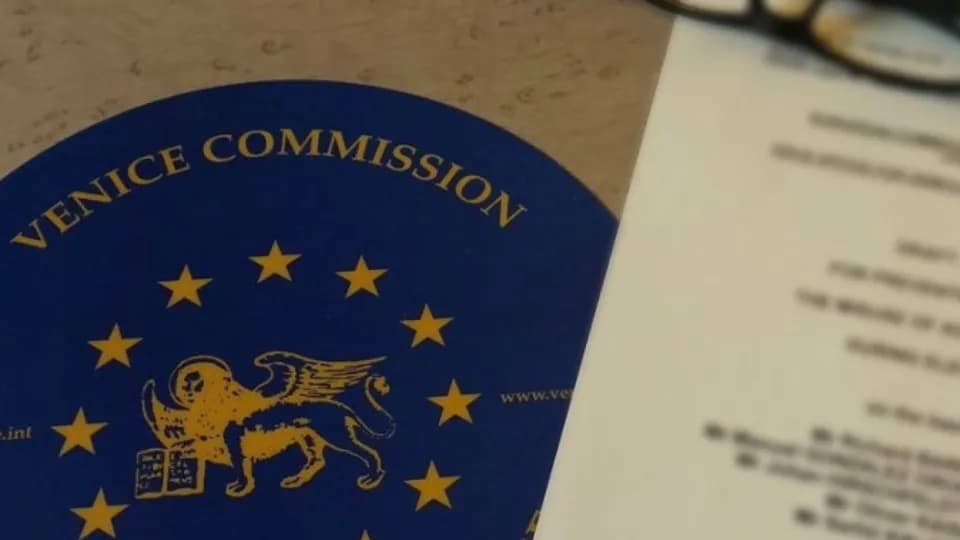
- •The Venice Commission adopted opinions on three Ukrainian bills concerning judicial discipline and integrity vetting procedures.
- •The European Court of Human Rights has criticized Ukraine's vague disciplinary regulations and procedural deficiencies since 2013.
- •The Commission identified the lack of a comprehensive judicial reform approach and Supreme Court external oversight as key issues.
International Advisory Opinion on Judicial Reform Bills
The Venice Commission adopted opinions on three Ukrainian judicial reform bills during its plenary session on October 9-10. These opinions analyze draft laws No. 13137, 13137-1, and 13165-2, which address improvements to judicial discipline procedures and reforms to the integrity declaration verification system.
The Commission prepared these opinions jointly with the Council of Europe's Directorate General of Human Rights and Rule of Law (DGI). In July, online consultations were held with stakeholders including Ukraine's High Council of Justice, Parliament's Legal Policy Committee, government and opposition MPs, the Supreme Court, and the High Qualification Commission of Judges.
Background of the Judicial Trust Crisis [AI Analysis]
Ukraine has pursued judicial reform for years but has failed to resolve persistent problems of corruption, politicization, and low public trust. Despite the 'Judicial System Development Strategy 2021-2023,' adopted through Presidential Decree 231/2021, setting public trust restoration as a strategic goal, confidence levels remain low.
The European Court of Human Rights (ECHR) has identified violations of the right to a fair trial in Ukraine's judicial discipline procedures through multiple rulings since 2013. Notably, in the case of Oleksandr Volkov v. Ukraine, the Court found four violations of Article 6 and one violation of Article 8 of the European Convention on Human Rights, calling for urgent structural reforms.
Structural Deficiencies in the Discipline System
Key issues identified by the ECHR include:
1. Vague Definition of Disciplinary Grounds
- Excessively broad and unclear provisions such as 'breach of oath'
- Lack of specific interpretative guidance in legislation or case law
- Absence of statute of limitations undermining legal certainty
2. Lack of Procedural Fairness
- Absence of independent and impartial disciplinary bodies
- Inadequate effective judicial review mechanisms
- Defects in parliamentary voting procedures
- Flawed composition of adjudicating panels
3. Risk of Arbitrary Dismissal
- Instances of unpredictable and arbitrary judicial dismissals
- Potential violations of privacy rights (Convention Article 8)
Continuous International Monitoring
Ukraine's judicial reform has been examined from multiple angles. Reports by the Council of Europe's Group of States against Corruption (GRECO) and opinions by the Venice Commission and DGI have accumulated, forming international consensus on directions for improvement.
These bills represent attempts to incorporate such international recommendations into legislation. Key elements include adjustments to the High Council of Justice's powers, procedural improvements for the High Qualification Commission of Judges, and strengthening of integrity declaration verification systems.
Supreme Court Monitoring Controversy
In this opinion, the Venice Commission also addressed the issue of Supreme Court judicial monitoring with international expert participation. The Commission previously expressed concern that Ukraine's judicial reform lacks a comprehensive approach.
This points to the risk that piecemeal legislation could undermine the coherence and efficiency of the entire judicial system. A key issue is how external oversight of Supreme Court judges can be reconciled with the principle of judicial independence.
Future Reform Directions [AI Analysis]
If the Venice Commission's recommendations are incorporated into legislation, Ukraine's judicial system is likely to undergo the following changes:
Short-term Tasks
- Establish clear legal definitions of disciplinary grounds
- Create independent disciplinary bodies and increase procedural transparency
- Strengthen objectivity of integrity declaration verification systems
Medium to Long-term Tasks
- Develop systematic reform roadmap for the entire judiciary
- Establish judicial appointment and evaluation systems meeting international standards
- Ensure continued participation of civil society and international experts
However, pursuing structural reforms during wartime presents significant challenges for Ukraine. Given that judicial reform is a core condition in European Union accession negotiations, technical and financial support from the international community will be essential.
댓글 (2)
Venice에 대해 더 알고 싶어졌습니다. 후속 기사 부탁드립니다.
기사 잘 봤습니다. 다른 시각의 분석도 읽어보고 싶네요.
More in Special

The Corsican Mafia Exposed: Breaking a Century of Silence

AI-Generated Fake Person Used to Sell Dubai Flight Seats

Facebook Groups Traded Endangered Species Using Code Language — Indonesian Broker Network Exposed

G6 Alliance Declares Support for Hormuz Strait Security... Reverses Stance Under Trump Pressure
Seoul's Average Monthly Rent Surpasses 1.51 Million Won as Soaring Official Property Prices Trigger 'Housing Cost Bomb'

Rihanna Tops Spotify Without New Album for 10 Years, Proving Power of Catalog
Latest News

이스라엘, 헤즈볼라 무기 통로 레바논 다리 공습
이스라엘군, 헤즈볼라 무기 통로 레바논 다리 공습

중동행 전세기 전쟁보험료 최고 7천500만원
중동행 전세기 전쟁보험료가 최고 5만달러(7천500만원)로 상승

이란 탄도미사일, 이스라엘 방어망 뚫고 160명 부상
이란 탄도미사일이 이스라엘 방공망을 통과해 160명 부상

Middle East Conflict Drives Manufacturing Outlook to 10-Month Low
The Korea Institute for Industrial Economics & Trade survey shows April manufacturing outlook PSI plummeted to 88, falling below baseline for the first time in 10 months.

Lee Jae-myung Administration Excludes Multi-Home Officials from Real Estate Policymaking
President Lee Jae-myung has ordered the exclusion of multi-home owning public officials from all real estate policy processes.

Southeast Asia Growth Forecasts Cut Amid Oil Price Surge, Threatening Korean Exports
Maybank Research has downgraded ASEAN-6's 2026 growth forecast from 4.8% to 4.5%.

Volkswagen CEO Says Germany Should Learn from China's Industrial Strategy
Volkswagen CEO stated that Germany should learn from China's systematic industrial planning approach.

Reddit Considers Face ID to Block Bots While Maintaining Anonymity
Reddit is considering implementing biometric authentication systems such as Face ID and Touch ID to block AI bots while maintaining anonymity.