The ‘liberation’ justification for the war in Iran, the cruel reality behind it
The gap between the logic of liberalization promoted by US-Israeli military operations and the civilian casualties
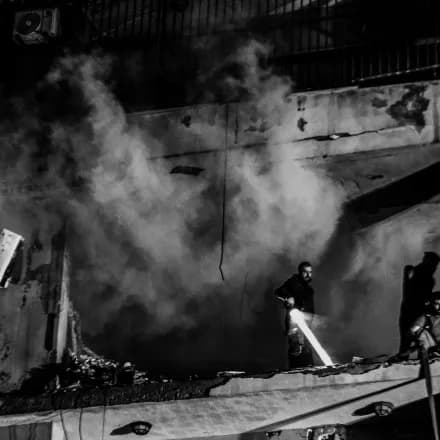
- •3rd week of US-Israeli airstrikes on Iran, 1,400 dead, 18,000 injured
- •War expands to Lebanon, more than 1 million people displaced, ground war imminent
- •Contrary to the cause of ‘liberation’, the contradictions are deepening as the destruction of civilian infrastructure and casualties increase rapidly.
Key facts: 3 weeks of war, soaring human casualties
The US and Israel airstrikes on Iran are entering their third week. According to multiple foreign media, at least 1,400 people have been killed and more than 18,000 injured in the military operation that began on February 28. Social infrastructure, including hospitals, pharmaceutical factories, educational facilities, and private energy facilities, is being extensively destroyed.
In response, Iran launched missiles and drones toward mainland Israel and U.S. military bases in the region, and is also targeting the energy infrastructure of nearby Gulf Arab countries.
Lebanon is also receiving heavy blows from Israel. About 900 people died and more than 1 million were displaced. Israel began preparing for a ground war targeting Hezbollah in southern Lebanon, and an entire apartment complex in central Beirut collapsed due to a missile attack.
Why is this important: The contradictions of war in the name of ‘liberation’
The most notable thing about this military operation is that the United States and Israel are packaging it as a 'humanitarian intervention for the liberation of the Iranian people.' Even former Crown Prince Reza Pahlavi, successor to Iran's former monarchy, is joining in to spread this narrative.
Related industry analysts point out the falsity of this logic. One peace strategy expert said, “Israeli journalists were saying, ‘The Iranians wanted us to come in and liberate them,’” and asked, “My answer was, ‘Are we going to liberate their bodies from their souls?’”
In fact, this operation is only increasing civilian casualties without achieving its goal of replacing the Iranian regime. The fundamental contradiction of carrying out ‘human rights intervention’ through large-scale human rights violations is being revealed.
When did this trend begin: 20 years of lobbying for regime change in Iran?
Pressure for ‘regime change’ on Iran is not something new. For about 20 to 25 years since the Iraq War in 2003, the lobby pushing for regime change in Iran has been continuously active in the United States.
There is an analysis that the 2003 Iraq War is evaluated as a disaster from the United States' perspective, but is considered a 'success' from the perspective of Israel, Saudi Arabia, and the UAE. One peace strategist explained, “If Iraq had become a liberal democracy, it would have challenged Israel on the Palestine issue and Saudi Arabia on the definition of Islam.”
In this context, there is an analysis that the current attack on Iran is aimed at 'turning it into a failed state' rather than regime change. Former Crown Prince Pahlavi does not actually need to be a democratic leader, he just needs to drive Iran into a state of division and neutralize the threat to Israel.
Lebanon: The tragedy of political scapegoating
The situation in Lebanon is even more serious. A local reporter in Beirut said, “Lebanese people are suffering now, and there is no one trying to save them.” “They know they are just political pawns who always end up in the worst situation with the Palestinians.”
The biggest concern is the possibility that Israel will occupy the area south of the Litani River, take away residents' homes and land, and build settlements. The pattern that was repeated in the past occupied territories could be repeated in Lebanon.
Future outlook [AI analysis]
This war is likely to expand in many ways.
Risk of regional spread: If the ground war in Lebanon begins in earnest, there is a possibility that the conflict in the region will further intensify. Iran's attacks on energy facilities in Gulf countries are already causing instability in the global energy market, and if this trend continues, it is likely to lead to a surge in international oil prices.
Limitations of the ‘liberation’ narrative: As civilian casualties accumulate, the persuasiveness of the cause of ‘humanitarian intervention’ is likely to weaken. This could lead to changes in public opinion in the United States and the departure of allies.
Risks of a failed nationalization strategy: If the state functions of Iran or Lebanon collapse, there is a possibility that the paradox of a power vacuum leading to the expansion of extremist forces, as seen in Iraq, Libya, and Syria, will be repeated. This is a pattern in which short-term security interests result in long-term regional instability.
In the end, the historical lesson is once again confirmed that a war in the name of 'liberation' actually produces destruction, not liberation.
댓글 (3)
팩트에 기반한 냉정한 판단이 필요한 시점입니다.
중요한 포인트를 짚으셨네요.
이 사안은 신중하게 접근해야 한다고 봅니다.
More in Global


Latest News

당정, 석유 최고가격제 손실 보전을 추경에 반영키로
당정이 석유 최고가격제 손실을 추경에 반영하기로 결정

6년 전 세 살 딸 살해한 30대 친모 구속송치
경찰, 6년 전 세 살 딸 살해 혐의 30대 친모를 구속송치

中企 수입 나프타의 80% 이상이 중동산…공급망 위기 심화
중소기업 수입 나프타의 80% 이상이 중동산으로 공급 의존도 높음

미·이란 긴장 한 달, 금융시장 요동…장기화 우려
미·이란 갈등으로 증시 변동성 확대, 코스피 6천 고지 후 등락

미·이란 전쟁 한 달, 미국 전문가 "종전·확전 기로"
미·이란 전쟁 1개월 도래, 종전·확전 기로 평가

미·이란 전쟁 1개월, 한국 안보·공급망 취약점 노출
미·이란 전쟁 장기화로 한국 안보·경제 취약점 노출