This year alone, 4.5 million girls are at risk of female genital mutilation... joint statement from heads of six UN agencies
Although the incidence has been reduced by half through 30 years of efforts, it is unclear whether the 2030 goal will be achieved due to reduced international support.
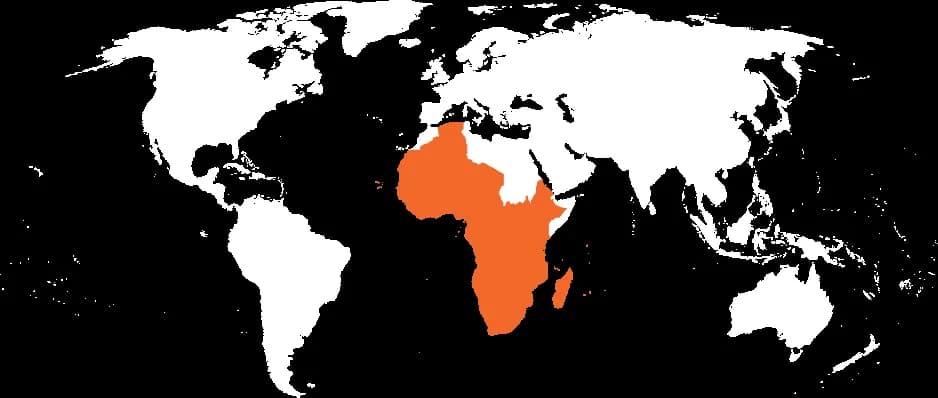
- •By 2026, approximately 4.5 million girls are at risk of female genital mutilation, and 230 million women around the world are living with the aftereffects.
- •Three decades of efforts have reduced the incidence by half, but progress is threatened by dwindling international support and claims of 'medicalized circumcision'.
- •The UN emphasized that with an investment of $2.8 billion, 20 million cases could be prevented and $28 billion in economic effects could be achieved.
Six UN agencies issue joint statement to eradicate female genital mutilation
To mark the International Day for the Elimination of Female Genital Mutilation on February 6, the heads of six UN agencies, including the United Nations Population Fund (UNFPA), UNICEF, the Office of the High Commissioner for Human Rights, UN Women, the World Health Organization (WHO), and UNESCO, issued a joint statement. They warned that approximately 4.5 million girls will be at risk of Female Genital Mutilation (FGM) in 2026 alone, many of them under the age of five.
Currently, more than 230 million women and girls worldwide are living with the lifelong aftereffects of female genital mutilation. The United Nations said this practice seriously damages women's physical and mental health and costs about $1.4 billion (about 2 trillion won) in treatment costs every year.
30 years of effort, achieving tangible results
This statement from the United Nations emphasized that the international community's efforts to eradicate female genital mutilation over the past 30 years are achieving tangible results. In countries where female genital mutilation is widespread, about two-thirds of the population support abolishing the practice.
What is particularly noteworthy is that half of the total improvements achieved since 1990 have occurred in the past 10 years. This has reduced the proportion of girls who experience female genital mutilation from one in two to one in three. The United Nations said health education, engaging religious and community leaders, and using traditional and social media have proven to be effective strategies.
Female genital mutilation, why is it a problem?
Female circumcision is a traditional practice in Africa, the Middle East, and parts of Asia, and involves the removal of part or all of the external female genitalia. The United Nations defined this as a clear violation of human rights and emphasized that it cannot be justified on any basis.
This practice causes lifelong health problems, including serious bleeding, infections, infertility, birth complications, and psychological trauma. The United Nations Sustainable Development Goals (SDGs) set the goal of completely eradicating female genital mutilation by 2030.
Achievement threatened by reduction of international support
However, UN agencies have expressed concern that achieving the 2030 goal is becoming uncertain. This is because financial support for health, education, and child protection programs is decreasing as global investment and support decline.
Of particular concern is the spread of the dangerous claim that female genital mutilation is permitted when performed by a doctor or medical practitioner. So-called 'medicalized female genital mutilation' is presenting a new obstacle to efforts to eradicate the practice.
The United Nations has warned that without sufficient and predictable funding, there is a risk that community outreach programs will be scaled back, frontline services will be weakened and progress rolled back.
Economic effect 10 times greater than investment
According to the United Nations, every dollar invested in ending female genital mutilation generates a tenfold return. Specifically, if you invest $2.8 billion (about 4 trillion won), you can prevent 20 million cases of female genital mutilation and get a return on investment of $28 billion (about 40 trillion won).
The UN presented support for community-led movements, strengthening education, and providing comprehensive medical, psychological, and legal support for survivors as key strategies.
Impact on Korea
Korea is not a country where female genital mutilation is practiced, but as a member of the international community, it is not indifferent to this issue. As a member of the United Nations, the Korean government has a responsibility to contribute to achieving the SDGs, and has supported programs to protect women's human rights in the fields of international humanitarian assistance and development cooperation.
In addition, there is a need to raise awareness and establish a support system for immigrant and refugee women living in Korea who have experienced female genital mutilation or are at risk.
Future outlook [AI analysis]
In order to achieve the 2030 goal, it appears that financial support from the international community will need to be significantly expanded over the remaining four years. However, as major donor countries continue to cut their foreign aid budgets, it is highly likely that achieving the goal will become difficult.
On the positive side, changes in community awareness are accelerating, so there is a possibility that the voluntary abolition movement at the grassroots level will spread. In particular, activities to raise awareness among young people through social media are being effective, so it is expected that the practice will gradually disappear along with the generational change.
However, the spread of claims of ‘medicalized female genital mutilation’ is a cause for concern. It appears that the international community needs to respond clearly and strengthen medical ethics education.
댓글 (4)
This 관련 기사 잘 읽었습니다. 유익한 정보네요.
year에 대해 더 알고 싶어졌습니다. 후속 기사 부탁드립니다.
좋은 의견이십니다.
간결하면서도 핵심을 잘 정리한 기사네요.
More in Global
Election Banner Crisis Looms as Middle East Naphtha Shortage Hits Minor Parties

4 out of 10 Industrial Deaths Due to Falls...Over 200 Workers Die Annually from Workplace Falls
18 Arrested at Palestine Support Protest Outside London Police Headquarters
Iran-backed Houthis Join War with Attack Against Israel

Pope Leo XIV Warns 'War Is Result of Idolatry of Power and Money' During Monaco Visit

Pro-Israel Extremist Arrested for Molotov Cocktail Attack Attempt on Palestinian Activist's Home in New York
Latest News

Scotland Suffer Shock Defeat to Japan Ahead of World Cup Return
Scotland rugby team suffers defeat to Japan with poor performance ahead of World Cup

Iran Crisis Fuels Market Volatility Amid Oil Price Concerns
Global and domestic markets face volatility from Iran-triggered oil crisis

Former UK Minister Josh Simons Resigns Over Journalist Investigation Controversy
Former UK Minister Josh Simons resigns over journalist investigation controversy

11-Year-Old Lebanese Boy Killed in Israeli Strike Buried Amid Tears and Defiance
11-year-old Jawad Younes and uncle Ragheb killed in Israeli strike on Lebanon

US 'Looksmaxxing' Influencer Clavicular Arrested on Battery Charges in Florida
Looksmaxxing influencer Clavicular (Peters) arrested in Florida on battery charges

Zelensky Visits Gulf States as Iran Strikes Ukrainian Drone Defense Facility in UAE
Iran strikes Ukrainian drone defense facility in UAE during President Zelensky's Gulf tour