AI, Data Centers, and Broadband Networks Reshape Nigeria's ICT Industry in 2025
Emergence of Agentic AI and Tier III Data Centers Lay Foundation for Technological Self-Reliance
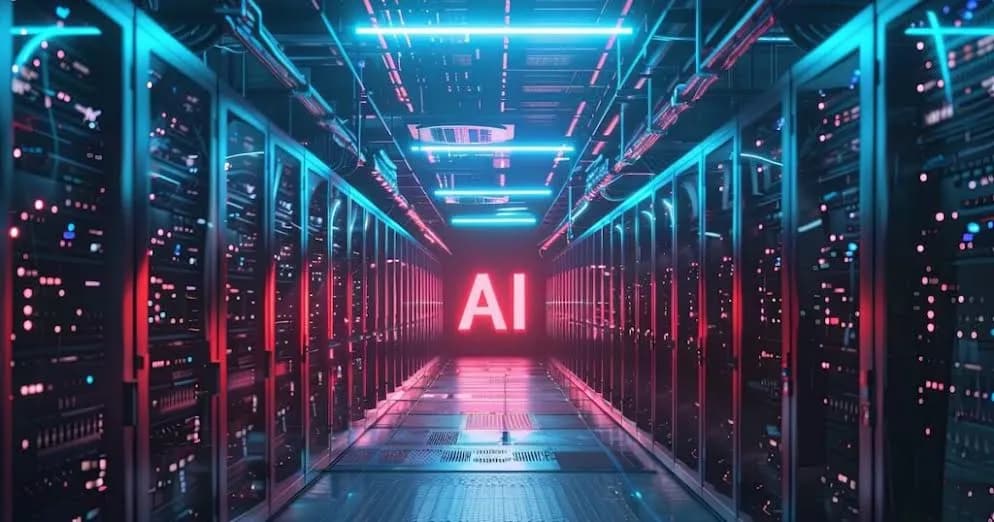
- •Nigeria's ICT industry in 2025 was restructured around agentic AI, Tier III data centers, and broadband network expansion.
- •Microsoft provided AI training to 350,000 people through the AI National Capacity Initiative, with cumulative training participants exceeding 4 million since 2021.
- •Nigeria's data centers increased to 16, with 10 concentrated in Lagos, and the largest-scale Kasi Cloud is scheduled for launch in the first half of 2026.
Nigeria Finds Breakthrough Through Technology Amid Economic Crisis
In 2025, Nigeria's Information and Communication Technology (ICT) industry underwent rapid restructuring centered on three pillars: artificial intelligence (AI), broadband networks, and cloud data centers. Despite rising unemployment due to the economic crisis, technology-based startups turned this into an opportunity, developing innovative solutions in payment and connectivity sectors.
Local media THISDAYLIVE reported that agentic AI, Internet of Things (IoT), broadband connectivity, and the influx of Tier III cloud data centers served as key factors determining the direction of Nigeria's ICT sector.
Agentic AI Drives Startup Solution Advancement
Agentic AI emerged as the most prominent technology in Nigeria's tech ecosystem in 2025. Unlike traditional AI that simply responds to commands, agentic AI represents a next-generation AI paradigm that autonomously sets goals, formulates plans, and executes tasks with minimal human intervention.
The core of this technology lies in Multi-Agent Systems. Instead of a single model handling all tasks, each agent is responsible for specific subtasks while an orchestration engine coordinates them. This enabled financial payment platforms to process fraud detection, customer authentication, and transaction approval in parallel, while connectivity solutions automated network optimization and incident response.
Nigerian tech startups significantly improved their existing solutions by leveraging agentic AI. A payment startup executive stated, "After implementing agentic AI, transaction processing speed improved by 40%, and fraud detection rates increased by 25%."
Microsoft Provides AI Training to 350,000 People
Alongside infrastructure development, talent cultivation progressed rapidly. Microsoft announced that it provided AI training to over 350,000 Nigerians through the AI National Capacity Initiative (AINSI) program in collaboration with the Nigerian Federal Government, Data Science Nigeria, and Lagos Business School.
This is part of a digital education partnership that began in 2021, with cumulative training participants exceeding 4 million. Abideen Yusuf, Country Manager for Microsoft Nigeria and Ghana, emphasized, "Nigeria cannot afford to wait. AI is reshaping every industry, and the nations that build capacity fastest will lead. Large-scale capacity development is essential to seize the opportunities AI presents."
Tier III Data Center Influx Drives Rapid Cloud Infrastructure Growth
In 2025, Nigeria experienced a Tier III cloud data center boom. Major data center operators including Rack Centre, Open Access Data Centre (OADC), and Digital Realty Nigeria expanded their facilities centered in Lagos.
Notably, Kasi Cloud, under construction in the Lekki area, is Nigeria's largest cloud data center and is scheduled for launch in the first half of 2026. Currently, approximately 16 data centers operate in Nigeria, with 10 concentrated in Lagos State.
| Item | 2024 | 2025 | Change |
|---|---|---|---|
| Number of Data Centers | 12 | 16 | +33% |
| Lagos Concentration | 8 (67%) | 10 (63%) | +2 |
| Tier III Proportion | 40% | 75% | +35%p |
Tier III data centers guarantee 99.982% availability with annual downtime limited to under 1.6 hours. Equipped with dual power supplies, N+1 cooling systems, and concurrently maintainable structures, they have become essential infrastructure for financial, telecommunications, and cloud service providers.
Broadband Network Expansion Accelerates Digital Divide Resolution
Improvement in broadband connectivity was also a major achievement of the ICT industry in 2025. The Nigerian Communications Commission (NCC) successfully increased national broadband penetration from 45% to 58%, while rural 4G coverage expanded from 32% to 47%.
This resulted from the government's National Broadband Plan 2020-2025, with public-private partnership (PPP) projects proving effective alongside private telecommunications operators' infrastructure investments. Improved broadband accessibility became the foundation for the expansion of remote education, e-commerce, and digital financial services.
[AI Analysis] Strategic Investment for Technological Self-Reliance Expected to Continue
Nigeria's 2025 ICT achievements proved that growth momentum can be secured through technology even amid economic crisis, going beyond simple technology adoption. Particularly noteworthy is the early adoption of cutting-edge technologies like agentic AI to address domestic challenges.
In 2026, cloud computing capabilities are likely to be further strengthened with the launch of Kasi Cloud. Data centers are expected to spread to other regions such as Abuja and Port Harcourt to alleviate Lagos concentration.
AI talent cultivation is also expected to continue. Microsoft's AINSI program has raised its 2026 target to 500,000 people, and global big tech companies including Google and IBM are reportedly considering expanding their Nigerian education programs.
However, structural problems such as unstable power supply, foreign exchange shortages, and regulatory uncertainty remain. With over 60% of data center operating costs spent on diesel generator fuel, transitioning to renewable energy and stabilizing the power grid are urgent challenges.
Nevertheless, Nigeria's trend of leading technological innovation as Africa's largest ICT market is expected to continue for the foreseeable future. A population exceeding 200 million, young tech workforce, and vibrant startup ecosystem are powerful assets for long-term growth.
댓글 (3)
AI 관련 기사 잘 읽었습니다. 유익한 정보네요.
그 부분은 저도 궁금했습니다.
Data에 대해 더 알고 싶어졌습니다. 후속 기사 부탁드립니다.
More in this series
More in AI & Tech

Czech Drone Factory Fire Under Investigation for Terrorism

Trump Slams NATO Allies as 'Cowards' Over Strait of Hormuz Refusal
Google Unveils Gemini 3.1 Flash-Lite Optimized for High-Volume Processing

From Go AI to Life Sciences: AlphaGo's 10-Year Journey
Google DeepMind Unveils Framework for Measuring AGI Evolution

Perplexity Launches 'Comet' AI Browser for iPhone
Latest News

Santo Domingo's Malecón Sports Park Construction Progressing Smoothly
Construction of a soccer field and skate park is progressing smoothly in the Malecón area of Santo Domingo, Dominican Republic.

Beyond Vaccines: Refusal of Newborn Vitamin K Shots Spreads
Half of newborns at an Idaho hospital did not receive vitamin K injections due to parental refusal.

US Military Strikes Iranian Facilities Threatening Strait of Hormuz
US military strikes Iranian underground missile facilities near the Strait of Hormuz

The Corsican Mafia Exposed: Breaking a Century of Silence
Citizens in Corsica, France have begun publicly denouncing the mafia problem that has been taboo for decades.

UFC 313: Jones vs. Aspinall Heavyweight Title Fight Confirmed
UFC 313 confirmed for March 8: Jon Jones vs. Tom Aspinall heavyweight title fight

Black Combat: A New Leap for Korean MMA Promotion
Black Combat is rapidly growing as one of the top three domestic MMA promotions, securing a young fan base through digital marketing

Russia Anticipates Economic Gains from US-Iran Conflict
US-Iran tensions drive international oil prices up, increasing Russia's energy export revenues

Gas Sprayer Detected at BTS Comeback Concert Venue Metal Detector
Woman in her 50s caught carrying gas sprayer at BTS comeback concert venue