Artemis 2 Crew Witnesses 53-Minute Solar Eclipse from Beyond the Moon
NASA's Orion spacecraft captures unprecedented solar corona footage free of Earth's atmospheric interference
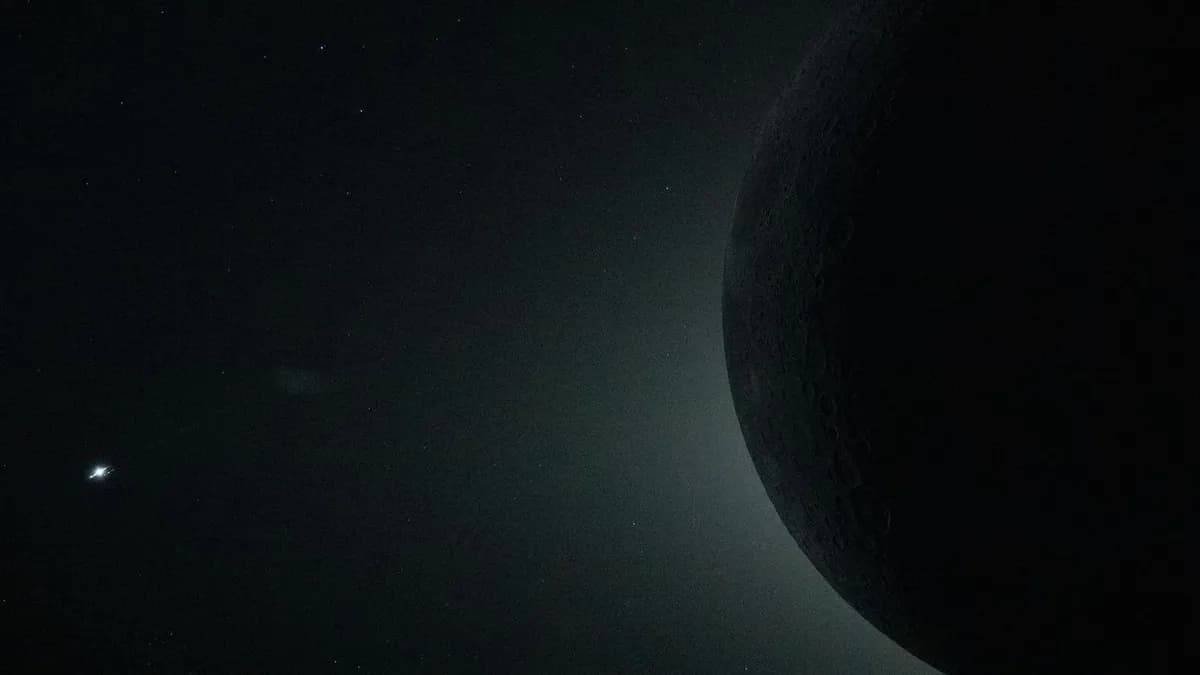
- •Artemis 2's Orion spacecraft observed a 53-minute solar eclipse during its far-side lunar flyby.
- •Captured free of atmospheric interference, the footage reveals detailed solar corona structure.
- •NASA scientists are analyzing whether the observed halo results from the corona, zodiacal light, or both.
The Sun Disappears Behind the Moon
The crew of NASA's Artemis 2 mission experienced the longest crewed solar eclipse in history during their far-side lunar flyby. On April 6, as the Orion spacecraft passed behind the moon, the sun was fully obscured for approximately 53 minutes. NASA recently released a timelapse video documenting the event.
The footage compresses nearly an hour of totality into a brief sequence, capturing the moment the moon gradually covered the sun, leaving only the solar corona — the sun's outer atmosphere — visible as a glowing halo. "As the sun disappears behind the moon, it reveals a glowing halo around the lunar disk," NASA officials wrote on Instagram. "Science team members are investigating whether this effect is due to the corona, zodiacal light, or a combination of the two."
A View Impossible from Earth
The scientific value of this observation extends well beyond a visual spectacle. Solar eclipses seen from Earth typically last only a few minutes, as the moon's shadow sweeps quickly across the surface. Artemis 2's trajectory, however, allowed the spacecraft to travel alongside the moon through its shadow, extending the totality window to an unprecedented 53 minutes.
The absence of Earth's atmosphere was equally significant. On the ground, atmospheric scattering and distortion limit the clarity of coronal features. Orion's solar array wing cameras captured brightness changes and fine structural details within the corona without such interference. As totality progressed, the reduction in scattered sunlight also revealed background stars, planets, and earthshine — the faint illumination of the lunar surface by sunlight reflected off Earth.
Commander Reid Wiseman, pilot Victor Glover, and mission specialists Christina Koch and Jeremy Hansen experienced a temporary communications blackout with Earth during the observation. As the spacecraft entered the moon's shadow on the far side, contact with mission control was severed — yet this same isolation created ideal conditions for extended coronal study.
Apollo's Shadow and a Half-Century Return
Astronauts observing solar eclipses near the moon is not entirely new. Apollo crews in lunar orbit occasionally witnessed the sun being blocked by the moon. However, their low lunar orbits meant they transited the moon's shadow quickly, leaving little time for sustained observation.
Artemis 2 follows a large elliptical trajectory designed to maximize time beyond the moon's near side. Originally intended to test deep-space communications, life support systems, and crew adaptation, this orbital design incidentally produced the longest crewed solar eclipse observation in human spaceflight history.
Coronar research has traditionally relied on ground-based eclipse expeditions or dedicated solar observatories in space, such as ESA's Solar Orbiter. A crewed spacecraft conducting prolonged coronal observation near the moon, however, represents a rare and largely untested frontier.
What Comes Next [AI Analysis]
The timelapse data collected during Artemis 2's eclipse is likely to serve as a new reference dataset for solar corona research. The corona's heating mechanism — why it is hundreds of times hotter than the solar surface — remains one of the central unsolved problems in solar physics. Fifty-three minutes of uninterrupted, atmosphere-free observation may yield new clues when cross-referenced with data from existing space-based solar monitors.
NASA's ongoing analysis of the corona-versus-zodiacal-light distinction could also refine standards for deep-space optical observation. Zodiacal light, produced by sunlight scattering off interplanetary dust, is notoriously difficult to study from Earth due to atmospheric interference.
On a broader programmatic level, as Artemis 3 and subsequent missions move toward sustained lunar surface operations near the south pole, crews are likely to encounter periodic lunar eclipse conditions. Proposals for lunar-surface solar observatories are expected to gain traction, potentially supplementing — and in some respects surpassing — the capabilities of space-based solar telescopes.
댓글 (63)
흥미로운 주제입니다. 주변에도 공유해야겠어요.
Crew에 대해 더 알고 싶어졌습니다. 후속 기사 부탁드립니다.
좋은 의견이십니다.
그 부분은 저도 궁금했습니다.
그 부분은 저도 궁금했습니다.
Witnesses 관련 기사 잘 읽었습니다. 유익한 정보네요.
그 부분은 저도 궁금했습니다.
기사 잘 봤습니다. 다른 시각의 분석도 읽어보고 싶네요.
그 부분은 저도 궁금했습니다.
간결하면서도 핵심을 잘 정리한 기사네요.
흥미로운 주제입니다. 주변에도 공유해야겠어요.
Crew에 대해 더 알고 싶어졌습니다. 후속 기사 부탁드립니다.
좋은 의견이십니다.
그 부분은 저도 궁금했습니다.
좋은 의견이십니다.
Witnesses 관련 기사 잘 읽었습니다. 유익한 정보네요.
기사 잘 봤습니다. 다른 시각의 분석도 읽어보고 싶네요.
간결하면서도 핵심을 잘 정리한 기사네요.
공감합니다. 참고하겠습니다.
흥미로운 주제입니다. 주변에도 공유해야겠어요.
Crew에 대해 더 알고 싶어졌습니다. 후속 기사 부탁드립니다.
Witnesses 관련 기사 잘 읽었습니다. 유익한 정보네요.
공감합니다. 참고하겠습니다.
그 부분은 저도 궁금했습니다.
기사 잘 봤습니다. 다른 시각의 분석도 읽어보고 싶네요.
그 부분은 저도 궁금했습니다.
간결하면서도 핵심을 잘 정리한 기사네요.
흥미로운 주제입니다. 주변에도 공유해야겠어요.
그 부분은 저도 궁금했습니다.
Crew에 대해 더 알고 싶어졌습니다. 후속 기사 부탁드립니다.
그 부분은 저도 궁금했습니다.
그 부분은 저도 궁금했습니다.
Witnesses 관련 기사 잘 읽었습니다. 유익한 정보네요.
기사 잘 봤습니다. 다른 시각의 분석도 읽어보고 싶네요.
간결하면서도 핵심을 잘 정리한 기사네요.
좋은 의견이십니다.
흥미로운 주제입니다. 주변에도 공유해야겠어요.
그 부분은 저도 궁금했습니다.
그 부분은 저도 궁금했습니다.
좋은 의견이십니다.
Crew에 대해 더 알고 싶어졌습니다. 후속 기사 부탁드립니다.
Witnesses 관련 기사 잘 읽었습니다. 유익한 정보네요.
기사 잘 봤습니다. 다른 시각의 분석도 읽어보고 싶네요.
그 부분은 저도 궁금했습니다.
그 부분은 저도 궁금했습니다.
간결하면서도 핵심을 잘 정리한 기사네요.
좋은 의견이십니다.
좋은 의견이십니다.
공감합니다. 참고하겠습니다.
흥미로운 주제입니다. 주변에도 공유해야겠어요.
Crew에 대해 더 알고 싶어졌습니다. 후속 기사 부탁드립니다.
Witnesses 관련 기사 잘 읽었습니다. 유익한 정보네요.
기사 잘 봤습니다. 다른 시각의 분석도 읽어보고 싶네요.
간결하면서도 핵심을 잘 정리한 기사네요.
공감합니다. 참고하겠습니다.
흥미로운 주제입니다. 주변에도 공유해야겠어요.
좋은 의견이십니다.
공감합니다. 참고하겠습니다.
좋은 의견이십니다.
Crew에 대해 더 알고 싶어졌습니다. 후속 기사 부탁드립니다.
Witnesses 관련 기사 잘 읽었습니다. 유익한 정보네요.
좋은 의견이십니다.
좋은 의견이십니다.
More in Special

[Error] Source Article Content Could Not Be Loaded
Primordial Black Holes From the Big Bang May Be the Key to Dark Matter

Original Article Content Could Not Be Loaded

UN Launches 'Client Challenge' to Reshape Global Partnerships

UN Pushes 'Client Challenge' to Rethink How International Aid Is Delivered

795 Hungarian Government Passwords Leaked Online Across 12 Ministries
Latest News

US-Iran Nuclear Talks Collapse — Vance Says Iran Refused to Commit to Denuclearization
US-Iran nuclear talks collapse; Vance announces Iran refused to commit to giving up nuclear weapons

Two Firefighters Killed in Wando Factory Fire — Explosion 3 Minutes After Re-entry
Two firefighters killed while fighting a fire at a seafood processing plant in Wando, South Jeolla Province

President Lee Jae-myung Directly Calls Israeli Actions 'Crime,' Sparking Controversy
President Lee Jae-myung publicly labeled Israel's military actions in Gaza as 'criminal'

SK하이닉스, 1분기 영업이익 40조 시대 임박…TSMC와 격차 20%p 벌린다
SK하이닉스 1분기 영업이익 40조원 돌파 전망, 영업이익률 최대 70% 추산
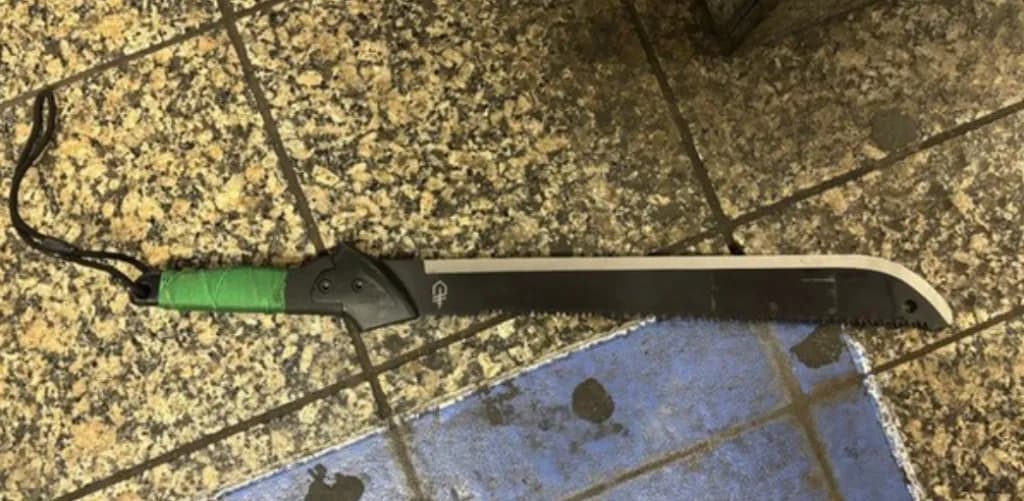
Machete-wielding man fatally shot by police at NYC's Grand Central after slashing 3
A man with a machete attacked three passengers on a subway platform at NYC's Grand Central Terminal

페레이라, UFC 커뮤니티 어워드 수상…링 밖 '또 다른 챔피언'
알렉스 페레이라가 UFC 327 방송 중 2026 포레스트 그리핀 커뮤니티 어워드를 수상했다.

금감원, 스페이스X 공모주 국내 배정 법률 검토 착수
금감원이 미래에셋증권의 스페이스X 공모주 국내 배정 추진과 관련해 법률 검토에 착수했다.
![[속보] 美·이란 핵 협상 결렬…밴스 부통령 '합의 없이 귀국'](/_next/image?url=https%3A%2F%2Fstorage.googleapis.com%2Farayonews-images%2Farticles%2Fbreaking-breaking-us-iran-nuclear-talks-collapse-vance-returns-withou-2604120227-b681ab34.webp&w=3840&q=75)
[BREAKING] U.S.-Iran Nuclear Talks Collapse — Vance Returns Without Deal
VP Vance returns to U.S. after failing to reach agreement, leaving final proposal with Iran