Australia's Albanese Government Pursues Multi-Layered Strategy with 2035 Carbon Reduction Target
Climate Policy Simultaneously Targets Voters, Industry, and International Community
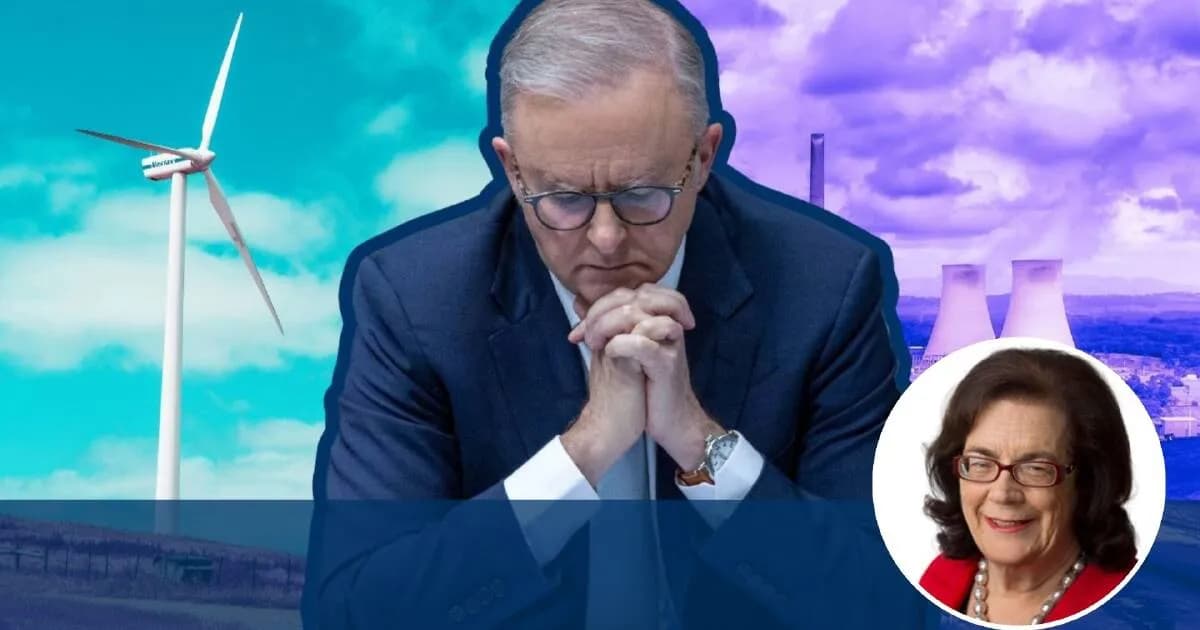
- •Australia's Albanese government is employing a multi-layered strategy simultaneously targeting voters, industry, and the international community with its 2035 carbon reduction target announcement.
- •Australia has experienced two decades of political conflict over climate policy, and this target is assessed as an attempt to join the international mainstream.
- •South Korea maintains close ties with Australia in LNG, hydrogen, and mineral supply chains, and Australia's policy changes are expected to impact clean energy cooperation.
A Balanced Strategy Targeting Multiple Stakeholders
The 2035 greenhouse gas reduction target announced by Australia's Albanese government is being assessed as a product of political calculation aimed at simultaneously engaging multiple audiences. Professor Michelle Grattan of the University of Canberra and political columnist recently pointed out in an analytical piece that this goal-setting goes beyond simple environmental policy and has the character of a multi-layered communication strategy.
As one of the world's major coal exporters with high per capita carbon emissions, Australia faces the challenge of balancing international pressure for climate action against domestic industry resistance.
Why This Target Matters
The 2035 target is significant as it represents Australia's medium-term roadmap within the Paris Agreement implementation process. Australia has already upwardly revised its 2030 target, and the 2035 goal serves as a waypoint toward achieving carbon neutrality by 2050.
Through this target, the government aims to deliver different messages to three distinct groups:
1. Environmentally conscious voters — Signaling serious commitment to climate action
2. Mining and energy industries — Reassurance of gradual adjustment rather than radical transformation
3. International community — Demonstrating willingness to fulfill responsibilities as a Paris Agreement compliant nation
Particularly, Australia has experienced intensified domestic political conflict over climate policy in recent years, making it a major variable in regime changes. The Albanese Labor government needs to walk a fine line, differentiating itself from the previous conservative government while minimizing industry backlash.
Historical Context of Australian Climate Policy
Australia's climate policy has been a political battleground for the past two decades.
2007 — Kevin Rudd's Labor government signals policy shift by ratifying the Kyoto Protocol
Early 2010s — Julia Gillard government attempts carbon tax introduction → abolished following conservative opposition
2015 — Paris Climate Agreement signed, Australia participates
2019 — Scott Morrison's conservative government maintains pro-coal industry stance
2022 — Albanese Labor government takes office, raises 2030 target (43% reduction from 2005 levels)
2025 — 2035 medium-term target announced, solidifying medium to long-term roadmap
Within this trajectory, the current announcement is interpreted as an attempt to shed the stigma of being a 'climate-skeptical developed nation' and join the international mainstream.
Impact on South Korea
South Korea maintains close ties with Australia in LNG, hydrogen, and mineral supply chains. Australia's strengthened carbon reduction policy is expected to have the following impacts:
- Accelerated clean hydrogen cooperation — Australia has significant renewable energy-based hydrogen production potential, with South Korea emerging as a major import partner
- Structural changes in iron ore and coal exports — Long-term coal export decline anticipated, iron ore linkable with low-carbon steelmaking technology
- Strengthened climate diplomacy cooperation — Increased possibility of Korea-Australia coordination in Asia-Pacific regional climate cooperation frameworks
Future Outlook [AI Analysis]
Whether the Albanese government's target-setting translates into actual policy will likely depend heavily on the 2026 general election results. Climate policy remains a polarized issue in Australian politics, and target revisions could be inevitable if the conservative opposition regains power.
However, with the spread of global carbon border adjustment mechanisms (CBAM) and improved renewable energy economics, industry resistance is weakening compared to the past. Particularly as mining companies begin investing in carbon-neutral steel and hydrogen businesses, the feasibility of policy transition is increasing.
International scrutiny is also a crucial variable. If Australia fails to keep its promises, it could face weakened voice at climate summits (COP) and disadvantageous positions in trade negotiations with Europe and the United States.
Ultimately, this target will only be meaningful when supported by practical implementation plans and legislation beyond political rhetoric.
댓글 (3)
흥미로운 주제입니다. 주변에도 공유해야겠어요.
기사 잘 봤습니다. 다른 시각의 분석도 읽어보고 싶네요.
간결하면서도 핵심을 잘 정리한 기사네요.
More in Global




Latest News

당정, 석유 최고가격제 손실 보전을 추경에 반영키로
당정이 석유 최고가격제 손실을 추경에 반영하기로 결정

6년 전 세 살 딸 살해한 30대 친모 구속송치
경찰, 6년 전 세 살 딸 살해 혐의 30대 친모를 구속송치

中企 수입 나프타의 80% 이상이 중동산…공급망 위기 심화
중소기업 수입 나프타의 80% 이상이 중동산으로 공급 의존도 높음

미·이란 긴장 한 달, 금융시장 요동…장기화 우려
미·이란 갈등으로 증시 변동성 확대, 코스피 6천 고지 후 등락

미·이란 전쟁 한 달, 미국 전문가 "종전·확전 기로"
미·이란 전쟁 1개월 도래, 종전·확전 기로 평가

미·이란 전쟁 1개월, 한국 안보·공급망 취약점 노출
미·이란 전쟁 장기화로 한국 안보·경제 취약점 노출