Bulgaria Joins Eurozone as 21st Member in 2026
Euro officially adopted from January 1, completing monetary integration 19 years after EU accession
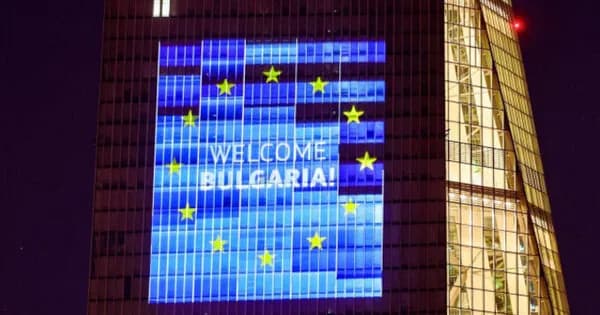
- •Bulgaria became the 21st eurozone member on January 1, 2026, officially adopting the euro.
- •The currency board system introduced in 1997 has ended, with conversion proceeding at a fixed rate of 1 euro = 1.95583 leva.
- •The central bank will provide permanent free exchange services, with integration into the 350 million-person eurozone market expected to enhance economic stability.
Bulgaria Officially Adopts the Euro
Bulgaria has become the 21st member of the eurozone, fully replacing its national currency, the lev, with the euro starting January 1, 2026. This decision marks a significant milestone in Bulgaria's European integration process, with EU institutions evaluating it as a path toward enhanced economic stability, predictability, and long-term development.
A fixed exchange rate of 1 euro = 1.95583 leva applies uniformly to all institutions, businesses, and citizens, eliminating the risk of arbitrary devaluation. Throughout January, both euros and leva can be used, but change will be given only in euros. From February 1, the euro becomes the sole legal tender.
19-Year Journey to Monetary Integration
This euro adoption fulfills a commitment originating from the EU accession treaty signed on April 25, 2005. Since joining the EU on January 1, 2007, Bulgaria has gradually prepared for monetary integration, including joining the EU Banking Union on October 1, 2020.
The decisive phase began on February 25, 2025, when Bulgaria requested convergence reports from the European Central Bank (ECB) and the European Commission. On June 4, both institutions determined that Bulgaria met all nominal criteria, including fiscal soundness, long-term interest rates, price stability, and exchange rate requirements. Final political approval came on July 8 through formal consent from the EU Economic and Financial Affairs Council and the European Parliament.
End of the 1997 Currency Board System
With euro adoption, Bulgaria officially terminates the currency board system introduced on July 1, 1997. This system was established to stabilize the currency following the hyperinflation and banking collapse of 1996-1997, and had pegged the lev's value to the German mark (later the euro) for approximately 29 years.
All Bulgarian bank accounts (current, savings, deposits) and loans are automatically converted free of charge on January 1, with IBAN numbers remaining unchanged. From this date, all card payments and cash withdrawals will be made exclusively in euros.
Lev Exchange Schedule and Procedures
Until June 30, 2026, all banks and post offices in areas without banks will exchange leva for euros at the fixed rate without fees. Post offices can exchange up to 1,000 leva per person per day without prior notice; amounts between 1,000 and 10,000 leva require advance request.
After June 30, banks and post offices may charge fees, and after December 31, they may completely discontinue the service. However, the Bulgarian National Bank will provide free exchange services permanently through its branches in Sofia, Plovdiv, Burgas, Varna, and Pleven, as well as designated cash service centers.
Significance of Joining the Eurozone Economic Area
The euro is the world's second most widely used currency. Authorities emphasize benefits including reduced transaction and exchange costs, improved investment predictability, enhanced travel convenience, and better price transparency for consumers and businesses.
Bulgarian euro coins will circulate alongside coins from other eurozone countries in a market of over 350 million people. The national side of Bulgarian coins features Paisius of Hilendar, St. Ivan of Rila, and the Madara Rider, with cent denominations labeled as 'stotinki'. Regardless of issuing country, all euro coins are legal tender throughout the eurozone.
Future Outlook [AI Analysis]
Bulgaria's eurozone accession is likely to accelerate monetary integration among Eastern European countries. Similar paths are expected for EU members such as Romania and Croatia.
In the short term, consumer confusion and price adjustments may occur during the lev-to-euro transition. However, medium to long-term prospects point to enhanced economic stability through elimination of foreign exchange risks and increased intra-regional trade. Particularly notable cost reductions are expected in tourism and logistics sectors.
Nevertheless, reduced flexibility in responding to economic cycles due to loss of monetary policy autonomy may remain a policy challenge going forward.
댓글 (5)
흥미로운 주제입니다. 주변에도 공유해야겠어요.
Joins 관련 기사 잘 읽었습니다. 유익한 정보네요.
좋은 의견이십니다.
Eurozone에 대해 더 알고 싶어졌습니다. 후속 기사 부탁드립니다.
그 부분은 저도 궁금했습니다.
More in Economy

당정, 석유 최고가격제 손실 보전을 추경에 반영키로

미·이란 긴장 한 달, 금융시장 요동…장기화 우려

뉴욕증시 3대 지수 동반 상승…이란 휴전 기대감

Elon Musk's X recruits a cryptocurrency expert as head of design... ‘X Money’ launch imminent

BitGo-GK Sync plans to build ‘tokenized deposit’ infrastructure for banks

The other side of prediction markets: Ethical dilemmas of cryptocurrency platforms dealing in war and terrorism
Latest News
"간부 잘 아는데 교통비 좀" 휴가 군인들 돈 뜯은 50대 구속
50대 A씨가 휴가 중인 군인들에게 부대 간부를 아는 척 접근해 돈을 사취

英 옥토퍼스, 이란 전쟁 이후 태양광 판매 50% 증가
이란 전쟁 이후 영국 옥토퍼스의 태양광 판매량 50% 증가
당정 "추경, 지방·취약계층에 더 지원되는 방식으로"
당정이 지방자치단체와 취약계층 중심의 추경 편성 방침 재확인
어머니 폭행하고 금팔찌 빼앗은 30대 아들 경찰에 붙잡혀
어머니 폭행 후 금팔찌 빼앗은 30대 남성 체포
아이티 갱단 폭력사태로 10개월간 5천명 이상 사망
아이티에서 지난 10개월간 갱단 폭력으로 5천명 이상 사망
서방 정보당국 "러시아, 우크라이나 전쟁 후 이란에 드론·식량 공급"
서방 정보당국, 러시아의 이란 드론·식량 공급 작업 거의 완료 파악

6년 전 세 살 딸 살해한 30대 친모 구속송치
경찰, 6년 전 세 살 딸 살해 혐의 30대 친모를 구속송치

中企 수입 나프타의 80% 이상이 중동산…공급망 위기 심화
중소기업 수입 나프타의 80% 이상이 중동산으로 공급 의존도 높음