China Issues Travel Advisory for Japan: Four Key Reasons Behind the Warning
Rising Anti-Foreign Sentiment and Safety Concerns Under Koichi Hagiuda Administration
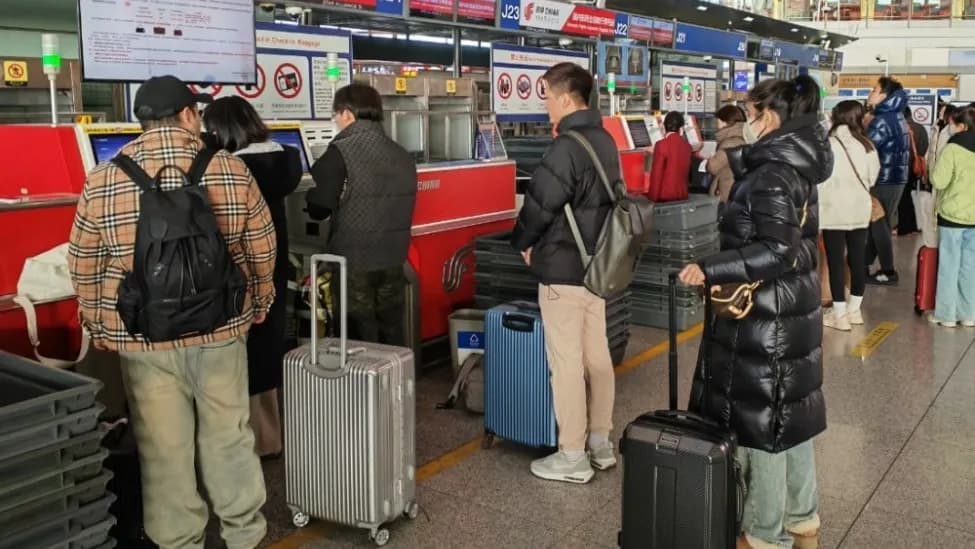
- •The Chinese government has issued travel and study advisories for Japan, citing increased crimes targeting Chinese citizens and rising anti-foreign discrimination.
- •The Koichi Hagiuda administration's 'Japan First' ideology, tightened visa regulations, and surging travel costs are key factors behind the warning.
- •The deterioration of China-Japan relations is reshaping East Asia's tourism landscape, presenting both opportunities and lessons for South Korea.
China Issues Consecutive Travel Advisories for Japan
The Chinese government has issued a series of warnings regarding travel and study in Japan for its citizens. On November 16, China's Ministry of Education issued a study abroad advisory, citing "frequent crimes targeting Chinese citizens in Japan," and the Ministry of Culture and Tourism issued a travel warning on the same day. Previously, the Ministry of Foreign Affairs had also advised that "Chinese citizens should refrain from visiting Japan for the time being."
While some interpret this as diplomatic pressure, the Chinese government maintains it is a necessary measure to protect its citizens. Indeed, several assault incidents targeting Chinese tourists in Japan this year have heightened safety concerns.
Background of the Warning: Four Core Reasons
China's advisory on visiting Japan can be summarized into four main points:
1. Spread of Political Hostility into Society
As Japan's new administration under Prime Minister Koichi Hagiuda (reportedly) promotes the "China threat theory" and strengthens military expansion, political anti-China sentiment is spreading to civil society. China warns of "the possibility that political incitement could translate into discrimination and harassment throughout society."
Assault incidents targeting Chinese tourists in Japan this year support these concerns. Chinese authorities warn that "if government-level conflicts intensify, there is a risk that individuals with extremist tendencies may target Chinese people."
2. Rise of 'Japan First' Ideology
Anti-foreigner sentiment has been rising in Japan recently. Far-right groups have organized "anti-foreign" rallies, and hate speech on social media linking foreigners to increased crime rates has proliferated.
Conservative right-wing politicians, including Koichi Hagiuda, are criticized for politically exploiting this atmosphere by promoting 'Japan First' slogans. This raises concerns that it could create practical obstacles to employment, entrepreneurship, and daily life for Chinese residents in Japan.
3. Tightened Visa and Tourism Regulations
The Japanese government is significantly strengthening management and supervision of foreigners. According to the Nikkei, Japan is considering raising visa fees for foreign tourists. Currently, single-entry visas cost about 3,000 yen (approximately $27), with proposals to "raise them to US and UK levels."
Local Chinese residents report that "opening bank accounts has become more difficult recently, and company establishment審査 has become stricter." There are expectations that highly skilled workers, students, and investors will all face stricter scrutiny.
4. Surging Travel and Study Costs
Starting in 2025, major Japanese tourist destinations have begun implementing a 'dual pricing system'. This policy, which applies different prices to domestic and foreign visitors, has been criticized by some as 'price gouging for foreigners.' Discussions are also underway to abolish the tax-free shopping system for international tourists.
Additionally, accommodation, food, and transportation costs continue to rise due to ongoing inflation in Japan. China points out that "given fierce competition in the international tourism market, it is questionable how much Japan's value for money and attractiveness can be maintained."
Impact on South Korea
China's travel advisory for Japan could reshape the entire East Asian tourism landscape. Chinese tourists are a cornerstone of Japan's inbound market, and their decline is expected to impact the Japanese economy.
Conversely, this could present an opportunity for Korea's tourism industry. Chinese tourists are likely to seek alternative destinations such as South Korea and Southeast Asia instead of Japan. Indeed, as China-Korea relations enter an improvement phase, the number of Chinese tourists visiting Korea is trending upward.
However, rather than simply expecting benefits, the Korean government and industry should focus on enhancing the safety and satisfaction of Chinese tourists. Japan's case also serves as a lesson on how political conflicts can affect civilian exchanges.
Japan's Response and Future Outlook [AI Analysis]
On November 15, Japanese Chief Cabinet Secretary Minoru Kihara stated regarding China's warning, "We strongly protest and demand an appropriate response." This is because Chinese tourist spending accounts for a significant portion of Japan's economy.
However, China demands that "if Japan truly wants to improve bilateral relations, it must reflect on its wrong words and actions regarding historical issues and Taiwan, and stop provocations."
Looking ahead, it appears difficult for bilateral relations to improve in the short term. Japan's conservative right-wing government is likely to maintain its hardline stance toward China, and China is expected to continue measures to protect its citizens.
The reduction in people-to-people exchanges between China and Japan is likely to lead to a restructuring of the tourism and education markets not only in both countries but across East Asia. Neighboring countries, including South Korea, need to respond strategically to these changes.
댓글 (2)
팩트에 기반한 냉정한 판단이 필요한 시점입니다.
이 사안은 신중하게 접근해야 한다고 봅니다.
More in Global




Latest News

당정, 석유 최고가격제 손실 보전을 추경에 반영키로
당정이 석유 최고가격제 손실을 추경에 반영하기로 결정

6년 전 세 살 딸 살해한 30대 친모 구속송치
경찰, 6년 전 세 살 딸 살해 혐의 30대 친모를 구속송치

中企 수입 나프타의 80% 이상이 중동산…공급망 위기 심화
중소기업 수입 나프타의 80% 이상이 중동산으로 공급 의존도 높음

미·이란 긴장 한 달, 금융시장 요동…장기화 우려
미·이란 갈등으로 증시 변동성 확대, 코스피 6천 고지 후 등락

미·이란 전쟁 한 달, 미국 전문가 "종전·확전 기로"
미·이란 전쟁 1개월 도래, 종전·확전 기로 평가

미·이란 전쟁 1개월, 한국 안보·공급망 취약점 노출
미·이란 전쟁 장기화로 한국 안보·경제 취약점 노출