EVs Now Displace 2.3 Million Barrels of Daily Oil Demand—70% of Hormuz Exports
Projected to save 5 million barrels/day by 2030; China alone cuts $28B in annual oil import costs
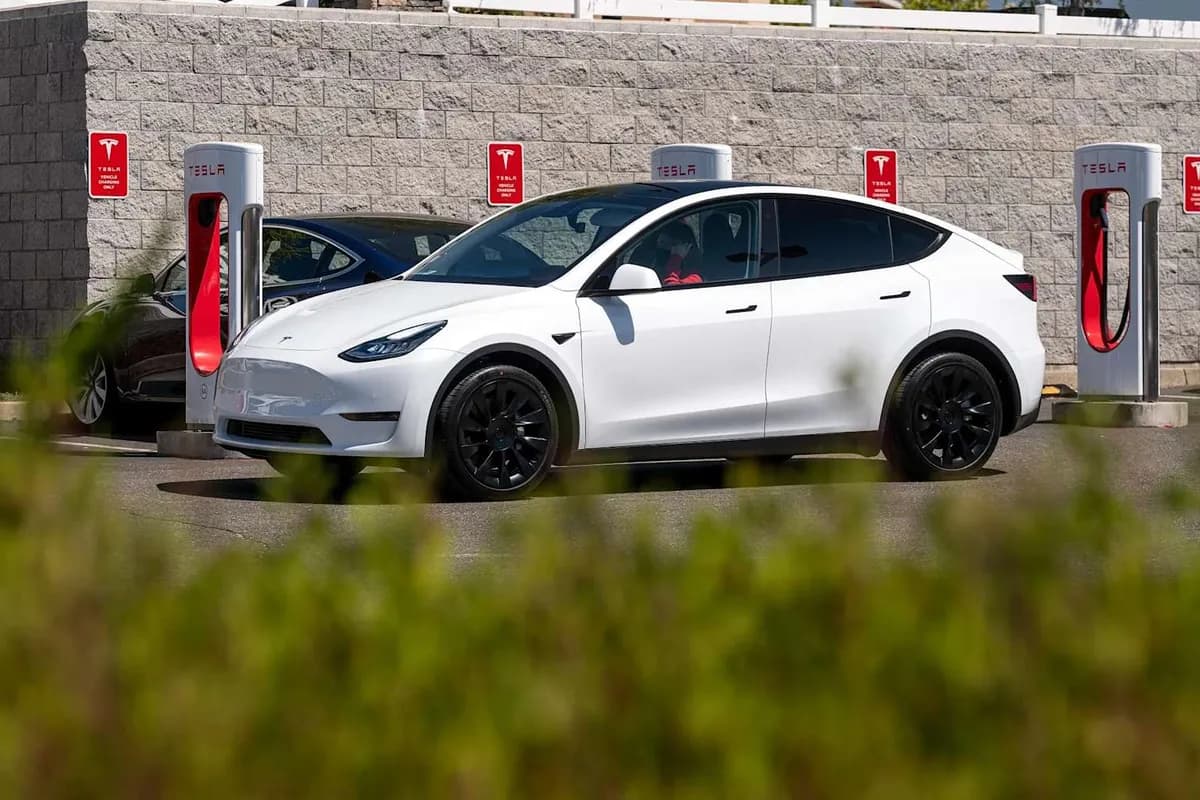
- •Electric vehicles are displacing 1.7-2.3 million barrels of daily oil demand in 2025, equivalent to 70% of Iran's exports through the Strait of Hormuz.
- •China is saving $28 billion annually in oil import costs through EVs, while Vietnam leads with 38% EV sales share, surpassing the EU and US.
- •By 2030, EV-driven oil demand reduction is projected to exceed 5 million barrels per day, fundamentally reshaping global energy markets.
Electric Vehicles Reshaping Global Oil Markets
Global electric vehicle adoption is already creating visible reductions in oil demand, according to recent analyses. Reports from energy research institutions BloombergNEF and Ember reveal that EVs are currently displacing 1.7 to 2.3 million barrels of oil per day in 2025—equivalent to approximately 70% of Iran's oil exports through the Strait of Hormuz.
BloombergNEF estimates the displacement at 2.3 million barrels daily, while Ember offers a more conservative 1.7 million barrel estimate. Both institutions project this figure will exceed 5 million barrels per day by 2030. Notably, China is saving over $28 billion annually in oil import costs through EV adoption.
Emerging Markets Leading the EV Revolution
A striking finding is that emerging markets are driving EV adoption. Vietnam's EV sales share reached 38% in 2025, significantly outpacing the European Union's 26% and the United States' 10%. This demonstrates that the EV transition is no longer confined to developed nations but has become a global phenomenon.
China has emerged as the absolute leader in EV adoption. Leveraging its massive domestic market, the country drives both large-scale production and consumption simultaneously, generating substantial energy cost savings. These economic benefits are acting as catalysts for accelerating EV policies in other nations.
The Transformation Journey Since the 2010s
The oil demand reduction from EVs did not happen overnight. The premium EV market began forming in the early 2010s, centered around Tesla. Following the 2015 Paris Climate Agreement, government carbon neutrality policies gained momentum, propelling EV adoption forward.
Entering the 2020s, falling battery prices combined with expanded charging infrastructure brought EVs into genuine mass-market territory. Particularly after 2020, China's aggressive subsidy policies and production facility investments reshaped the global EV market landscape. Starting in 2023, EV prices began reaching parity with internal combustion vehicles, and by 2025, some EV models have become even more affordable.
Beginning of Structural Changes in the Oil Industry
The displacement of over 2 million barrels per day carries significance beyond mere numbers. This represents approximately 2% of global oil consumption—equivalent to the entire export volume of a mid-sized oil-producing nation. The comparison to 70% of Hormuz Strait exports suggests more than just numerical equivalence; it indicates that the strategic value of this geopolitically sensitive region may be relatively diminishing.
The International Energy Agency (IEA) identified in its 2023 report that EV adoption is a key variable accelerating the timing of peak oil demand. The analyses from BloombergNEF and Ember substantiate with concrete figures that these projections are becoming reality.
Future Outlook [AI Analysis]
By 2030, over 5 million barrels of daily oil demand will likely be displaced by EVs. This projection assumes current trends continue and national carbon neutrality policies are implemented as planned. Particularly if electrification of commercial and heavy-duty vehicles accelerates, the displacement scale could expand further.
Oil-exporting nations are already developing response strategies. Saudi Arabia is diversifying its petrochemical industry, while the UAE is expanding renewable energy investments. The economic restructuring of oil-dependent countries will be a core variable in global energy geopolitics over the next decade.
For South Korea, with annual oil imports reaching approximately $100 billion, expanded EV adoption is expected to directly impact energy security and trade balance improvement. However, this will likely simultaneously raise the necessity for structural adjustments in the domestic refining industry.
댓글 (2)
EVs 관련 기사 잘 읽었습니다. 유익한 정보네요.
Now에 대해 더 알고 싶어졌습니다. 후속 기사 부탁드립니다.
More in Economy

당정, 석유 최고가격제 손실 보전을 추경에 반영키로

미·이란 긴장 한 달, 금융시장 요동…장기화 우려

뉴욕증시 3대 지수 동반 상승…이란 휴전 기대감

Elon Musk's X recruits a cryptocurrency expert as head of design... ‘X Money’ launch imminent

BitGo-GK Sync plans to build ‘tokenized deposit’ infrastructure for banks

The other side of prediction markets: Ethical dilemmas of cryptocurrency platforms dealing in war and terrorism
Latest News

"간부 잘 아는데 교통비 좀" 휴가 군인들 돈 뜯은 50대 구속
50대 A씨가 휴가 중인 군인들에게 부대 간부를 아는 척 접근해 돈을 사취

英 옥토퍼스, 이란 전쟁 이후 태양광 판매 50% 증가
이란 전쟁 이후 영국 옥토퍼스의 태양광 판매량 50% 증가

당정 "추경, 지방·취약계층에 더 지원되는 방식으로"
당정이 지방자치단체와 취약계층 중심의 추경 편성 방침 재확인

어머니 폭행하고 금팔찌 빼앗은 30대 아들 경찰에 붙잡혀
어머니 폭행 후 금팔찌 빼앗은 30대 남성 체포

아이티 갱단 폭력사태로 10개월간 5천명 이상 사망
아이티에서 지난 10개월간 갱단 폭력으로 5천명 이상 사망

서방 정보당국 "러시아, 우크라이나 전쟁 후 이란에 드론·식량 공급"
서방 정보당국, 러시아의 이란 드론·식량 공급 작업 거의 완료 파악

6년 전 세 살 딸 살해한 30대 친모 구속송치
경찰, 6년 전 세 살 딸 살해 혐의 30대 친모를 구속송치

中企 수입 나프타의 80% 이상이 중동산…공급망 위기 심화
중소기업 수입 나프타의 80% 이상이 중동산으로 공급 의존도 높음