Cuban hospital power outage death rumor and 5-star hotel controversy, the truth seen through fact check
The substance of the controversy surrounding U.S. progressive activists' humanitarian expedition to Cuba
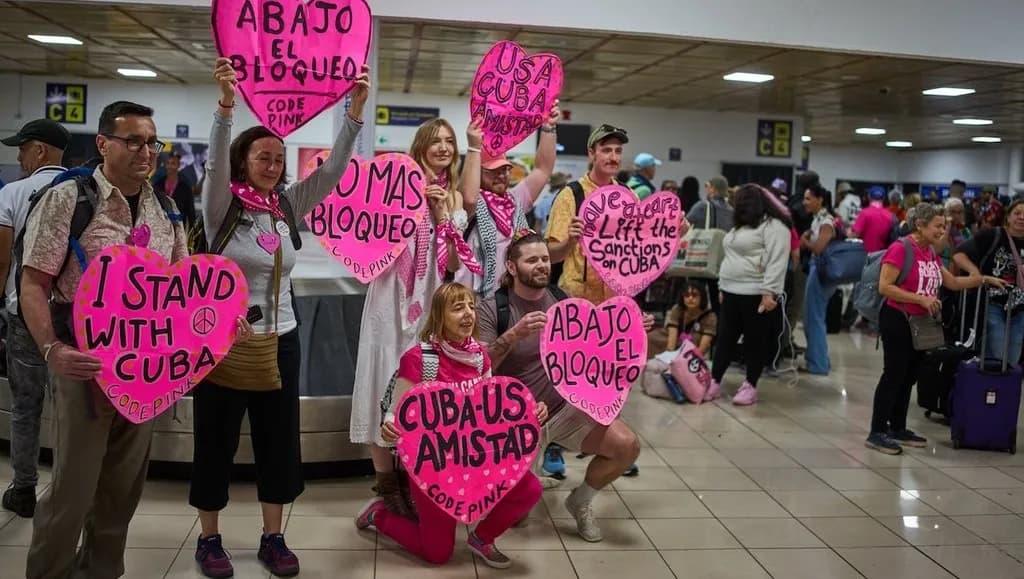
- •The claim made by a U.S. Republican lawmaker that 'activist performances caused a power outage in a Cuban hospital and 7 deaths' was confirmed to be unfounded.
- •The hospital directly refuted this in an official statement, saying there were no ventilator-related deaths during the power outage.
- •The controversy reflects the sharp conflict between liberals and conservatives over the U.S. policy of blocking Cuba.
Activists visit Cuba amid humanitarian crisis
As Cuba faces a serious humanitarian crisis due to shortages of food, medicine, water, and fuel, a group of American progressive activists visited the site, sparking controversy. Nuestra America Convoy, a coalition of international activists including Progressive International, The People's Forum, and Code Pink, visited Cuba from March 21 to 23 and delivered humanitarian aid.
This expedition attracted attention as famous left-leaning Twitch streamer Hasan Piker and Isra Hirsi, daughter of U.S. Democratic Congressman Ilhan Omar, participated. Code Pink stated the purpose of the visit as "a citizen-led mission to break the blockade, deliver aid, and deliver a strong message that the Cuban people are not alone."
Why is this controversy important?
This incident goes beyond a simple activist visit and shows the sharp political conflict surrounding Cuba policy in the United States. Maria Elvira Salazar, a Cuban-American Republican congresswoman who represents a district in Miami, Florida, criticized the activists for "staying in five-star hotels and traveling in air-conditioned buses," and claimed that the Irish band's performance in particular caused a power outage at a nearby hospital, leading to "the deaths of seven Cubans on ventilators."
Hassan Fiker, on the other hand, countered that US law requires Americans to stay in certain hotels, calling the attacks a "hoax" to divert attention from the activists' real work.
Fact check for key claims
Claims that 7 people died due to hospital power outage
Verification result: No evidence
In an interview with Fox News, Salazar claimed that Irish hip-hop band Kneecap's performance "sucked up all the power" and caused a power outage at a nearby hospital, which resulted in the deaths of seven patients on ventilators.
However, no reliable evidence was found to support this claim, and Rep. Salasar did not provide any evidence. Hermanos Ameijeiras Hospital, which was at the center of the controversy, directly refuted through an official Facebook post on March 23, saying, "There were no deaths at our institution related to mechanical ventilation device failure during the power outage on March 21."
Claims that the performance caused a blackout
Verification result: No evidence
The Nicap Band visited Cuba with Convoy and performed in Havana on March 21. However, according to a New York Times report, organizers did not plan the performance, and Nicap performed an impromptu performance after Convoy participants joined the outdoor festival that was already in progress.
“Cuban bands were already playing at the festival before Nicap joined, and the festival used generators for speakers,” said Medea Benjamin, Code Pink co-founder and expedition organizer. “I can 100% guarantee that this did not cause a power outage.”
Cuba suffered its second major power outage in a week just hours after the Nicap performance, but it was a continuation of chronic power shortages caused by the U.S. oil blockade. Some linked the performance to the power outage, but others pointed to the US blockade continuing to cut off Cuba's power sources.
Historical Context of U.S.-Cuba Relations
The U.S. economic blockade of Cuba began during the Kennedy administration in 1962 and has continued for over 60 years. Relations temporarily improved during the Obama administration, but were strengthened again under the Trump administration and continue to this day.
Cuba's current crisis is analyzed as a complex result of structural economic failure, the blow from the COVID-19 pandemic, and US sanctions. In particular, as the operation of power plants became difficult due to the blockage of oil imports, power outages became routine, and the situation worsened rapidly from 2024.
Human rights groups have criticized the Cuban government as broadly repressive, and some Cubans have voiced criticism over the fact that Convoy participants met with President Miguel Díaz-Canel.
Future outlook [AI analysis]
This controversy suggests that the political division surrounding Cuba policy in the United States will be difficult to resolve for the time being. Conservatives characterize any form of support for the Cuban government as aiding the dictatorship, while liberals argue that the blockade causes unnecessary suffering to ordinary Cuban citizens.
As the fact check results show, the rapid spread of unverified claims in politically sensitive issues is likely to continue. Content with strong emotional appeal, such as hospital death claims, tends to spread widely before the facts can be verified.
Cuba's humanitarian crisis is difficult to resolve in the short term, and without changes in U.S. policy toward Cuba, similar activist expeditions and resulting controversies are expected to be repeated. Ultimately, it remains an important task to ensure that the voices of actual Cuban residents are not drowned out at the center of these debates.
댓글 (5)
Cuban 소식 정말 안타깝습니다. 유가족분들께 깊은 위로를 전합니다.
위로의 말씀 공감합니다.
이런 비극이 일어나지 않도록 사회 전체가 경각심을 가져야 합니다.
다시는 이런 일이 없어야 합니다.
이런 일이 다시는 반복되지 않았으면 합니다. power 관련 대책이 시급합니다.
More in Special

Are ICE agents deployed at U.S. airports a sign of a reign of terror in our daily lives?

U.S. political funding tracking debate: To what extent does TrackAIPAC view ‘pro-Israel funding’?

U.S. Department of Defense seeks to criminalize reporter's 'unauthorized questioning' itself
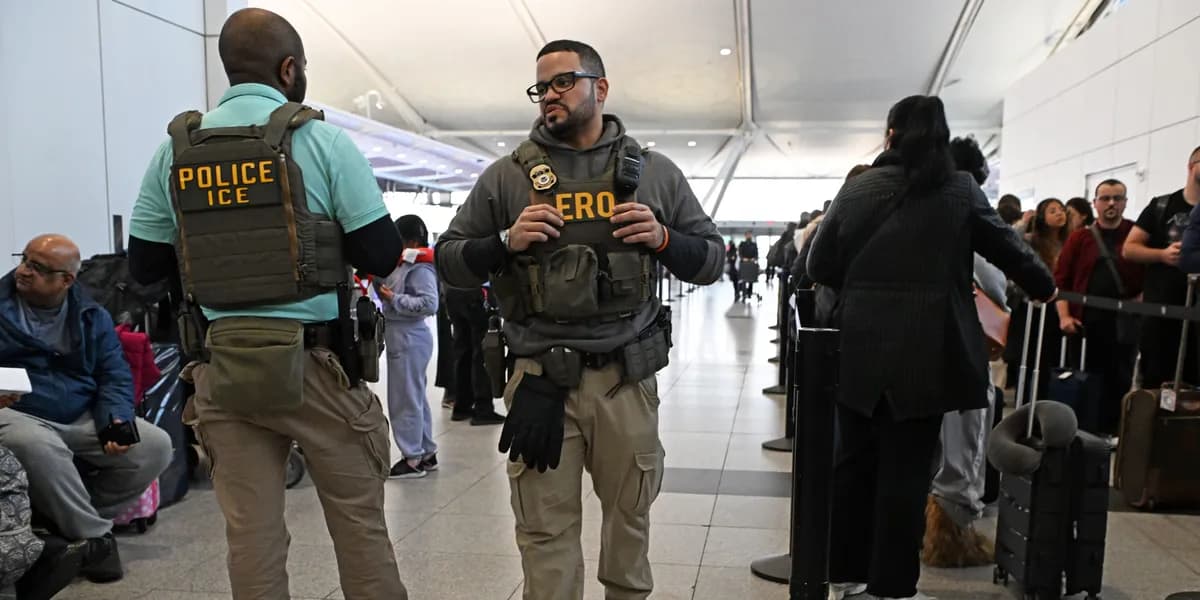
How to avoid ICE agents checking your phone at the airport
Intruder at Chinese Embassy in Japan Identified as Active JSDF Officer

New York City public hospital breaks up with Palantir... Ending controversy over commercialization of citizen health data
Latest News

Oh Se-hoon: "I Would Choose 5th Term as Seoul Mayor Over Presidency"
Seoul Mayor Oh Se-hoon states he would choose 5th mayoral term over presidency

BTS' 'Arirang' Tops Billboard 200 Chart—Seventh No. 1 Album
BTS's new song 'Arirang' achieves No. 1 on U.S. Billboard 200 chart

Three Arrested in Paris After Attempted Bomb Attack Near Bank of America
Three suspects arrested after attempted bomb attack near Bank of America branch in Paris

Three Journalists Killed in Israeli Strike on Southern Lebanon, Hundreds Mourn in Beirut
Three journalists killed in Israeli targeted attack on southern Lebanon
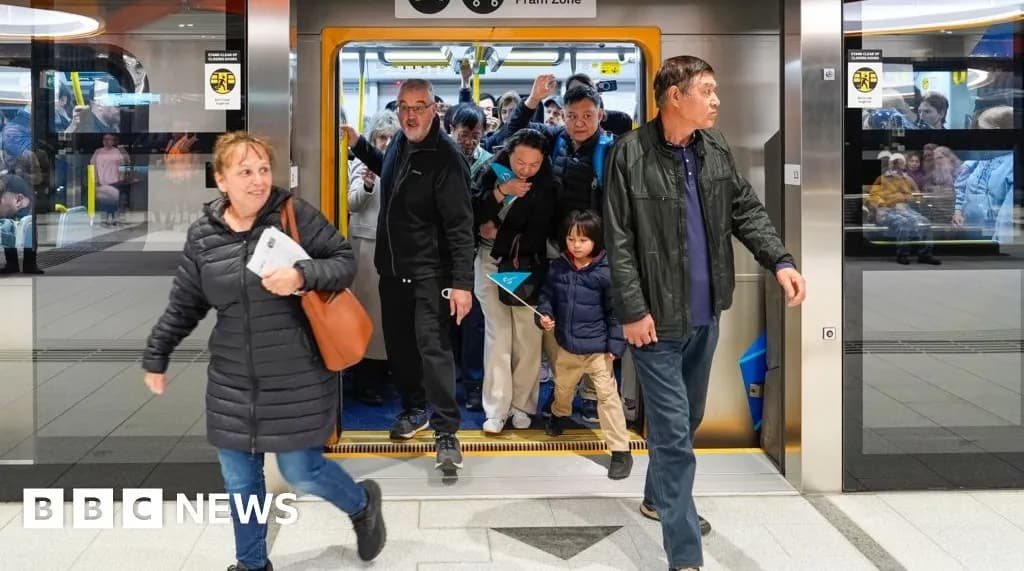
Two Australian States Offer Free Public Transport as Iran War Drives Up Fuel Prices
Victoria and Tasmania implement free public transport in response to fuel price surge from Iran war fallout

Iranian Missile Strikes Israeli Industrial Zone—Major Fire and Hazardous Material Leak
Iranian ballistic missile directly hits southern Israeli industrial zone, causing major fire
Trump Shares Pastor's Letter Amid Month-Long Iran War: "Blessed Are the Peacemakers"
President Trump shares pastor's letter on one-month anniversary of Iran war

African Football Chief Resigns Amid Morocco-Senegal Final Controversy
CAF Secretary General Veron Mosengo-Omba resigns amid Morocco-Senegal final controversy