Crater sightings soar across the U.S. What's really happening?
The number of sightings of large craters more than doubled in the month of March, experts say, 'although within a statistical range, there is a clear change'

- •In March 2026, sightings of craters increased rapidly across North America, with more than 2,369 cases reported in one month.
- •The number of large-scale crater incidents witnessed over 50 times has more than doubled, raising the possibility of changes in the actual inflow material.
- •The expansion of black boxes and security cameras has improved observation capabilities and has had an impact on increased reporting.
Fireballs that lit up all of North America
From March 17 to 23, 2026, there were reports of sightings of fireballs—meteors much brighter than regular meteors—across North America. Sightings began in Ohio and continued to California (March 19), Michigan and Georgia (March 20), and Texas (March 21). In particular, an incident occurred in Texas where meteor fragments fell through the roof of a house.
This phenomenon was not limited to the United States. A crater was observed in Vancouver, Canada, on March 3, and sightings were reported in France and Germany on March 8 and 11, respectively. Multiple craters lasted longer than usual and were observed simultaneously over a wide area. Some were accompanied by shock waves and sonic booms.
Why is this important?
According to the American Meteor Society's fireball report database, the number of reported fireball sightings in the United States jumped from 1,587 in January and 1,425 in February to more than 2,369 in March. The key issue is whether reports have simply increased or actual meteor activity has increased.
“It’s a question everyone wants an answer to,” said Nick Moskovitz, a planetary scientist at the Lowell Observatory in Flagstaff, Arizona. “There appears to be a slight increase in meteor activity, but it is still within statistical expectations, and it also has the effect of increasing awareness and reporting whenever a large event occurs.”
The 'large event' he mentioned was a meteor weighing about 1 ton and measuring about 90 cm in diameter that exploded over Texas on March 21. This meteor, which entered at about 56,000 kilometers per hour, was accompanied by a huge sonic explosion, and fragments the size of artillery shells fell into the bedroom of a home in the Bammel neighborhood, north of Houston. This incident, officially confirmed by the National Aeronautics and Space Administration (NASA), received intense media attention.
Unusual concentration of large craters
A detailed analysis report (dated March 24) led by Mike Hankey of the American Meteor Society reveals an interesting pattern. Although the total number of fireball occurrences has only increased slightly compared to recent years, the number of large-scale incidents witnessed has increased rapidly.
Specifically, the number of incidents with more than 50 sighting reports has more than doubled, and the number of incidents with more than 100 sightings has also doubled compared to the recent average. On the other hand, small-scale incidents remained at similar levels as before. “There are about 10 meteorite recoveries per year worldwide, and there were three recoveries within a week to 10 days,” Hankey explained.
This pattern suggests that it is not just more people reporting, but a change in the distribution of substances entering the Earth itself.
When did this trend start?
The increase in reports of crater sightings is closely related to technological advancements. Over the past 10 years, the distribution of dash cams, home security cameras, and Ring doorbells has expanded rapidly. “These devices are now available not only for incidental detection, but also for scientific purposes as they become cheaper,” Moskowitz said.
The Global Meteor Network, an international observation network, is operated by scientists and amateur astronomers from around the world and monitors the sky 24 hours a day. Due to the sheer volume of data, it is no longer possible for humans to review all the footage, so automated systems report detections every night. However, events that are too bright may be missed due to oversaturation of sensors, so reports from citizens to the American Meteor Society serve as an important reminder to experts.
NASA's Center for Near-Earth Object Studies (CNEOS) can detect larger objects globally, but misses many relatively small fireballs.
Future outlook [AI analysis]
Although the surge in craters in March 2026 is likely to be a short-term statistical change, there are a few things to note.
First, if the pattern of intensive occurrence of large fireballs continues, the possibility that this is the intersection of a specific asteroid debris flow and the Earth's orbit cannot be ruled out. The astronomical community is expected to closely analyze additional data in the coming weeks.
Second, observational capabilities will continue to be strengthened as technology advances. With the development of artificial intelligence (AI)-based image analysis technology, it is becoming more likely that fireballs that would have been missed in the past will be systematically recorded. This will contribute to a more accurate understanding of the actual trends in meteor activity in the long term.
Third, although it is rare for a meteorite to fall in a human residential area, like the Texas house-fall incident, the possibility of such an accident may slightly increase as urbanization expands. There is also a possibility that related insurance and safety discussions will be triggered.
댓글 (4)
Crater 관련 기사 잘 읽었습니다. 유익한 정보네요.
그 부분은 저도 궁금했습니다.
흥미로운 주제입니다. 주변에도 공유해야겠어요.
기사 잘 봤습니다. 다른 시각의 분석도 읽어보고 싶네요.
More in Life

Artemis 2 astronauts arrive at Kennedy Space Center... The first manned lunar exploration in 52 years is imminent.

NASA Artemis 2 scheduled to launch into lunar orbit on April 1

Burger King launches ‘Peppercorn BLT Whopper’ created with fan idea
NASA unveils 'Blue Marble' award categories in environment and energy fields

Soothe yourself with LEGO while waiting for Star Wars Ahsoka Season 2, now 20% off

Can humans give birth to babies in space? Science Reveals Unexpected Challenges
Latest News
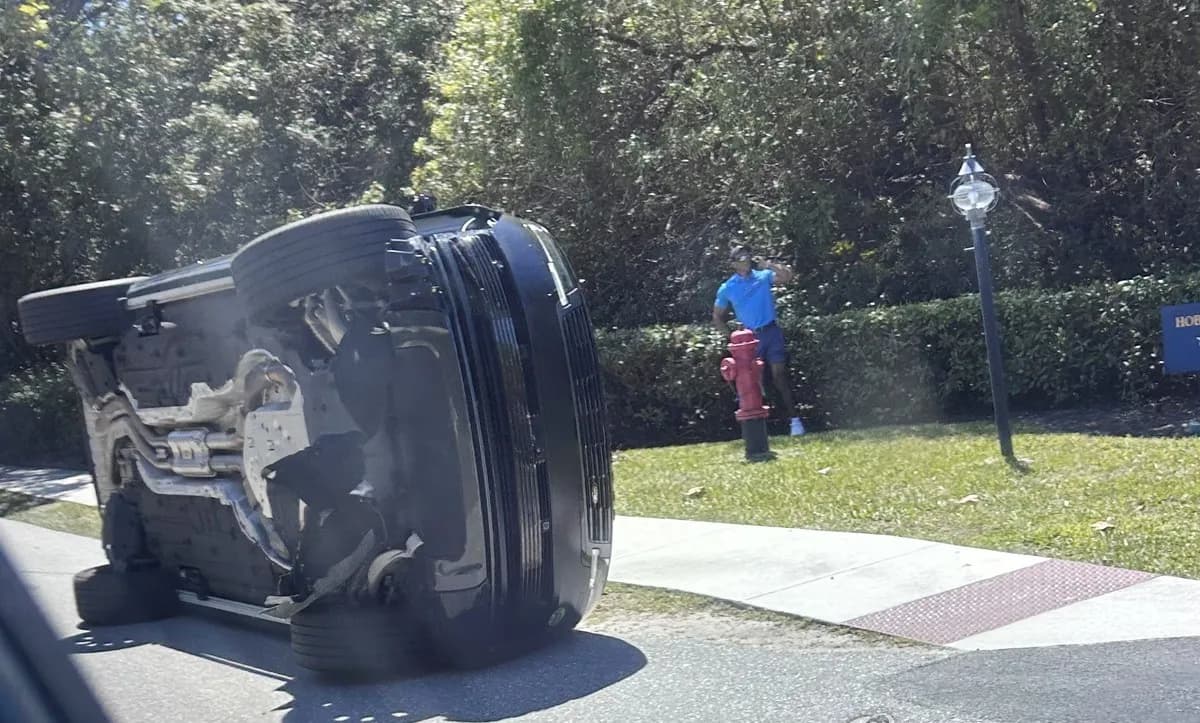
Tiger Woods Arrested for DUI Just 3 Days After Comeback—Fourth Vehicle-Related Incident
Tiger Woods arrested for DUI just 3 days after comeback

UK University Meningitis Outbreak: Worst Over but Concerns Remain About Recurrence
UK university meningococcal outbreak worst appears over, but cause remains unclear

Yen/Dollar Rate Breaks Through 160 Yen for First Time in 1 Year 8 Months Amid US-Iran War
Yen/dollar rate breaks through 160 yen for first time in 1 year 8 months amid US-Iran war

England Players Rated in Friendly Against Uruguay
England conducted player evaluations in Friday's friendly against Uruguay

Tiger Woods Arrested on Suspicion of DUI
Tiger Woods arrested in Florida on suspicion of DUI

Trump Orders Pay for US Airport Security Staff Amid Shutdown Chaos
President Trump orders emergency pay for airport security staff

NY Stock Market Plunges on Prolonged Iran War Concerns…Dow Enters Correction Territory
NY stock market's three major indices close lower on Iran war prolongation concerns

Tiger Woods Involved in Car Crash in Florida
Tiger Woods involved in car crash in Florida, confirmed by police