From Go AI to Life Sciences: AlphaGo's 10-Year Journey
AI Revolution Expands Beyond Games to Protein Structure Prediction, Weather Forecasting, and Genome Analysis

- •Google DeepMind has revealed how reinforcement learning technology that began with AlphaGo has expanded over 10 years to protein structure prediction (AlphaFold), genome analysis (AlphaGenome), and weather prediction (WeatherNext).
- •AlphaFold solved the 50-year-old protein folding problem, while AlphaMissense analyzed over 71 million genetic variants, reducing the time to identify rare disease causes from years to months.
- •The Gemini series operates as general-purpose multimodal AI alongside domain-specific models like AlphaFold, Veo, and Imagen in a two-track strategy, while Genie 3 and SIMA 2 demonstrated virtual world generation and interactive learning agent technologies.
March 2016: The Moment AI Surpassed Humanity
On March 9, 2016, Google DeepMind's AlphaGo defeated Lee Sedol 4-1, ushering in the era of Go AI. Over the following 10 years, AlphaGo's core technologies—reinforcement learning and neural networks—expanded beyond games into life sciences, climate prediction, and robotics, marking a turning point where AI transformed the paradigm of scientific research.
Google DeepMind recently released retrospective materials summarizing major projects from the decade following AlphaGo. Specialized AI models like AlphaFold, AlphaGenome, and WeatherNext have been deployed to solve real scientific problems, demonstrating the practicality of "domain-specific AI rather than general-purpose AI."
A Decade After AlphaGo: The Expansion of Scientific AI
Life Sciences — The AlphaFold Series
AlphaGo's reinforcement learning technology was first applied to protein structure prediction. Released in 2020, AlphaFold predicts the 3D structure of proteins from amino acid sequences with atomic-level accuracy, solving the 50-year-old "protein folding problem."
Subsequently released AlphaGenome is a model that analyzes genomic data to identify disease-causing genetic variants. It has reduced the time to identify causes of rare genetic diseases from years to months, establishing itself as foundational technology for the era of precision medicine.
AlphaMissense is a model that predicts the pathogenicity of genetic variants, having analyzed over 71 million single nucleotide variants. This is being utilized to identify genetic causes of complex diseases such as cancer and diabetes.
Climate and Environment — Earth Observation and Weather Prediction
DeepMind has released AlphaEarth Foundations and WeatherNext to address the climate crisis.
- AlphaEarth Foundations: A model that combines satellite imagery and sensor data to map the Earth's surface in high resolution. It tracks wildfires, deforestation, and glacier melting in real-time.
- WeatherNext: An AI-based weather forecasting system that is faster and more accurate than traditional numerical weather prediction models. It generates 10-day forecasts in under one minute and has improved prediction accuracy for extreme weather events (heavy rain, typhoons) by over 20%.
DeepMind is making WeatherNext's experimental model publicly available through Weather Lab, collaborating with meteorological researchers worldwide.
Robotics — Gemini Robotics
The multimodal capabilities of Gemini, a general-purpose AI model, have also been applied to robot control. Gemini Robotics is an AI that recognizes visual information, reasons about situations, and uses tools to perform physical tasks.
For example, when given the natural language command "bring me that cup over there," Gemini Robotics (1) visually identifies the cup's location, (2) avoids obstacles, and (3) autonomously performs a series of actions to grasp the cup with a gripper. Unlike traditional robots that only repeat pre-programmed actions, this represents the beginning of the embodied AI era where AI understands and makes decisions about situations.
Virtual World Generation — Genie 3 and SIMA 2
DeepMind has developed technology that goes beyond AI playing games to generating and interacting with game worlds themselves.
- Genie 3: A model that can generate and explore 3D virtual worlds from text prompts alone. When a user inputs "medieval fantasy village," an interactive environment including NPCs (Non-Player Characters), buildings, and terrain is automatically generated.
- SIMA 2 (Scalable Instructable Multiworld Agent 2): An agent that understands natural language commands and learns in various game environments. It learns multiple games simultaneously, demonstrating transfer learning capabilities.
This technology is expected to be utilized not only in game development but also in virtual training simulations and educational interactive content creation.
Coexistence of General and Specialized Models
DeepMind's AI strategy can be summarized as a two-track approach of general-purpose models (Gemini series) and domain-specific models (AlphaFold, Veo, Imagen).
| Model Category | Representative Models | Characteristics | Application Areas |
|---|---|---|---|
| General-purpose AI | Gemini, Gemini Audio | Multimodal models that integrate text, voice, images, and video | Conversational AI, content generation, general task automation |
| Specialized AI | AlphaFold, Veo, Imagen, Lyria | High-performance models optimized for specific domains | Scientific research, video generation, music production |
| Open Models | Gemma | Open-source models freely available to external developers | AI app development, research, education |
Gemini processes text generation, image editing, and voice control in a single model, while Nano Banana provides detailed image editing functions. Gemini Audio is a model that integrates voice conversation, music generation, and audio control.
Among specialized models, Veo generates cinema-quality videos from text, and Imagen specializes in high-resolution image generation. Lyria is a model that generates high-quality music and audio, establishing itself as a tool for composers and sound designers.
Before and After AlphaGo: What Changed?
| Period | Major Achievements | AI Technology Level | Application Areas |
|---|---|---|---|
| Before 2016 | IBM Deep Blue (chess), Watson (quiz show) | Rule-based AI, limited learning | Specific games, simple data processing |
| 2016-2020 | AlphaGo (Go), AlphaZero (integrated chess, shogi, Go) | Reinforcement learning + neural networks, self-learning | Complex strategy games |
| 2020-2023 | AlphaFold (proteins), GPT-3 (language), DALL-E (images) | Large-scale pre-training, multimodal | Scientific research, creative content |
| 2024-Present | Gemini (general-purpose AI), AlphaGenome (genome), Genie 3 (world generation) | Multimodal integration, domain-specific deepening | Expansion across all industries |
While AI before AlphaGo was "a tool following rules defined by humans," AI since then has evolved into systems that learn and create autonomously. Particularly in the scientific field, AI is performing the role of a fellow researcher discovering new knowledge beyond hypothesis testing.
[AI Analysis] Challenges Left by AlphaGo's Decade
While AI has shown remarkable achievements in the decade since AlphaGo, the challenges that need to be addressed have also become clear.
1. Computational Costs and Accessibility
Large-scale models like AlphaFold and Gemini require enormous GPU computation. DeepMind's release of the open-source model Gemma is part of a strategy for "democratizing AI." However, developing countries, small and medium-sized enterprises, and individual researchers without access to computational infrastructure are still likely to be excluded from AI innovation.
2. Explainability and Transparency
Why AlphaFold predicted a particular protein structure or on what basis Gemini generated an answer remains a "black box." To apply AI in high-risk fields such as medicine and law, Explainable AI (XAI) research is essential.
3. Ethics and Regulation
DeepMind emphasizes "responsible AI development" and invests in AI safety research. However, legal and ethical debates about copyright of AI-generated content, accountability for AI decisions, and prevention of AI weaponization are still ongoing.
4. Path to General AGI (Artificial General Intelligence)
While AlphaGo surpassed humans in Go and AlphaFold in protein prediction, both models are narrow AI specialized in specific tasks. The path to AGI that performs diverse tasks like humans remains distant. DeepMind is strengthening "generality and reasoning ability" through Gemini and SIMA 2, but the timeline for achieving true AGI is difficult to predict.
5. Reproducibility and Validation of Scientific AI
How reliable are protein structures, weather forecasts, and genetic variant analyses predicted by AI must undergo independent validation. In particular, the actual disease-causing rate among the 71 million variants predicted by AlphaMissense is not yet clear. Securing the credibility of AI science is expected to be a key challenge for the next decade.
The AI revolution begun by AlphaGo is now expanding from "AI that wins games" to "AI that solves humanity's challenges." The next 10 years will determine how much practical contribution AI can make to solving problems in science, medicine, and the climate crisis.
댓글 (3)
From에 대해 더 알고 싶어졌습니다. 후속 기사 부탁드립니다.
좋은 의견이십니다.
Go 관련 기사 잘 읽었습니다. 유익한 정보네요.
More in this series
More in AI & Tech

영국 정치지도자들, 아동 성착취 혐의에 대한 긴급 조사 촉구

A humanoid robot performing in China has a child's face on it.

U.S. jury finds Meta and Google responsible for ‘social media addiction’… 3.7 billion won compensation ruling

Japanese X-ray Observatory makes first direct measurement of ultrafast 'cosmic wind' in galaxy M82

NASA selects 24 people for 2026 Astrophysics Postdoctoral Fellowships

Ethereum is at a crossroads to ‘redefine its identity’ ahead of the quantum computing and AI era
Latest News
"간부 잘 아는데 교통비 좀" 휴가 군인들 돈 뜯은 50대 구속
50대 A씨가 휴가 중인 군인들에게 부대 간부를 아는 척 접근해 돈을 사취
英 옥토퍼스, 이란 전쟁 이후 태양광 판매 50% 증가
이란 전쟁 이후 영국 옥토퍼스의 태양광 판매량 50% 증가
당정 "추경, 지방·취약계층에 더 지원되는 방식으로"
당정이 지방자치단체와 취약계층 중심의 추경 편성 방침 재확인

당정, 석유 최고가격제 손실 보전을 추경에 반영키로
당정이 석유 최고가격제 손실을 추경에 반영하기로 결정
어머니 폭행하고 금팔찌 빼앗은 30대 아들 경찰에 붙잡혀
어머니 폭행 후 금팔찌 빼앗은 30대 남성 체포

아이티 갱단 폭력사태로 10개월간 5천명 이상 사망
아이티에서 지난 10개월간 갱단 폭력으로 5천명 이상 사망
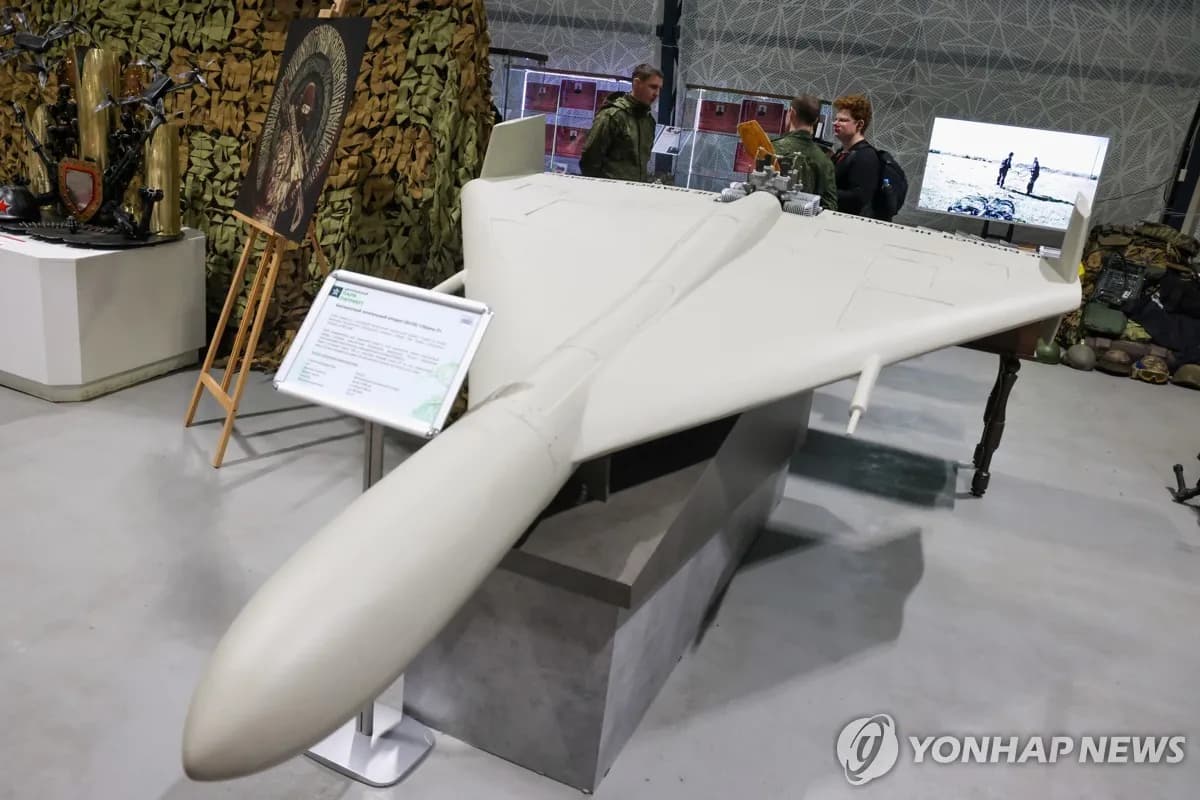
서방 정보당국 "러시아, 우크라이나 전쟁 후 이란에 드론·식량 공급"
서방 정보당국, 러시아의 이란 드론·식량 공급 작업 거의 완료 파악

6년 전 세 살 딸 살해한 30대 친모 구속송치
경찰, 6년 전 세 살 딸 살해 혐의 30대 친모를 구속송치