From Work to Code to Daily Life: OpenAI's Expanding AI Applications
How ChatGPT, Codex, and APIs are bringing OpenAI's AI into real-world use
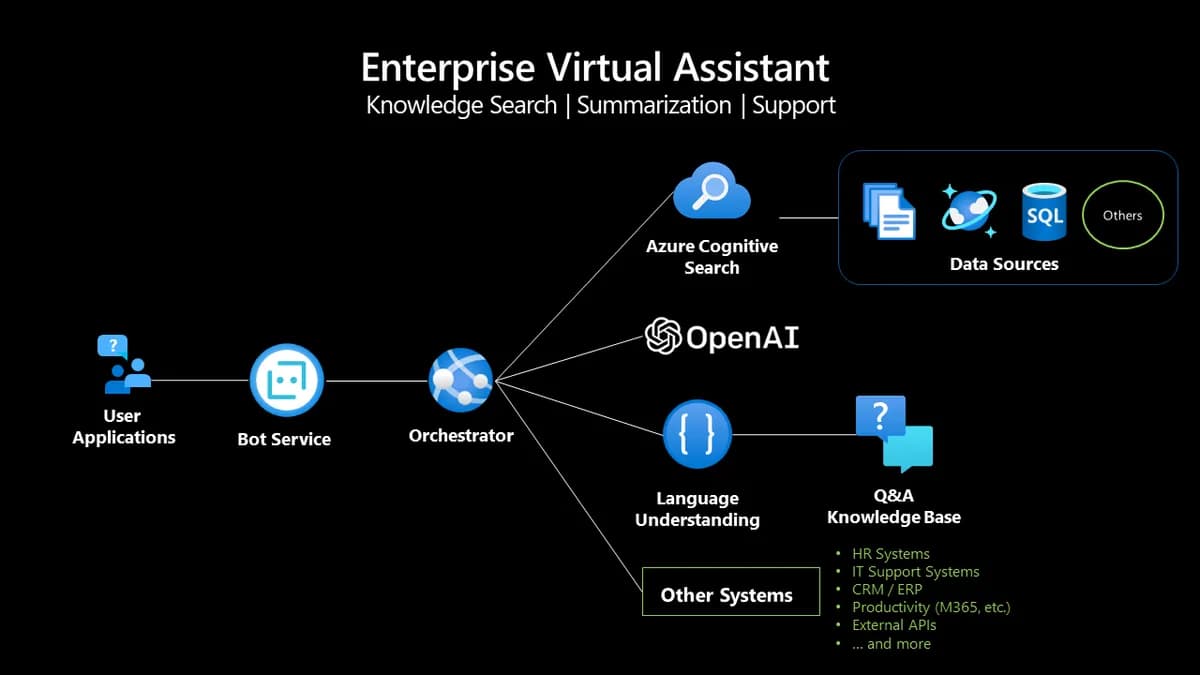
- •OpenAI is deploying AI across work, development, and daily life through ChatGPT, Codex, and its API ecosystem.
- •GPT-4o API is priced at $2.50 per million input tokens, reflecting a sustained decline in enterprise AI integration costs.
- •An accelerating shift toward AI agents and industry-specific models suggests AI will become a default feature in all software.
From the Lab to the Field
OpenAI, which began as an AI research organization, is now embedded in the daily lives of hundreds of millions of people and the workflows of millions of businesses. Through its conversational AI ChatGPT, code generation engine Codex, and a developer- and enterprise-facing API ecosystem, OpenAI has become arguably the most aggressive player in the race to deploy AI in real-world settings. The significance here is not just the technology itself — it's that these tools have crossed the threshold from impressive demos to functional instruments across professional work, software development, and everyday tasks.
ChatGPT: The Widest Gateway
Of all OpenAI's products, ChatGPT remains the most accessible entry point for the general public. After launching in November 2022 and reaching 100 million users at an unprecedented pace, it has grown into a platform used by hundreds of millions of people weekly worldwide. Initially perceived as a question-and-answer tool, its range of applications has broadened dramatically: drafting emails and reports, assisting with legal document review, producing educational materials, and generating customer service scripts.
The evolution of ChatGPT goes well beyond incremental updates. With multimodal capabilities now standard, users can analyze images, hold voice conversations, and upload files for summarization or analysis. GPT-4o in particular enables simultaneous processing of text, images, and audio. The paid subscription tier, ChatGPT Plus at $20/month, offers faster responses, priority access to the latest models, and advanced data analysis — appealing to both individual power users and enterprises.
Codex: The Developer's Copilot
OpenAI's code-specialized model, Codex, has had the most direct impact on the software development ecosystem. As the core engine powering GitHub Copilot, it is already in use by millions of developers globally for code autocomplete and generation. Supporting dozens of languages including Python, JavaScript, TypeScript, Go, and C++, Codex allows developers to generate code from natural-language descriptions — dramatically boosting productivity on repetitive tasks.
According to GitHub's own research, developers using Copilot experience up to a 55% speed improvement on routine coding tasks. Beyond simple autocomplete, Codex now assists with writing test code, documentation, and refactoring suggestions — evolving from a coding assistant toward an intelligent layer that spans the full development pipeline.
The API Ecosystem: Core of the B2B Strategy
OpenAI's most significant channel for industrial penetration is its API offering. GPT-4, GPT-4o, GPT-3.5, image generation model DALL-E, speech recognition model Whisper, and text-to-speech (TTS) APIs are all available as a suite. Enterprises integrate these into their own products to build customer service chatbots, document summarization systems, content generation engines, and retrieval-augmented generation (RAG) pipelines.
API pricing varies by model and usage. GPT-4o is priced at $2.50 per million input tokens and $10.00 per million output tokens; the lighter GPT-4o mini offers $0.15 input and $0.60 output per million tokens. This tiered pricing lowers the barrier for organizations of all sizes — from startups to large enterprises — to integrate AI into their services.
Comparison by Product
| Product/Service | Primary Audience | Core Function | Price (Representative) | Real-World Use Case |
|---|---|---|---|---|
| ChatGPT Free | General consumers | Text chat, basic analysis | Free | Learning, everyday Q&A |
| ChatGPT Plus | Power users | GPT-4o, image/voice, advanced analytics | $20/mo | Work assistance, content creation |
| ChatGPT Team/Enterprise | Businesses | Security, admin console, custom GPTs | Negotiated | Internal knowledge management, HR |
| Codex / GitHub Copilot | Developers | Code generation & autocomplete | $10–19/mo | Development productivity |
| GPT-4o API | B2B developers | Text, image & audio processing | $2.5/$10 per 1M | Chatbots, automation, RAG |
| DALL-E API | Creative industries | Text-to-image generation | Per-image billing | Advertising, design |
| Whisper API | Media & entertainment | Speech-to-text transcription | $0.006/min | Subtitles, meeting notes |
[AI Analysis] What Comes Next
OpenAI's real-world deployment strategy is likely to converge on several key directions.
Shift toward agents: A transition from response-based AI to autonomous agents capable of executing tasks is likely to accelerate. OpenAI's Operator and Deep Research features are early signals of this direction. As AI moves from 'advising' to 'acting,' the scope of enterprise automation is poised to expand significantly.
Industry-specific model competition: Divergence from general-purpose models toward healthcare, legal, financial, and other domain-specific models is increasingly likely. OpenAI is already exploring healthcare applications, and domain-specific solutions built on partnership frameworks are expected to multiply.
Falling costs and broader access: As GPU efficiency improves and models become lighter, API pricing is likely to continue declining. This will lower the barrier to AI adoption for small and medium-sized businesses, potentially making AI integration the default expectation for virtually all software products.
Intensifying competition: With Google's Gemini, Anthropic's Claude, and Meta's Llama growing rapidly, OpenAI's dominant position faces increasing pressure. The rise of open-source models in particular is likely to intensify price competition across the API market.
Ultimately, the success of OpenAI's real-world AI strategy will depend not only on maintaining technological superiority but also on navigating the non-technical challenges of trust, safety, and regulatory compliance.
댓글 (93)
From 관련 기사 잘 읽었습니다. 유익한 정보네요.
Work에 대해 더 알고 싶어졌습니다. 후속 기사 부탁드립니다.
공감합니다. 참고하겠습니다.
흥미로운 주제입니다. 주변에도 공유해야겠어요.
좋은 의견이십니다.
공감합니다. 참고하겠습니다.
좋은 의견이십니다.
기사 잘 봤습니다. 다른 시각의 분석도 읽어보고 싶네요.
좋은 의견이십니다.
그 부분은 저도 궁금했습니다.
그 부분은 저도 궁금했습니다.
간결하면서도 핵심을 잘 정리한 기사네요.
좋은 의견이십니다.
그 부분은 저도 궁금했습니다.
From 관련 기사 잘 읽었습니다. 유익한 정보네요.
Work에 대해 더 알고 싶어졌습니다. 후속 기사 부탁드립니다.
공감합니다. 참고하겠습니다.
흥미로운 주제입니다. 주변에도 공유해야겠어요.
기사 잘 봤습니다. 다른 시각의 분석도 읽어보고 싶네요.
공감합니다. 참고하겠습니다.
간결하면서도 핵심을 잘 정리한 기사네요.
From 관련 기사 잘 읽었습니다. 유익한 정보네요.
Work에 대해 더 알고 싶어졌습니다. 후속 기사 부탁드립니다.
흥미로운 주제입니다. 주변에도 공유해야겠어요.
기사 잘 봤습니다. 다른 시각의 분석도 읽어보고 싶네요.
좋은 의견이십니다.
간결하면서도 핵심을 잘 정리한 기사네요.
공감합니다. 참고하겠습니다.
공감합니다. 참고하겠습니다.
좋은 의견이십니다.
From 관련 기사 잘 읽었습니다. 유익한 정보네요.
Work에 대해 더 알고 싶어졌습니다. 후속 기사 부탁드립니다.
흥미로운 주제입니다. 주변에도 공유해야겠어요.
그 부분은 저도 궁금했습니다.
그 부분은 저도 궁금했습니다.
공감합니다. 참고하겠습니다.
기사 잘 봤습니다. 다른 시각의 분석도 읽어보고 싶네요.
좋은 의견이십니다.
그 부분은 저도 궁금했습니다.
좋은 의견이십니다.
간결하면서도 핵심을 잘 정리한 기사네요.
From 관련 기사 잘 읽었습니다. 유익한 정보네요.
좋은 의견이십니다.
공감합니다. 참고하겠습니다.
공감합니다. 참고하겠습니다.
Work에 대해 더 알고 싶어졌습니다. 후속 기사 부탁드립니다.
흥미로운 주제입니다. 주변에도 공유해야겠어요.
그 부분은 저도 궁금했습니다.
공감합니다. 참고하겠습니다.
그 부분은 저도 궁금했습니다.
기사 잘 봤습니다. 다른 시각의 분석도 읽어보고 싶네요.
간결하면서도 핵심을 잘 정리한 기사네요.
From 관련 기사 잘 읽었습니다. 유익한 정보네요.
좋은 의견이십니다.
그 부분은 저도 궁금했습니다.
그 부분은 저도 궁금했습니다.
Work에 대해 더 알고 싶어졌습니다. 후속 기사 부탁드립니다.
흥미로운 주제입니다. 주변에도 공유해야겠어요.
기사 잘 봤습니다. 다른 시각의 분석도 읽어보고 싶네요.
좋은 의견이십니다.
공감합니다. 참고하겠습니다.
간결하면서도 핵심을 잘 정리한 기사네요.
좋은 의견이십니다.
From 관련 기사 잘 읽었습니다. 유익한 정보네요.
Work에 대해 더 알고 싶어졌습니다. 후속 기사 부탁드립니다.
공감합니다. 참고하겠습니다.
흥미로운 주제입니다. 주변에도 공유해야겠어요.
그 부분은 저도 궁금했습니다.
기사 잘 봤습니다. 다른 시각의 분석도 읽어보고 싶네요.
간결하면서도 핵심을 잘 정리한 기사네요.
공감합니다. 참고하겠습니다.
그 부분은 저도 궁금했습니다.
From 관련 기사 잘 읽었습니다. 유익한 정보네요.
그 부분은 저도 궁금했습니다.
공감합니다. 참고하겠습니다.
Work에 대해 더 알고 싶어졌습니다. 후속 기사 부탁드립니다.
그 부분은 저도 궁금했습니다.
그 부분은 저도 궁금했습니다.
공감합니다. 참고하겠습니다.
흥미로운 주제입니다. 주변에도 공유해야겠어요.
기사 잘 봤습니다. 다른 시각의 분석도 읽어보고 싶네요.
그 부분은 저도 궁금했습니다.
간결하면서도 핵심을 잘 정리한 기사네요.
공감합니다. 참고하겠습니다.
From 관련 기사 잘 읽었습니다. 유익한 정보네요.
좋은 의견이십니다.
Work에 대해 더 알고 싶어졌습니다. 후속 기사 부탁드립니다.
흥미로운 주제입니다. 주변에도 공유해야겠어요.
좋은 의견이십니다.
좋은 의견이십니다.
기사 잘 봤습니다. 다른 시각의 분석도 읽어보고 싶네요.
간결하면서도 핵심을 잘 정리한 기사네요.
From 관련 기사 잘 읽었습니다. 유익한 정보네요.
More in this series
More in AI & Tech

Coinbase VP of International Policy Joins OpenAI as EMEA Policy Head
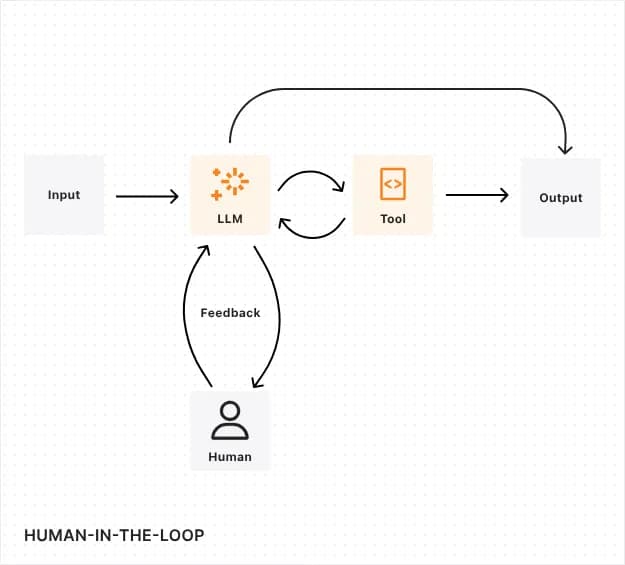
Cloudflare Integrates OpenAI GPT-5.4 and Codex into Agent Cloud

SK Hynix Approaches 40 Trillion Won Operating Profit in Q1...Widens Gap with TSMC by 20 Percentage Points

Tesla FSD Receives Europe's First Regulatory Approval...Deployment Begins in Netherlands
Cohere·Aleph Alpha Merger Talks in Final Stretch…Birth of Transatlantic Enterprise AI?
Alibaba's Qwen Surpasses 50% of Global Open-Source AI Downloads
Latest News

Pope: 'God does not stand with bullies' — Chinese oil tanker crosses Hormuz despite US blockade
Pope Francis issues strong anti-war message, saying God does not side with aggressors

Ex-NATO Chief Warns UK Security 'In Peril', Blasts Starmer for 'Corrosive Complacency'
Lord Robertson, ex-NATO chief, accuses PM Starmer of 'corrosive complacency' on defence

Sterling Returns to Pre-War Levels on Hopes for Iran Conflict Resolution
Sterling recovers fully to pre-war levels on hopes for Iran conflict resolution

Global Stocks Rally, Oil Falls on Hopes for US-Iran Talks
Nasdaq, S&P 500, and Dow all rise on US-Iran negotiation hopes, erasing war-related losses

KOSPI Breaks 6,000 Again — SK Hynix Hits All-Time High for First Time in Six Weeks
KOSPI surged past 6,000 intraday, gaining over 3%, but closed in the 5,900 range.

Two Suspects Arrested for Allegedly Shooting at Sam Altman's Home, Including Molotov Cocktail Attack
Two suspects arrested for attacking OpenAI CEO Sam Altman's San Francisco home
KOSPI Breaks 6,000 Again for First Time in 42 Days, Surging Over 3%
KOSPI broke above 6,000 intraday for the first time in 42 days, rising over 3% on US-Iran nuclear talk optimism.

President Lee Orders: "Exclude Multi-Home Owners Even From Copying Documents" in Real Estate Policy
President Lee orders multi-home-owning officials excluded from real estate policy discussions at all levels, including document support staff