IMF Raises 2026 Global Growth Forecast to 3.3%
Outlook Improves on Tariff Easing and AI Investment Boom—U.S.-China Trade Uncertainty Remains
- •The IMF raised its 2026 global economic growth forecast to 3.3%, up 0.2 percentage points, citing tariff easing and AI investment as key drivers.
- •The U.S. effective tariff rate is projected to fall to 18.5% as companies restructure supply chains to absorb trade shocks.
- •AI investment bubbles and trade policy uncertainty were identified as major downside risks.
Global Economy Rebounds from Tariff Shock
The International Monetary Fund (IMF) has revised its 2026 global economic growth forecast upward from 3.1% to 3.3%, an increase of 0.2 percentage points. The 2025 growth forecast was also raised from 3.2% to 3.3%, up 0.1 percentage points.
This upward revision reflects the gradual easing of U.S. tariffs that had surged last year, as well as companies' efforts to absorb the shock by restructuring their supply chains. IMF Economic Counsellor and Director of Research Pierre-Olivier Gourinchas noted that "the global economy is performing better than expected as it moves beyond the trade disruptions and tariff shocks of 2025."
[IMG:1]
Falling Tariff Rates and AI Investment Drive Growth
The IMF projects that the U.S. effective tariff rate will decline to 18.5% by 2026. This is significantly lower than the 25% estimated in April 2025. The reduction follows the Trump administration's phased tariff relief through trade agreements with other countries after tariffs peaked in April 2025.
Simultaneously, a boom in artificial intelligence (AI) infrastructure investment is supporting growth. Large-scale investments in data centers, AI chip development, and related energy facilities—primarily centered in the United States—have driven asset prices and productivity expectations higher.
The IMF raised the U.S. 2026 growth forecast to 2.4%, up 0.3 percentage points, while Spain is also expected to grow 2.3% (up 0.3 percentage points) due to expanded technology investment. Meanwhile, the United Kingdom's forecast remained unchanged at 1.3%.
Tariff Policy Trends Since 2022
Global supply chain restructuring accelerated after the pandemic in 2022, leading countries to strengthen protectionist trade policies. The United States, in particular, sharply increased tariffs on major trading partners including China following the inauguration of Trump's second administration after the 2024 election.
In April 2025, the average U.S. tariff rate soared to around 25%, causing significant disruption to global trade flows. However, subsequent negotiations between the U.S. and major trading partners led to gradual tariff reductions, while companies responded by diversifying their supply chains away from the United States. China adopted a strategy of redirecting exports to markets outside the U.S.
When the IMF issued its October 2024 forecast, tariff shocks had not yet fully materialized, leading to conservative growth projections. As the situation stabilized faster than expected, the IMF began raising its forecasts incrementally from July 2025 onward.
Uncertainty Factors: Trade Policy and AI Bubble Concerns
The IMF warned that several risk factors remain in the growth outlook.
First, trade policy uncertainty. The U.S. Supreme Court is expected to rule within days or weeks on Trump's use of the International Emergency Economic Powers Act (IEEPA) to impose broad tariffs. Director Gourinchas cautioned that "if the Supreme Court rules against the tariffs and Trump imposes new tariffs based on other trade laws, global trade policy uncertainty would increase significantly."
Second, the possibility of an AI investment bubble. While AI infrastructure investment is expanding rapidly, if productivity gains and profit growth fall short of expectations, market corrections could dampen demand. Additionally, if the AI boom continues at its current pace, inflationary pressures could resurface.
Third, geopolitical tensions. Instability in the Middle East and regional conflicts could cause further disruptions to supply chains and markets.
Outlook [AI Analysis]
The IMF projects that if AI technology spreads rapidly and productivity improvements materialize, 2026 global economic growth could rise by up to an additional 0.3 percentage points. Over the medium term, depending on the pace of AI adoption and countries' readiness levels, AI could contribute 0.1 to 0.8 percentage points annually to growth.
However, this scenario requires countries to adopt AI technology swiftly while fostering business innovation and process improvements. If investment returns prove disappointing or trade tensions escalate again, growth rates are likely to fall below current forecasts.
Global economic growth for 2027 is projected at 3.2%, unchanged from the previous forecast. The U.S. 2027 growth forecast was revised down 0.1 percentage points to 2.0%.
댓글 (2)
이런 긍정적인 뉴스가 더 많았으면 좋겠습니다.
Raises 소식 반갑습니다. 앞으로가 더 기대됩니다.
More in Economy
Middle East Conflict Drives Manufacturing Outlook to 10-Month Low

Lee Jae-myung Administration Excludes Multi-Home Officials from Real Estate Policymaking
Volkswagen CEO Says Germany Should Learn from China's Industrial Strategy

Russia Anticipates Economic Gains from US-Iran Conflict
U.S. Federal Reserve Unveils Bank Capital Regulation Modernization Plan
Federal Reserve Announces Enforcement Actions Against Two Former Bank Employees
Latest News
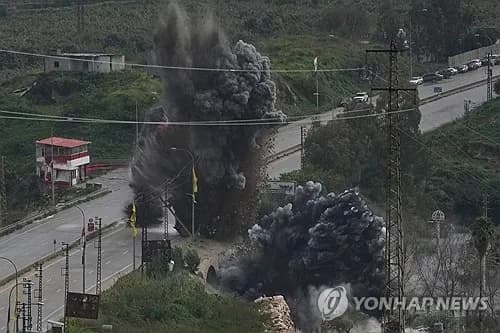
이스라엘, 헤즈볼라 무기 통로 레바논 다리 공습
이스라엘군, 헤즈볼라 무기 통로 레바논 다리 공습
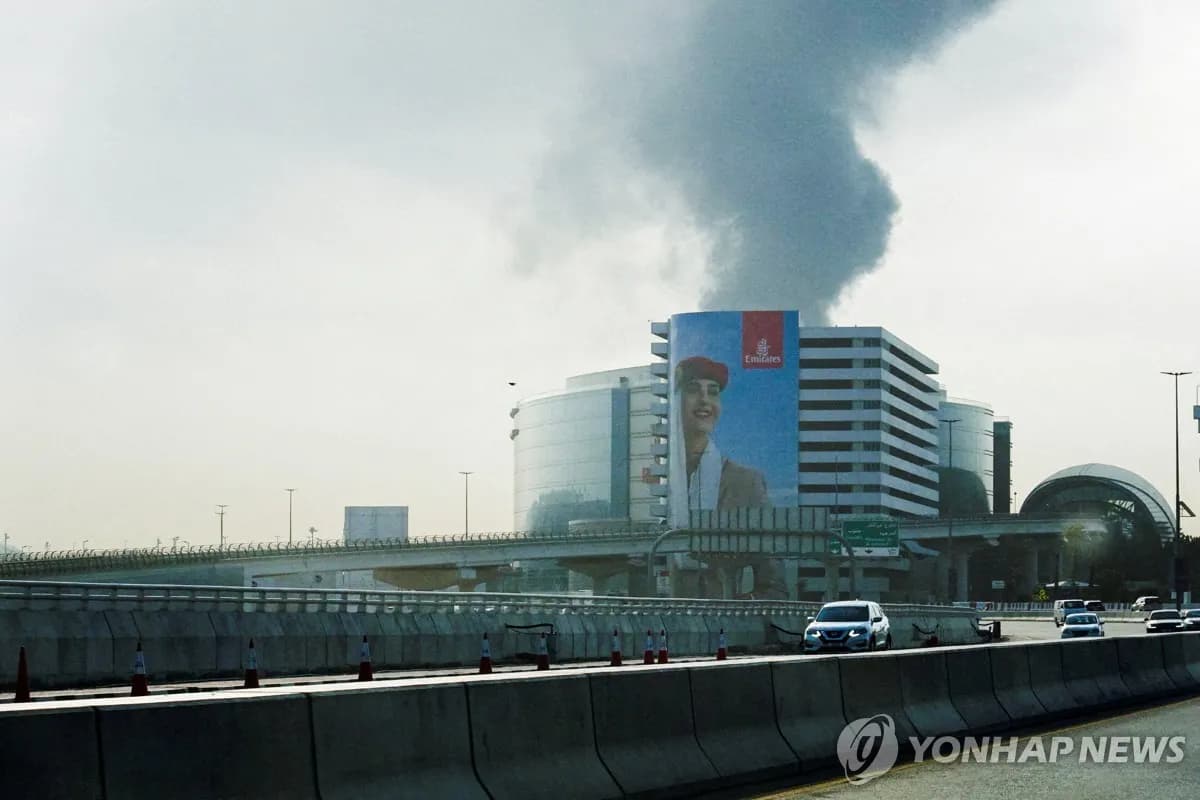
중동행 전세기 전쟁보험료 최고 7천500만원
중동행 전세기 전쟁보험료가 최고 5만달러(7천500만원)로 상승

이란 탄도미사일, 이스라엘 방어망 뚫고 160명 부상
이란 탄도미사일이 이스라엘 방공망을 통과해 160명 부상

Southeast Asia Growth Forecasts Cut Amid Oil Price Surge, Threatening Korean Exports
Maybank Research has downgraded ASEAN-6's 2026 growth forecast from 4.8% to 4.5%.

Reddit Considers Face ID to Block Bots While Maintaining Anonymity
Reddit is considering implementing biometric authentication systems such as Face ID and Touch ID to block AI bots while maintaining anonymity.

BTS Tops March Artist Brand Reputation Rankings with First Full Group Comeback in 4 Years
BTS ranked first in the Korean Corporate Reputation Research Institute's March Artist Brand Reputation Rankings based on 99 million data points.

Santo Domingo's Malecón Sports Park Construction Progressing Smoothly
Construction of a soccer field and skate park is progressing smoothly in the Malecón area of Santo Domingo, Dominican Republic.

Pogačar Overcomes Crash to Win Milano-Sanremo, Achieves Four Monument Victories
Tadej Pogačar defeated Tom Pidcock to win Milano-Sanremo, achieving his fourth Monument victory.