James Webb Space Telescope Finds Clue to How Supergiant Exoplanets Form
29 Cygni b, 15 times Jupiter's mass, shows signs of bottom-up formation despite its enormous size
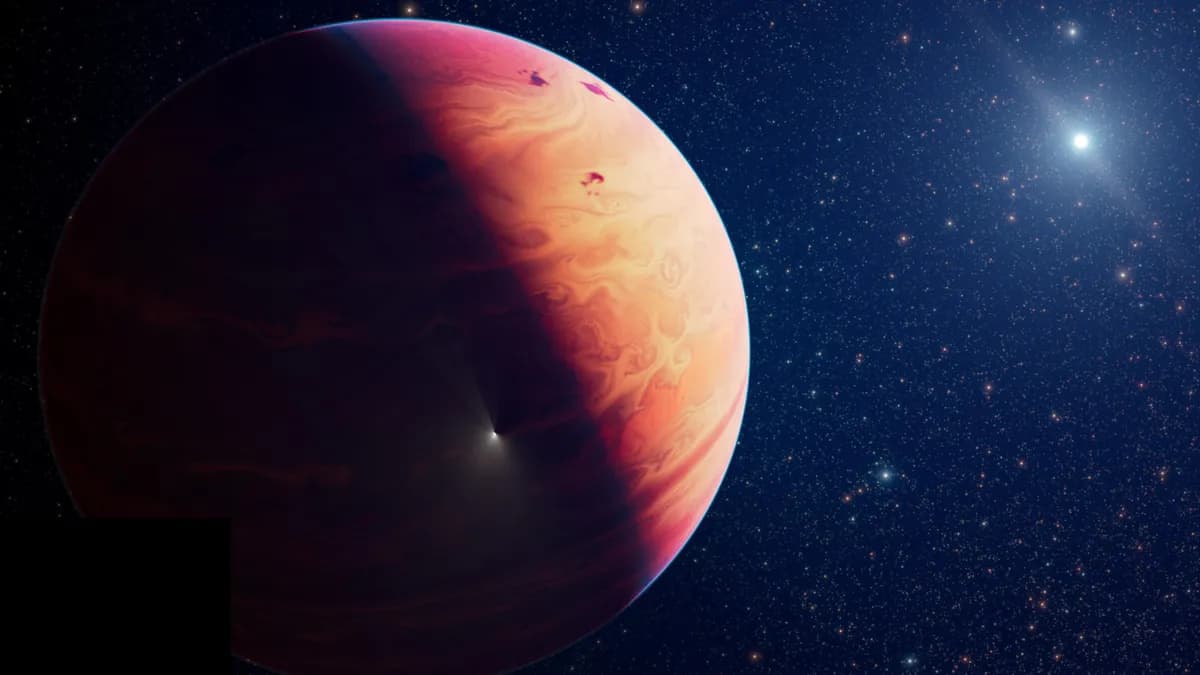
- •JWST directly imaged 29 Cygni b, a gas giant 15 times Jupiter's mass, 133 light-years away.
- •Atmospheric analysis revealed three lines of evidence supporting a bottom-up formation process.
- •The findings suggest even supergiant planets may form like smaller worlds, not like stars.
A Planet on the Boundary
133 light-years from Earth orbits a peculiar object. The gas giant known as 29 Cygni b carries roughly 15 times the mass of Jupiter, straddling the boundary between planet and star. Now, the James Webb Space Telescope (JWST) has observed this world directly — and found clues that may finally answer one of astronomy's most persistent questions: how do the most massive planets form?
Two Pathways, One World
Planetary formation theory offers two broad mechanisms. The 'bottom-up' process sees dust and ice gradually accumulating into progressively larger bodies. The 'top-down' process mirrors stellar birth: dense pockets of gas and dust within protoplanetary disks collapse directly under gravity. Until now, super-massive planets like 29 Cygni b were presumed to require the top-down route.
29 Cygni b complicates that assumption. Its mass points toward top-down formation, but its wide orbit — averaging about 2.4 billion kilometers from its star, comparable to Uranus in our solar system — hints otherwise.
Three Lines of Evidence
Using JWST's Near-Infrared Camera (NIRCam), the research team directly imaged 29 Cygni b as part of a program targeting four young, hot exoplanets with masses between one and 15 times Jupiter's.
By analyzing light absorbed by carbon dioxide and carbon monoxide, the team uncovered three key findings.
First, the planet's atmosphere is roughly 150 times more metal-rich than Earth's. In astronomy, 'metals' refers to all elements heavier than helium.
Second, 29 Cygni b is significantly more metal-rich than its own parent star — indicating it accreted large quantities of metal-enriched material from its protoplanetary disk, a hallmark of bottom-up formation.
Third, the planet's orbital plane aligns with its star's rotation axis, strongly suggesting formation within a protoplanetary disk rather than through a top-down collapse.
Decades of Debate
The question of where planets end and stars begin has long divided astronomers. Since the 1990s, surveys have revealed gas giants far more massive than Jupiter — objects too large to call typical planets, yet too small to ignite nuclear fusion. The approximate threshold for deuterium fusion sits near 13 Jupiter masses, a boundary 29 Cygni b approaches closely.
The JWST, fully operational since 2022, has transformed the field by enabling detailed atmospheric chemistry analysis of worlds hundreds of light-years away.
Outlook [AI Analysis]
This study raises the possibility that even supergiant planets can form through bottom-up processes — but a single case is not enough to rewrite theory. As the remaining three exoplanets in the program are observed, patterns in metal enrichment and orbital alignment may emerge.
If consistent results appear across multiple targets, the field may move toward redefining the planet-star boundary not just by mass, but by formation mechanism. In the longer term, a refined theory of planetary formation would sharpen our understanding of how frequently Earth-like, potentially habitable environments arise across the galaxy.
댓글 (28)
좋은 정리입니다. James의 향후 전망이 궁금합니다. 계속 지켜봐야겠습니다.
친구한테도 추천했습니다.
흥미로운 주제입니다. Space 기사에서 언급된 사례가 흥미로웠습니다.
흥미로운 주제입니다. 제임스웹우주망원경 관련 데이터가 인상적이었습니다. 좋은 기사 감사합니다.
외계행성이 일상에 어떤 영향을 줄지 생각해보게 됩니다.
James 기사에서 언급된 사례가 흥미로웠습니다.
Webb 관련 데이터가 인상적이었습니다.
Space 주제로 시리즈 기사가 나오면 좋겠습니다.
제임스웹우주망원경 기사에서 언급된 사례가 흥미로웠습니다. 주변에도 공유해야겠어요.
좋은 정리입니다. 외계행성 기사에서 언급된 사례가 흥미로웠습니다. 후속 기사 부탁드립니다.
James이 일상에 어떤 영향을 줄지 생각해보게 됩니다.
좋은 정리입니다. Webb 관련 배경 설명이 이해하기 쉬웠습니다. 해외 동향도 함께 다뤄주시면 좋겠습니다.
Space에 대해 처음 접하는 정보가 있었습니다.
출퇴근길에 항상 읽고 있습니다.
외계행성 관련 배경 설명이 이해하기 쉬웠습니다.
James 관련 해외 동향도 궁금합니다. 잘 정리된 기사네요.
좋은 정리입니다. Webb에 대해 주변 사람들과 이야기 나눠볼 만합니다.
Space 관련 통계가 의외였습니다.
제임스웹우주망원경 관련 데이터가 인상적이었습니다. 좋은 기사 감사합니다.
구독 중인데 만족합니다.
몰랐던 사실을 알게 됐습니다. James 관련 배경 설명이 이해하기 쉬웠습니다.
이런 시각도 있었군요. Webb이 앞으로 어떻게 전개될지 주목해야겠습니다. 해외 동향도 함께 다뤄주시면 좋겠습니다.
유익한 기사네요. Space에 대해 더 알고 싶어졌습니다. 좋은 기사 감사합니다.
핵심만 잘 정리해주시네요.
외계행성에 대해 더 알고 싶어졌습니다.
James이 앞으로 어떻게 전개될지 주목해야겠습니다.
기사 잘 읽었습니다.
몰랐던 사실을 알게 됐습니다. Space 관련 용어 설명이 친절해서 좋았습니다. 다른 시각의 분석도 읽어보고 싶습니다.
More in Life

코크란 리뷰 '항아밀로이드 알츠하이머 치료제, 임상적 효과 없다'
병든 세포에 건강한 미토콘드리아 전달하는 'MitoCatch' 기술 등장

'집단 패턴'으로 외계 생명체 탐색하는 새 방법론 제시
NASA Astronauts Pull Off a Classic Optical Illusion Gag on the ISS
평생 쌓인 DNA 돌연변이, 자가면역 질환의 숨겨진 방아쇠였다
From Geothermal Spa to Boat Party: How to Experience the Aug. 12, 2026 Total Solar Eclipse in Spain and Iceland
Latest News

원화 수출 결제 비중 3.4%, 33년 만에 사상 최고
2025년 원화 수출 결제 비중 3.4%로 1992년 통계 작성 이래 사상 최고치 기록
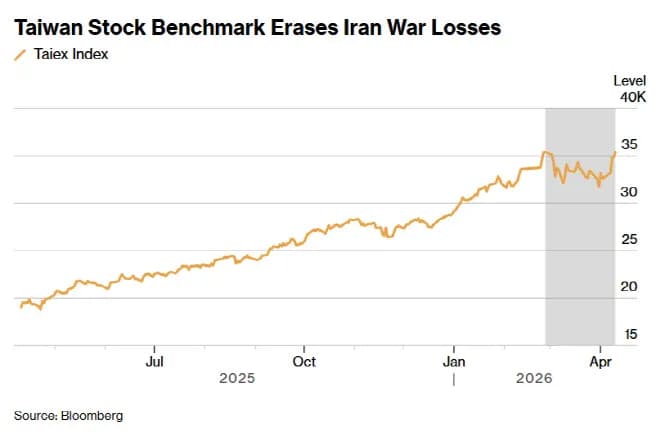
미-이란 협상 기대감에 닛케이 사상 최고치, 아시아 증시 동반 상승
닛케이 225 지수가 장중 사상 최고치를 돌파하며 1.6% 이상 상승했다.

호르무즈 봉쇄가 바꾼 세계 에너지 지도
호르무즈 봉쇄로 유럽의 미국산 항공유 수입이 2015년 이후 최고치를 기록했다.
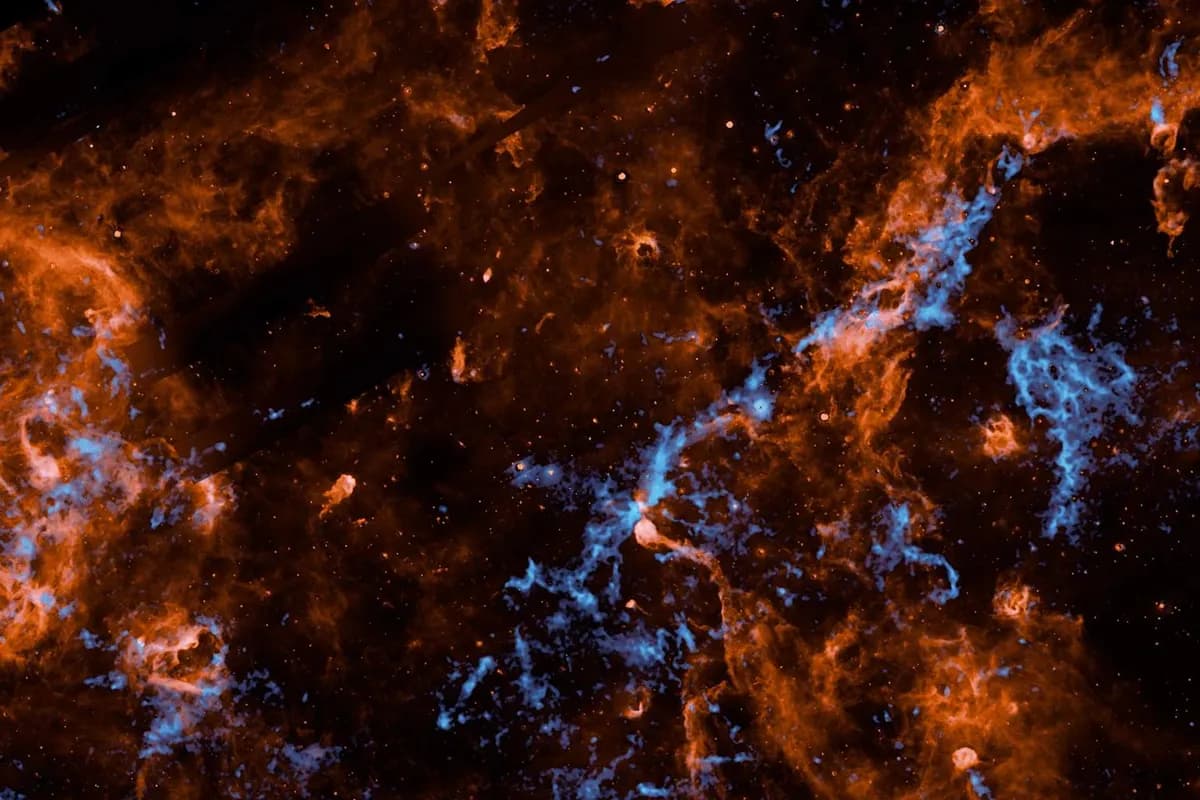
NASA SPHEREx, 은하수 600광년 뻗은 '성간 빙하' 지도 완성
NASA SPHEREx가 백조자리 X 지역에서 600광년 이상 뻗은 성간 얼음층을 최초로 전천 관측했다.

이재명, 'AI 제조혁신·국부펀드' 총동원령…위기를 기회로
이재명 대통령, 수보회의서 AI 제조혁신과 국부펀드 설립 총동원 지시.

서울 아파트값 7개월 만에 첫 하락…세금 폭탄 앞 급매 쏟아져
서울 아파트 실거래가지수가 3월에 0.59% 하락해 7개월 만에 첫 내림세를 기록했다.

초전도 양자 쌍 첫 촬영 성공, 70년 BCS 이론의 맹점 드러나
프랑스 CNRS 연구팀이 Physical Review Letters에 초전도 양자 쌍 형성 과정의 최초 직접 이미징 결과를 발표했다.
면화 가격 18.5% 급등… 호르무즈 봉쇄가 바꾼 글로벌 섬유 시장
면화 선물 가격이 중동 전쟁 이후 18.5% 급등해 파운드당 0.77달러를 기록했다.