Lucid Cosmos Unveiled: Can It Challenge the Tesla Model Y?
- •Lucid Cosmos Unveiled: Can It Challenge the Tesla Model Y?
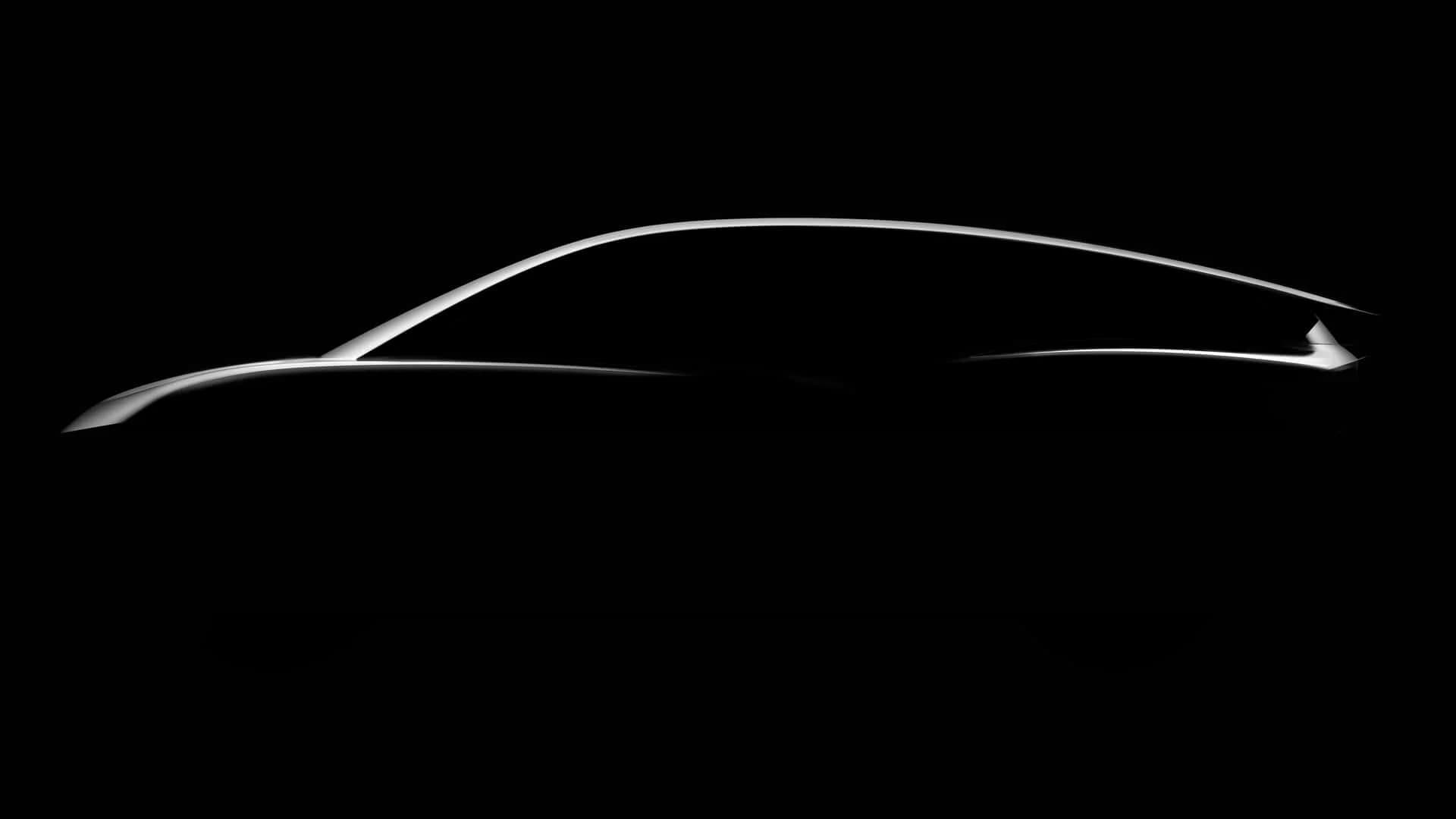
American electric vehicle brand Lucid has unveiled the physical prototype of its long-awaited mid-size crossover, the Cosmos, for the first time in New York. A journalist who attended last week's Investor Day event in New York reported being surprised, stating, "Instead of the exaggerated promotions and sparse information commonly seen at industry events, Lucid poured out clear roadmaps and specific technical details."
At this event, Lucid not only revealed the Cosmos prototype but also showcased the body-in-white, the new Atlas drive unit, next-generation electrical architecture, and even surprised attendees with the Lunar robotaxi concept, demonstrating serious commitment to their mid-size platform. Although photography was prohibited, we can share all the details observed on-site.
$50,000 Mid-Size Crossover Competing with Model Y and Rivian R2
The Lucid Cosmos is expected to have a starting price of approximately $50,000 (about 66 million Korean won). At this price point, it will directly compete with the Tesla Model Y, Rivian R2, BMW iX3, and Volvo EX60. The mid-size electric crossover market is currently the hottest battleground, and Lucid is jumping into this fight.
The prototype displayed on-site was in a vivid red color, and Lucid stated it was "very close to the final design." According to reports, there were no exaggerated fender protrusions or unrealistically large wheels commonly seen in concept cars. This indicates it's a genuine prototype ready for production.
Exterior Resembling a Scaled-Down Gravity, But with a Coupe Roofline
The Cosmos gives the initial impression of being a downsized version of the Lucid Gravity. It features a short, curvaceous front end, a coupe-like sloping roofline, and illuminated Lucid emblems front and rear, with wider letter spacing and much larger fonts than the existing Air or Gravity models.
Sharp, angular daytime running lights (DRL) and matrix headlamps create a strong impression, with a front lidar sensor embedded inside the grille. This is a device to support Lucid's ambitious personal autonomous driving and robotaxi capabilities currently in development.
The side profile, like the Gravity, employs a cab-forward design to maximize interior space. However, the most noticeable change is the manual door handles. While still flush with the body, they feature a recessed groove allowing users to insert their hand and pull a lever to open the door.
This is a small but significant change, as many manufacturers are returning to manual handles after electronic door handles have caused safety controversies worldwide. When low-voltage batteries fail, electronic handles may not operate, preventing doors from opening in accidents.
Polarizing Rear Design, But Aerodynamics Achieve 0.22 Cd
The Cosmos' rear appearance may be polarizing. It's reminiscent of the Audi Q6 Sportback e-tron but feels lower, sportier, and more aggressive. Thanks to this smooth shape, it achieves a drag coefficient (Cd) of 0.22, with an expected range exceeding 300 miles (approximately 480 km).
Derek Jenkins, Senior Vice President of Design and Brand at Lucid, explained the rear design as "a three-dimensional puzzle problem." He stated, "We had to solve for excellent interior space and headroom, generous cargo space, good rear visibility, and outstanding aerodynamic taper all at once."
While Jenkins acknowledged the rear design might be polarizing, he confidently stated, "Considering functional requirements, it was an inevitable choice, and we've solved many traditional disadvantages of coupe forms."
Exact cargo space dimensions haven't been disclosed yet, but both the rear trunk and frunk (front trunk) appeared generous in the prototype.
Minimalist and Luxurious Interior with Pillar-to-Pillar Display
The interior has a minimalist yet luxurious atmosphere. The steering wheel is identical to the Gravity's, but the existing curved display and center console screen have disappeared, replaced by a single wide display extending from behind the steering wheel to the passenger side. However, unlike the Mercedes-Benz EV's MBUX Hyperscreen, it doesn't completely span pillar-to-pillar and is slightly offset toward the driver's side.
Lucid changed the Gravity's screen layout to better support autonomous driving-related features and create shared experiences for passengers to enjoy together. Jenkins described this as "a democratic experience for passengers."
He explained, "We have many plans for how to show navigation and display AI systems," adding that "third-party apps could occupy the entire screen rather than just a portion, especially during high-level autonomous driving or charging stops."
Right-hand-drive screen versions are also planned, with different mounting points. Lucid plans to expand to seven European countries this year, including the UK and Germany.
Seat materials vary by trim, offering fabric and non-leather blends, with door panels using recycled materials. Fortunately, physical buttons are retained, allowing drivers easy access to important functions like climate control and volume without navigating touchscreen menus.
While the Cosmos has a sporty, performance-focused design, Lucid revealed that the Earth model will have a more angular silhouette, and a third, yet-unnamed model will be adventure-oriented.
Both LFP and NMC Batteries Offered, 300 Miles with 69kWh
While Lucid hasn't confirmed exact battery capacity and range, CEO Marc Winterhoff stated they will offer both lithium iron phosphate (LFP) and nickel manganese cobalt (NMC) battery packs for the mid-size platform.
LFP is the dominant battery type in China, with advantages including good durability, lower cost, and reduced rare earth dependency. However, energy density is lower than NMC, making it more suitable for entry-level trims. That said, recent advances in packaging technology by major Chinese battery companies have significantly narrowed the range gap in recent years.
Lucid revealed that the mid-size platform can achieve a 300-mile range with just 69kWh capacity. Actual battery size and range may be higher, which will be revealed later. However, considering most electric SUVs require larger batteries to achieve this range, it's a promising starting point.
The Cosmos battery employs structural design like the Tesla Model Y. Power electronics are positioned under the rear seats, which is excellent for serviceability. Since most battery issues arise from electronics rather than individual cells, this allows technicians to access components directly from under the rear seat without lifting the vehicle and removing the battery.
This is also an 800V battery architecture, enabling 200 miles (approximately 320 km) of range to be added in just 14 minutes of charging. This is significantly faster than the Model Y or new Rivian R2, and similar to the BMW iX3 or Volvo EX60.
It also includes an important feature most Teslas don't yet support: AC bidirectional charging. This includes V2H (Vehicle-to-Home), V2L (Vehicle-to-Load), V2V (Vehicle-to-Vehicle), and V2X (Vehicle-to-Everything) capabilities. This means you can power external appliances, light up a campsite, or even power an entire home with proper equipment.
Charging occurs through a Tesla-style NACS (North American Charging Standard) port located on the vehicle's rear left side.
Next-Generation Electrical Architecture Simplified to Three ECUs
The mid-size platform takes the Gravity's zonal architecture a step further with a centralized architecture—a simpler, more powerful electrical and computing system with lower manufacturing costs.
Lucid showed a disassembled version of this electrical system, which reportedly had a surprisingly small number of components. While the Gravity has about 12 ECUs (Electronic Control Units), the mid-size platform has only three total ECUs: one large central ECU and one on each side of the vehicle. ECUs are computers that act as "brains" controlling and managing various vehicle functions.
As a result, the Cosmos has only 0.6 miles (approximately 1.1 km) of wiring. According to Lucid, the Tesla Model Y has 0.8 miles and the Xiaomi SU7 has 1.4 miles. Fewer ECUs enable more frequent wireless updates, and the system simplicity allows for adding more AI and autonomous driving features over time. It also simplifies vehicle assembly and lowers manufacturing costs, which is key to meeting the $50,000 starting price.
New Atlas Drive Unit Smaller and Lighter Than Model Y's
In a private room, Lucid officials unveiled the new Atlas drive unit to be installed in mid-size electric vehicles. Drive units typically consist of planetary reduction gear sets, differentials, rotors, stators, inverters, and integrated cooling systems.
To demonstrate how compact the Atlas is, Lucid placed it alongside drive units from the Model Y, Hyundai Ioniq 5, and Gravity. The Atlas was noticeably smaller than both the Tesla and Hyundai units, and even smaller than Lucid's own Zeus motor (installed in the Gravity). The Ioniq 5 unit appeared bulky in comparison.
The Atlas has 30% fewer parts than Zeus, 37% lower material costs, and is 23% lighter. Additionally, the front and rear Atlas drive units are essentially identical, reducing manufacturing complexity. This compact size enables the Cosmos' excellent packaging and interior space utilization, which is also an advantage of the Gravity.
Compared to the Model Y drive unit, power density is 40% higher and energy efficiency is improved by 10%, leading Lucid to expect the Cosmos to achieve up to 4.5 miles/kWh efficiency. Most current U.S. electric vehicles show 2.5-4.0 miles/kWh efficiency in real-world driving, though this varies with driving style, weather, and road conditions.
Performance-wise, the all-wheel-drive version is expected to accelerate from 0-60 mph (0-96 km/h) in 3.5 seconds, while the rear-wheel-drive model will be the range and efficiency champion.
Body Without Gigacasting: Strategy to Lower Insurance Costs
The journalist also saw the Cosmos body-in-white, which is the bare steel and aluminum shell before powertrain, interior, and chassis components are installed.
A notable difference was the absence of gigacasting. Lucid engineers explained that instead of casting entire front and rear underbodies as single massive aluminum pieces like Tesla, Volvo, and many manufacturers do to reduce costs, the Cosmos uses smaller steel and aluminum castings and aluminum extrusions.
However, megacasting is used at the four corner wheel arches. Lucid stated that avoiding large gigacasting can lower insurance premiums and reduce total cost of ownership long-term. This is a direct response to well-known industry concerns about expensive repair costs for electric vehicles even after minor collisions.
Avoiding gigacasting allows engineers to design multi-stage crumple zones at the front—the body sections that absorb impact during frontal collisions. The first collision layer is designed to absorb minor impacts and be easily repaired, while the second, stronger layer handles more severe collisions while keeping the shell intact and still repairable. Of course, gigacasting tends to lower production costs, so there are trade-offs. We'll see if this was worthwhile once we know the Cosmos price and how easy repairs actually are.
First Production in Saudi Arabia Late This Year, U.S. 6-12 Months Later
Lucid plans to produce the Cosmos first in Saudi Arabia, then later in the United States. Initial production begins in Saudi Arabia late this year, with some early batches heading to the U.S. first. The factory near Jeddah in King Abdullah Economic City, Saudi Arabia, will target Middle Eastern, European, and other global markets. Approximately 6-12 months after Saudi Arabian production begins, Lucid plans to start secondary production at its Arizona factory, where most vehicles for the U.S. market will eventually be built.
The mid-size electric vehicle is also central to Lucid's robotaxi ambitions. Lucid has already confirmed that mid-size models will be deployed on the Uber platform in the future. Considering current geopolitical situations and supply chain disruptions from the Iran war, mid-size electric vehicles could face some headwinds. However, Lucid officials stated that the Iran war hasn't delayed work so far.
The Most Important Car That Will Determine Lucid's Fate
Summarizing everything revealed today, the Cosmos will truly be the most important car Lucid has ever made. Lucid is currently burning through cash rapidly, and the mid-size model could be the clearest opportunity toward profitability. However, success is by no means guaranteed in this fiercely competitive environment.
If the Cosmos delivers on all these promises, it could be a game-changer for the brand. While competing with the Model Y, Rivian R2, BMW iX3, and Volvo EX60, it has the potential to gain advantages in efficiency, charging speed, interior space, and advanced electrical architecture. Particularly, the 4.5 miles/kWh efficiency and 200-mile charging in 14 minutes are attractive points for Korean consumers as well.
Whether it will officially launch in the Korean market remains uncertain, but given Lucid's plans to expand to seven European countries this year, future entry into Asian markets is worth anticipating. What do you think of the Lucid Cosmos? Can it become a real competitor to the Model Y?
댓글 (4)
Lucid 관련 기사 잘 읽었습니다. 유익한 정보네요.
좋은 의견이십니다.
Cosmos에 대해 더 알고 싶어졌습니다. 후속 기사 부탁드립니다.
그 부분은 저도 궁금했습니다.
More in Global





Latest News

당정, 석유 최고가격제 손실 보전을 추경에 반영키로
당정이 석유 최고가격제 손실을 추경에 반영하기로 결정

6년 전 세 살 딸 살해한 30대 친모 구속송치
경찰, 6년 전 세 살 딸 살해 혐의 30대 친모를 구속송치

中企 수입 나프타의 80% 이상이 중동산…공급망 위기 심화
중소기업 수입 나프타의 80% 이상이 중동산으로 공급 의존도 높음

미·이란 긴장 한 달, 금융시장 요동…장기화 우려
미·이란 갈등으로 증시 변동성 확대, 코스피 6천 고지 후 등락

미·이란 전쟁 한 달, 미국 전문가 "종전·확전 기로"
미·이란 전쟁 1개월 도래, 종전·확전 기로 평가

미·이란 전쟁 1개월, 한국 안보·공급망 취약점 노출
미·이란 전쟁 장기화로 한국 안보·경제 취약점 노출