More than 1 million people in Lebanon flee, survival stories of civilians driven out by Israeli airstrikes
Syrian civil war refugees return to the streets, worst humanitarian crisis since 1975 civil war

- •Israeli airstrikes force more than 1 million Lebanese people to flee, creating the worst humanitarian crisis since the 1975 civil war
- •Refugees fleeing the Syrian civil war are being forced out into the streets again
- •One-fifth of Lebanon's population has lost their homes, but the international community's practical relief efforts face limitations.
Underneath the giant crescent moon statue, evacuation has begun again
Fatima, a 45-year-old woman, is calling to her children under the giant crescent moon statue in front of the Mohammed al-Amin Mosque in downtown Beirut, Lebanon. She left her home with her family on March 2 when Israeli airstrikes hit the southern suburb of Burj al-Barajneh.
Fatima's family is originally from Syria. I came to Lebanon to escape the civil war in Syria, but now I find myself on the streets again. Her 70-year-old mother, Warde, sitting in a wheelchair, took refuge under this very Crescent Moon statue when Israel attacked the same area in 2024.
“Children are different from adults. They have fears and fears.” Fatima says she decided to leave home when her sons started crying at the sound of the explosion. “The children have been hungry since yesterday. There is no food or anything to drink. They froze last night.”
Fatima testified that authorities in Beirut provided no help. Some citizens saw the family shivering in the cold and brought them blankets. “Now I am scared to go back. They say the bombings will continue. So I have no choice but to sit here on the floor. What should I do? There is no solution.”
The next day, this family was not there.
Worst humanitarian disaster since the 1975 civil war
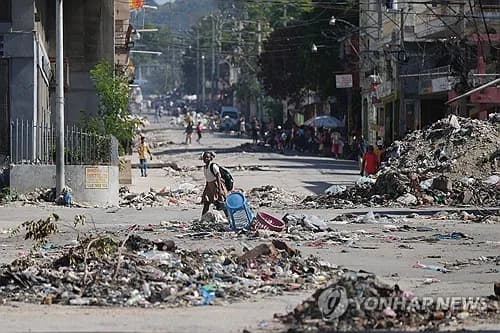
According to the Lebanese Ministry of Health, Israeli airstrikes have killed more than 1,000 people, 118 of them children. More than 1 million people lost their homes and were forced to flee. This is the deadliest conflict since Lebanon's 1975-1990 civil war.
Israel says it is targeting Hezbollah, but its airstrikes have expanded into residential areas in southern and eastern Lebanon, Beirut's southern suburbs and, more recently, into central Beirut.
According to the United Nations, the area designated as an evacuation zone is about 1,550 square kilometers (600 square miles). As of mid-March, approximately one-fifth of Lebanon's population had lost their homes due to Israeli military operations.
Teenager's testimony: "They were bombing in front of us."
Across from the statue where Fatima's family stayed, two teenage boys lie on thin mattresses against a wall covered in purple and yellow graffiti.
Until a few days ago, 16-year-old Karim lived in Dahieh, a southern suburb of Beirut, doing odd jobs to earn money. I lived in an apartment with my family and shared a room with my brother.
On the night of February 28, the day the United States and Israel killed Iran's Supreme Leader Ali Khamenei, Karim was told that "trouble would soon come to Lebanon." I didn't believe it at first. But when Israel began attacking the southern suburbs, Karim, his parents and brother narrowly escaped the airstrikes as they fled by car on the 'Airport Road', which connects downtown Beirut with Rafic Hariri International Airport.
“They were bombing in front of us. They were cutting off the road.”
After arriving in downtown Beirut, Karim's family visited schools that had been converted into temporary shelters, but most were already full.
Historical context: Lebanon's recurring tragedy
Lebanon has long been a stage for conflict in neighboring countries due to its geopolitical location. The civil war, which lasted for 15 years from 1975 to 1990, claimed the lives of approximately 120,000 people and devastated the country's infrastructure.
In the 2006 Israel-Hezbollah war, more than 1,000 Lebanese civilians were killed and 1 million people fled. The 2020 Beirut port explosion killed more than 200 people and left 300,000 homeless, dealing a crushing blow to an already fragile economy.
The Syrian civil war (2011-present) has brought more than 1.5 million Syrian refugees to Lebanon. Like Fatima's family, there are quite a few double refugees who escaped the war in Syria and were bombed again in Lebanon.
The Israel-Hezbollah conflict, which has intensified since 2024, is expanding into an all-out war in 2025. With tensions across the Middle East extremely high following the murder of Iran's supreme leader, Lebanese civilians are once again paying the price.
Future outlook [AI analysis]
Considering the current situation, it is highly likely that Lebanon's humanitarian crisis will be difficult to resolve in the short term.
Possibility of escalation: There is always a possibility of retaliation by Iran and its proxies following the murder of Iran's supreme leader. In this case, Lebanon could become a battlefield for a larger conflict.
Deepening economic collapse: Lebanon has suffered an economic crisis that began in 2019, with more than 80% of the population already below the poverty line. Large-scale evacuations and destruction of infrastructure are expected to make recovery even more difficult.
Limitations of the international community: Although the UN and international organizations are promising humanitarian support, there appear to be limits to actual relief efforts as hostilities continue.
Spread of the refugee crisis: As the number of refugees increases in Lebanon and the issues of Syrian and Palestinian refugees overlap, there is a possibility that the refugee crisis will spread throughout Europe and the Middle East.
As Fatima said, “there is no solution” is the reality facing Lebanese civilians. No one knows where the family went after spending a night under the giant crescent moon statue.
댓글 (6)
More 상황이 심각하네요. 서민들 피해가 걱정됩니다.
걱정이 많이 되네요. 좋은 지적입니다.
이 위기를 어떻게 극복할 수 있을지 전문가 의견이 더 필요합니다.
맞습니다. 대비가 필요한 시점이에요.
million 문제가 장기화되면 어떻게 될지 우려됩니다.
맞습니다. 대비가 필요한 시점이에요.
More in Global


Latest News

당정, 석유 최고가격제 손실 보전을 추경에 반영키로
당정이 석유 최고가격제 손실을 추경에 반영하기로 결정

6년 전 세 살 딸 살해한 30대 친모 구속송치
경찰, 6년 전 세 살 딸 살해 혐의 30대 친모를 구속송치

中企 수입 나프타의 80% 이상이 중동산…공급망 위기 심화
중소기업 수입 나프타의 80% 이상이 중동산으로 공급 의존도 높음

미·이란 긴장 한 달, 금융시장 요동…장기화 우려
미·이란 갈등으로 증시 변동성 확대, 코스피 6천 고지 후 등락

미·이란 전쟁 한 달, 미국 전문가 "종전·확전 기로"
미·이란 전쟁 1개월 도래, 종전·확전 기로 평가

미·이란 전쟁 1개월, 한국 안보·공급망 취약점 노출
미·이란 전쟁 장기화로 한국 안보·경제 취약점 노출