Open-Source Team Trains mRNA Language Models Across 25 Species for $165
OpenMed releases end-to-end protein AI pipeline; CodonRoBERTa outperforms ModernBERT on codon optimization
- •OpenMed trained mRNA language models across 25 species for $165 and 55 GPU-hours.
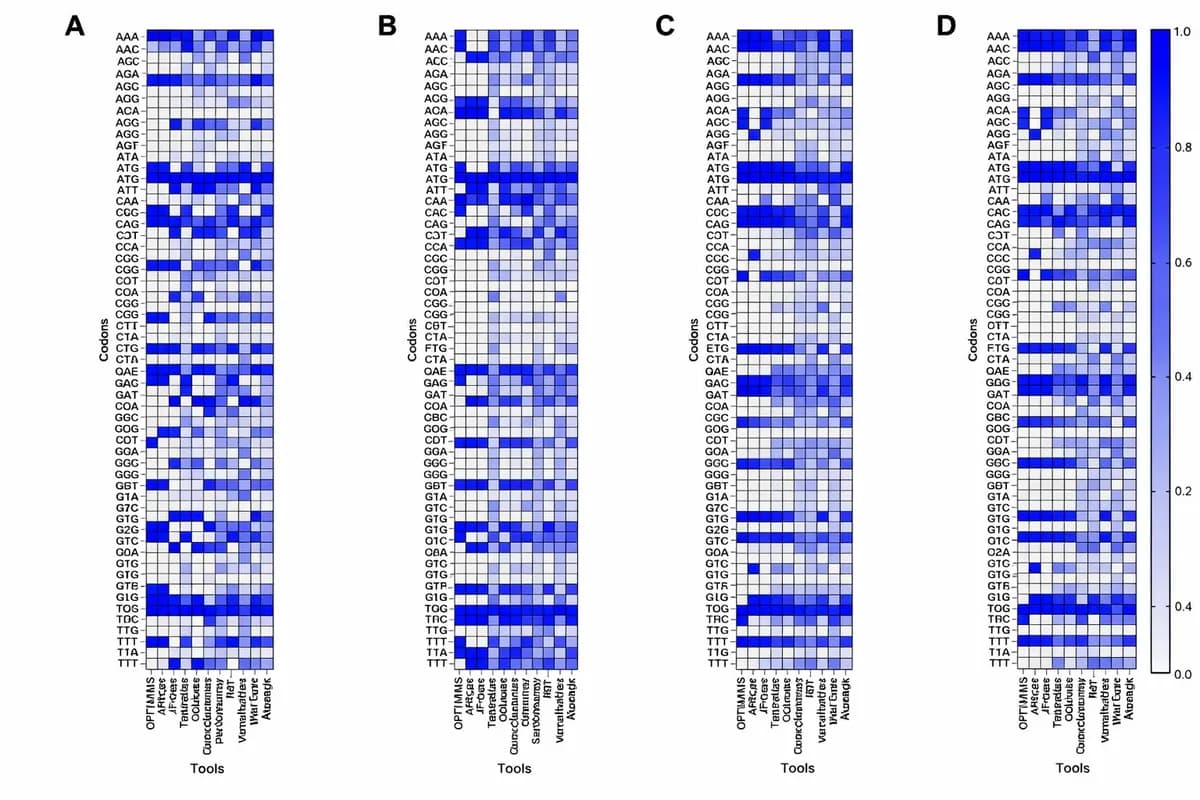
- •CodonRoBERTa-large-v2 achieved perplexity 4.10 and CAI correlation 0.40, beating ModernBERT.
- •A complete open-source pipeline linking structure prediction, sequence design, and codon optimization is now publicly available.
From Protein Concept to Synthesis-Ready DNA in One Pipeline
OpenMed, an open-source medical AI initiative, has successfully trained mRNA language models spanning 25 biological species for just $165 using 55 GPU-hours. The team built four production models and delivered a species-conditioned system that no other open-source project currently offers, according to a detailed post published on the Hugging Face Blog.
The project's central achievement is that CodonRoBERTa-large-v2 recorded a perplexity of 4.10 and a Spearman CAI (Codon Adaptation Index) correlation of 0.40 in codon-level language modeling experiments, significantly outperforming ModernBERT across all major metrics.
Why Codon Optimization Matters
The genetic code is degenerate: the same protein can be encoded by an astronomically large number of DNA sequences, yet some codon arrangements express up to 100 times more efficiently than others. The most visible real-world application of this principle is the Pfizer-BioNTech COVID-19 vaccine, whose mRNA sequence was codon-optimized for efficient expression in human cells.
Codon optimization is an essential step across therapeutic mRNA, vaccines, and recombinant protein production. However, most existing tools either rely on closed, commercial software or support only a single species. OpenMed set out to fill this gap with an open-source alternative.
Architecture Exploration: What Works Best for Codons?
BERT-family models (ESM-2, ProtTrans) already dominate protein AI. But codon sequences have distinct statistical properties compared to natural language or amino acid sequences — they are triplets drawn from a 64-token alphabet, with strong positional dependencies and species-specific usage biases.
The OpenMed team ran comparative experiments across multiple transformer architectures. CodonRoBERTa-large-v2 emerged as the clear winner, outperforming ModernBERT on every key metric.
| Model | Perplexity | Spearman CAI Correlation | Notes |
|---|---|---|---|
| CodonRoBERTa-large-v2 | 4.10 | 0.40 | Top performer |
| ModernBERT | Higher (worse) | Lower (worse) | Comparison baseline |
Lower perplexity and higher CAI correlation both indicate better prediction of real-world cellular expression efficiency.
Three-Stage Pipeline Architecture
OpenMed's pipeline addresses three distinct stages of the protein engineering workflow.
Stage 1 — Structure Prediction Meta's ESMFold predicts the 3D structure of the target protein.
Stage 2 — Sequence Design The Baker Lab's ProteinMPNN performs inverse design — determining which amino acid sequences will fold into that structure.
Stage 3 — mRNA Optimization OpenMed's custom CodonRoBERTa model optimizes the DNA codons to maximize expression efficiency in the target organism. This third stage is where the team invested the most effort.
Scaling to 25 Species and Species-Conditioned Modeling
While single-species models have existed before, OpenMed's differentiator is scaling to 25 species and building a species-conditioned system — a single model that learns distinct codon usage biases for each organism. The team reports that no other open-source project offers this level of multi-species support.
The total training cost was 55 GPU-hours at approximately $165 — a figure low enough for academic labs and startups worldwide to consider training their own models.
How We Got Here: The Historical Thread
When DeepMind's AlphaFold2 effectively solved protein structure prediction in 2021, the center of gravity in protein AI shifted rapidly from structure prediction toward sequence design and expression optimization. From 2022 onward, open-source tools like ESMFold and ProteinMPNN democratized access to previously closed workflows.
Codon optimization has been the last major segment to open up. Commercial services from companies like Twist Bioscience and Integrated DNA Technologies have dominated the market, while open-source alternatives remained limited in scope or single-species. OpenMed's work directly targets this gap.
[Expert Analysis] The Last-Mile Problem in Biopharma AI
Codon optimization has long been called the "last mile" of protein design. AI rapidly conquered structure prediction and sequence design, but predicting and optimizing actual cellular expression remained heavily dependent on empirical rules and commercial black boxes.
Three factors make OpenMed's approach notable. First, the democratization of training cost — $165 puts model training within reach of research groups globally, including those in lower-resource settings. Second, 25-species support opens doors beyond human therapeutics into agriculture and veterinary medicine. Third, a complete end-to-end open-source pipeline creates the foundation for reproducible science.
However, wet-lab validation data — evidence that these computational improvements translate to actual cellular expression gains — has not yet been published. The gap between computational metrics (perplexity, CAI) and real expression efficiency remains, and clinical-grade applications will likely require additional validation.
This pipeline has a high probability of being adopted as baseline infrastructure by synthetic biology startups and university research labs. Given the accelerating pace of mRNA vaccine development, demand for low-cost, high-performance open-source codon optimization tools is likely to grow steadily.
댓글 (57)
Open-Source의 향후 전망이 궁금합니다.
Team의 전문가 코멘트가 설득력 있었습니다.
Trains 주제로 시리즈 기사가 나오면 좋겠습니다.
아침에 읽기 딱 좋은 분량이에요.
코돈최적화 기사에서 언급된 사례가 흥미로웠습니다. 후속 기사 부탁드립니다.
매일 여기서 뉴스 보고 있어요.
Team 관련 배경 설명이 이해하기 쉬웠습니다.
유익한 기사네요. Trains의 향후 전망이 궁금합니다.
요즘 이 매체 기사가 제일 읽기 좋아요.
기사 잘 읽었습니다.
기자님 수고하셨습니다.
Team에 대해 처음 접하는 정보가 있었습니다.
Trains 관련 데이터가 인상적이었습니다. 생각이 바뀌었습니다.
mRNA의 향후 전망이 궁금합니다.
잘 읽었습니다. 코돈최적화 관련 배경 설명이 이해하기 쉬웠습니다.
Open-Source 주제로 시리즈 기사가 나오면 좋겠습니다. 계속 지켜봐야겠습니다.
몰랐던 사실을 알게 됐습니다. Team 관련 데이터가 인상적이었습니다.
Trains에 대한 다른 매체 보도와 비교해봐도 잘 정리되어 있습니다.
mRNA에 대해 더 알고 싶어졌습니다.
참고가 됩니다. 코돈최적화 관련 배경 설명이 이해하기 쉬웠습니다. 다른 시각의 분석도 읽어보고 싶습니다.
이런 시각도 있었군요. Open-Source에 대한 다른 매체 보도와 비교해봐도 잘 정리되어 있습니다.
유익한 기사네요. Team이 일상에 어떤 영향을 줄지 생각해보게 됩니다.
흥미로운 주제입니다. Trains 관련 데이터가 인상적이었습니다.
유익한 기사네요. mRNA 관련 통계가 의외였습니다.
코돈최적화에 대한 다른 매체 보도와 비교해봐도 잘 정리되어 있습니다. 계속 지켜봐야겠습니다.
Open-Source 주제로 시리즈 기사가 나오면 좋겠습니다.
Team 관련 용어 설명이 친절해서 좋았습니다.
Trains 관련 통계가 의외였습니다.
이런 시각도 있었군요. mRNA의 전문가 코멘트가 설득력 있었습니다. 생각이 바뀌었습니다.
코돈최적화 관련 배경 설명이 이해하기 쉬웠습니다.
유익한 기사네요. Open-Source이 앞으로 어떻게 전개될지 주목해야겠습니다.
흥미로운 주제입니다. Team 관련 용어 설명이 친절해서 좋았습니다.
Trains에 대한 다른 매체 보도와 비교해봐도 잘 정리되어 있습니다. 전문가 의견도 더 듣고 싶습니다.
mRNA에 대해 처음 접하는 정보가 있었습니다.
코돈최적화의 전문가 코멘트가 설득력 있었습니다.
Open-Source 관련 해외 동향도 궁금합니다. 계속 지켜봐야겠습니다.
Team 관련 데이터가 인상적이었습니다.
Trains 관련 용어 설명이 친절해서 좋았습니다.
구독 중인데 만족합니다.
코돈최적화에 대한 다른 매체 보도와 비교해봐도 잘 정리되어 있습니다. 전문가 의견도 더 듣고 싶습니다.
Open-Source 관련 해외 동향도 궁금합니다. 나중에 다시 읽어볼 만합니다.
Team에 대해 주변 사람들과 이야기 나눠볼 만합니다. 해외 동향도 함께 다뤄주시면 좋겠습니다.
Trains 관련 배경 설명이 이해하기 쉬웠습니다.
다른 기사도 기대하겠습니다.
읽기 좋은 기사입니다. 코돈최적화에 대해 처음 접하는 정보가 있었습니다. 후속 기사 부탁드립니다.
참고가 됩니다. Open-Source의 향후 전망이 궁금합니다. 좋은 기사 감사합니다.
Team 관련 해외 동향도 궁금합니다.
Trains에 대한 다른 매체 보도와 비교해봐도 잘 정리되어 있습니다. 다른 시각의 분석도 읽어보고 싶습니다.
mRNA 관련 통계가 의외였습니다.
잘 읽었습니다. 코돈최적화 기사에서 언급된 사례가 흥미로웠습니다.
잘 보고 있습니다.
이런 시각도 있었군요. Team 관련 데이터가 인상적이었습니다.
Trains에 대해 주변 사람들과 이야기 나눠볼 만합니다. 후속 기사 부탁드립니다.
mRNA 주제로 시리즈 기사가 나오면 좋겠습니다.
북마크해두겠습니다. 코돈최적화 관련 배경 설명이 이해하기 쉬웠습니다.
Open-Source 관련 통계가 의외였습니다. 주변에도 공유해야겠어요.
좋은 기사 감사합니다.
More in AI & Tech

애플 맥북 네오 4월 물량 완판...신규 주문 5월로 밀려
OpenAI Launches GPT-Rosalind, Specialized Reasoning AI for Life Sciences... Shaking Up Drug Development Paradigm

EU Begins Direct Talks with Anthropic Over Claude Mythos AI Cybersecurity Threats

Perplexity Officially Launches Mac-Exclusive AI Agent 'Personal Computer'
Global Financial Authorities Launch Coordinated Emergency Response to Anthropic's 'Mythos' AI Cyber Threat

Anthropic Secures 800-Person London Office...Building European Foothold Amid Pentagon Conflict
Latest News

ICIJ Exposes Merck's Keytruda Pricing Strategy and Patent Abuse
ICIJ's Cancer Calculus investigation exposes Merck's Keytruda pricing and patent strategies.

Israel-Lebanon 10-Day Ceasefire Takes Effect; UN Hopes It Opens Path to Talks
A 10-day Israel-Lebanon ceasefire took effect at midnight on April 17.
JWST, 성간 혜성 3I/ATLAS에서 메테인 최초 검출…외계 행성계 단서 포착
JWST가 성간 혜성 3I/ATLAS에서 메테인을 최초 직접 검출, 외계 행성계 내부 조성 단서 확보.

IMF Resumes Relations with Venezuela After 7 Years...Hopes for $4.9 Billion Frozen SDR Release
The IMF has resumed official relations with Venezuela after 7 years of suspension since 2019.

America's Political Cartoonists Capture the Week in Washington
Political cartoonists across the U.S. document the era through weekly satire.

IMF Resumes Relations with Venezuela After 7 Years...Possibility of Unfreezing $4.9 Billion
The IMF decided to resume official cooperation with Venezuela after seven years.

When the Jungle Swallowed Concrete: The Paradox of London's Barbican Conservatory
Photographer Altrath captures the spatial paradox of London's Barbican Conservatory in a new series.

Record-High Current Account Surplus, Yet Why is the Won Weakening?
Bank of Korea officially analyzes structural causes of continued won depreciation despite current account surplus.