Public Prosecution Service Act Reaches Plenary Session as People Power Party Launches Filibuster
Bill to Abolish Prosecution's Investigative Powers and Establish Indictment-Only Public Prosecution Service Expected to Pass on Afternoon of the 20th
- •A bill to abolish the prosecution and establish a Public Prosecution Service was introduced to the plenary session on the 19th, with the People Power Party launching a filibuster.
- •The bill abolishes the prosecution's authority to direct investigations and establishes a three-tier Public Prosecution Service dedicated to indictments, set to launch on October 2nd.
- •The Democratic Party plans to pass the bill through a vote on the afternoon of the 20th using its majority seats.
Bill to Abolish Prosecution and Establish Public Prosecution Service Reaches Plenary Session
A bill to abolish the Prosecutors' Office and establish a new Public Prosecution Service dedicated solely to indictments reached the National Assembly plenary session on the 19th, intensifying confrontation between the ruling and opposition parties. The Democratic Party of Korea plans to pass the bill through a vote around 3 PM on the 20th, leveraging its overwhelming majority.
The Public Prosecution Service Establishment Act centers on completely abolishing the prosecution's authority to direct investigations and separating investigation from indictment functions. If the bill passes, the current Prosecutors' Office and Prosecutors' Office Act will be abolished starting October 2nd, and a new three-tier organization consisting of the Public Prosecution Service, Regional Public Prosecution Services, and Local Public Prosecution Services will be launched.
People Power Party Launches Filibuster, Opposing "Collapse of Criminal Justice System"
The People Power Party launched a filibuster (unlimited debate) immediately after the bill was introduced. Representative Yoon Sang-hyun from the Legislation and Judiciary Committee took the first turn, and prior to the plenary session, the People Power Party held a protest rally at the National Assembly Rotunda Hall attended by party leader Jang Dong-hyuk and lawmakers.
The People Power Party criticized the bill as "a patchwork bill that will lead to concentration of power and collapse of the criminal justice system" and "bulletproof legislation designed to block investigations unfavorable to the regime while controlling favorable ones." Representative Na Kyung-won protested at the previous day's Legislation and Judiciary Committee meeting, saying, "If there's a need, we should excise the diseased part, but they've completely killed it."
Concerns are also emerging from the legal community. One attorney pointed out, "With the connection to investigations severed, it's questionable whether proper maintenance of indictments will be possible."
Key Provisions of the Public Prosecution Service Act
The Public Prosecution Service Act limits prosecutors' duties to: ▲deciding whether to indict and maintaining indictments ▲requesting warrants ▲consulting with and supporting judicial police officers on criminal investigations ▲requesting proper application of laws ▲directing and supervising execution of judgments ▲conducting state litigation ▲recovering proceeds of crime and international criminal judicial cooperation.
A "prohibition of abuse of authority" clause, not present in the current Prosecutors' Office Act, was also newly established. Additionally, "dismissal" was specified as grounds for disciplinary action against prosecutors, making it possible to dismiss prosecutors without impeachment proceedings.
The head of the Public Prosecution Service is designated as "Prosecutor General," maintaining the current title. Public officials belonging to the Prosecutors' Office (excluding prosecutors) may be transferred to national agencies with similar duties, such as the Corruption Investigation Office, respecting their own wishes.
Democratic Party: "Consigning the Prosecution to History"
Representative Kim Yong-min of the Democratic Party argued in his bill proposal explanation, "The prosecution became corrupt by arbitrarily abusing its concentrated powers and appointed itself as a servant of power," adding, "They ultimately became a political force, serving as a solid backer for insurrectionist forces and betraying the people."
The Democratic Party submitted a motion to terminate the filibuster immediately after it began. Since a filibuster automatically ends 24 hours after it starts, the bill is expected to be put to a vote on the afternoon of the 20th.
댓글 (3)
관계자분들의 노력에 박수를 보냅니다.
좋은 소식에 기분이 좋아지네요.
오랜만에 기분 좋은 뉴스를 접했습니다.
More in Global



Latest News
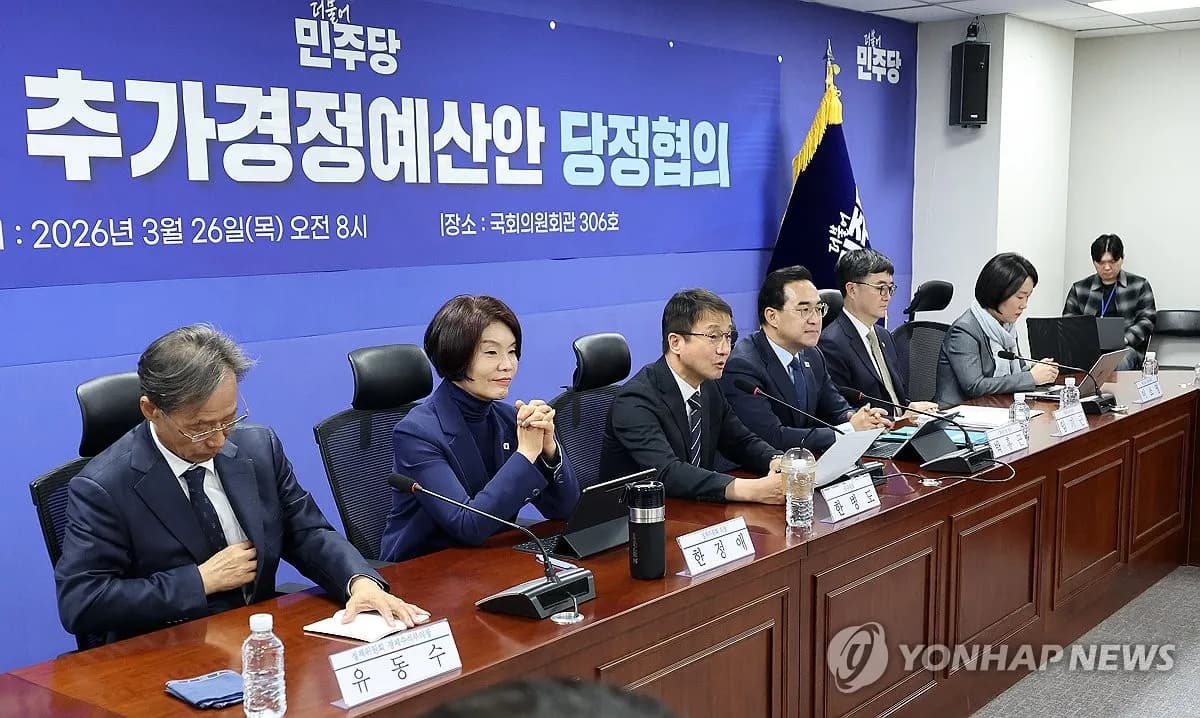
당정, 석유 최고가격제 손실 보전을 추경에 반영키로
당정이 석유 최고가격제 손실을 추경에 반영하기로 결정

6년 전 세 살 딸 살해한 30대 친모 구속송치
경찰, 6년 전 세 살 딸 살해 혐의 30대 친모를 구속송치

中企 수입 나프타의 80% 이상이 중동산…공급망 위기 심화
중소기업 수입 나프타의 80% 이상이 중동산으로 공급 의존도 높음

미·이란 긴장 한 달, 금융시장 요동…장기화 우려
미·이란 갈등으로 증시 변동성 확대, 코스피 6천 고지 후 등락

미·이란 전쟁 한 달, 미국 전문가 "종전·확전 기로"
미·이란 전쟁 1개월 도래, 종전·확전 기로 평가

미·이란 전쟁 1개월, 한국 안보·공급망 취약점 노출
미·이란 전쟁 장기화로 한국 안보·경제 취약점 노출