Quake Engine: How One Engine Changed the Gaming Industry Forever
The story of the technology that made 3D shooters a reality and laid the foundation for modern game development
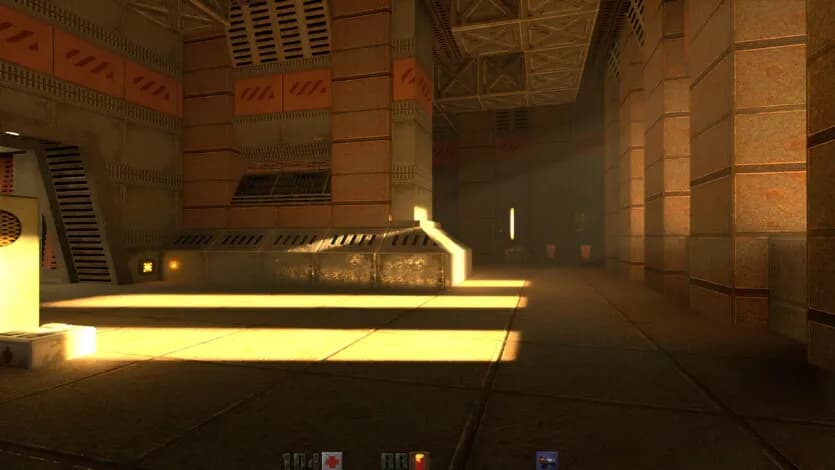
- •Quake Engine from 1996 became the first full-fledged 3D engine that demonstrated complex three-dimensional graphics were possible on home computers.
- •BSP technology, the QuakeC scripting language, and engine licensing capability created the foundation for Half-Life, Counter-Strike, and the entire modern industry.
- •Id Software published the source code in 1999, allowing thousands of developers to study professional architecture and create their own projects.
The Revolution We Forgot
When developers today launch Unreal Engine 5 or Unity, few remember that all this technological luxury became possible thanks to one engine from 1996. Quake Engine by id Software didn't just show what 3D games should look like—it created the very concept of a game engine as a separate product.
Before Quake, the industry worked differently. Each game was written from scratch, technologies remained internal studio affairs. John Carmack and his team changed the rules: they created the first full-fledged 3D engine that could be licensed, modified, and developed.
Why It Mattered
Quake Engine solved the main problem of mid-90s 3D graphics: how to display complex three-dimensional geometry on computers with 16 MB of RAM. The solution proved elegant—Binary Space Partitioning (BSP) technology.
BSP divided the game level into segments and determined which parts of the world the player could see. Everything behind the player or behind walls simply wasn't rendered. This allowed the creation of complex multi-level environments where competitors were still drawing flat corridors.
But technical excellence is only part of the story. Quake Engine became the first engine that developers could license. This gave birth to an entire industry: Half-Life, Counter-Strike, Team Fortress—all built on modified versions of Quake Engine. The industry understood: you can create games without reinventing the wheel every time.
Technological Foundation
Quake Engine's architecture consisted of several revolutionary components:
Rendering Engine—the first engine with full 3D geometry. Before this, even Doom used sprites for enemies. Quake switched to polygonal models for everything: characters, weapons, environments.
QuakeC—a scripting language for describing gameplay logic. Instead of hardcoded rules, developers gained flexibility. Want to change enemy behavior? Edit the script without recompiling the entire engine. This opened the era of modding.
The .PAK file system allowed packing all resources into one archive. This seems trivial, but it's precisely why mods began spreading massively on the internet. Download one file—and you have a new game.
Client-Server architecture for multiplayer became the standard for the next 20 years. One player creates a server, others connect. Before Quake, multiplayer was complicated and unstable; after—a common option.
From Doom to Quake: id Software's Evolution
To understand the magnitude of Quake Engine's achievement, we need to go back several years. 1993—the release of Doom. The game made first-person shooters mainstream, but technologically Doom wasn't true 3D. The engine used a clever combination of 2D maps with heights and sprites.
John Carmack, id Software's chief technical genius, understood the limitations. The next step had to be radical: true three-dimensional environments where you could look up and down, where levels had multiple floors overhead.
In 1996, this step happened. Quake didn't just improve on Doom—it rewrote the rules. The industry received proof: full-fledged 3D shooters were possible right now, without waiting for more powerful hardware.
It's also important that id Software didn't hide the technology. Quake Engine's source code was published in 1999 under the GPL license. This allowed hundreds of developers to study how a professional engine worked and create their own modifications.
Legacy: From Half-Life to the Present
Quake Engine's impact on the industry is hard to overestimate. Half-Life (1998) used a modified version of the engine (GoldSrc) and showed that shooters could tell complex stories without cutscenes. Counter-Strike was born as a Half-Life mod—and became the most popular multiplayer shooter for years.
Quake Engine's descendants—id Tech 2, 3, 4—continued the tradition of technological leadership. Id Tech 3 powered Call of Duty through the fourth installment. Id Tech 4 (Doom 3) introduced dynamic lighting and shadows.
Today the industry has moved to Unreal Engine and Unity, but the principles laid down by Quake Engine remain unchanged: modular architecture, separation of engine and content, modding support, rendering optimization through culling invisible geometry.
It can be argued that without Quake Engine, there would be no modern game development as we know it. The idea of licensing technology, openness to the community, focus on performance—all this id Software established nearly 30 years ago.
Lessons for Modern Developers
Quake Engine reminds us of several important principles:
-
Technological limitations breed innovation. BSP emerged due to lack of RAM but became the foundation for optimization for decades.
-
Openness creates ecosystems. Publishing the source code allowed thousands of developers to learn and create their own projects.
-
Modularity ensures longevity. Quake Engine's architecture proved so flexible that its descendants were used for 15 years after the original's release.
-
Engine as product. Before id Software, engines were internal tools. After—a separate business that still feeds the industry.
When you launch a modern AAA game with photorealistic graphics, remember: this technological chain began with a small team that in 1996 decided that 3D shooters should work on home computers. And they succeeded.
댓글 (4)
Quake 문제는 양쪽 입장을 모두 들어봐야 할 것 같습니다.
중요한 포인트를 짚으셨네요.
이 사안은 신중하게 접근해야 한다고 봅니다.
팩트에 기반한 냉정한 판단이 필요한 시점입니다.
More in Gaming

BGMI 4.3 Update Released: Krafton India's Marketing Director Reveals Success Formula
Life is Strange: Reunion Launches March 26
Studio Ghibli-Inspired Puzzle Game 'Nomori' Debuts at GDC

Sony Abandons PC Multi-Platform Strategy, Returns to PS5 Exclusivity

Disney's Next CEO Plans Movie Premieres in Fortnite

TikTok Altered Indie Game Ads with AI Without Consent, Sparking Racism Controversy
Latest News

이스라엘, 헤즈볼라 무기 통로 레바논 다리 공습
이스라엘군, 헤즈볼라 무기 통로 레바논 다리 공습

중동행 전세기 전쟁보험료 최고 7천500만원
중동행 전세기 전쟁보험료가 최고 5만달러(7천500만원)로 상승

이란 탄도미사일, 이스라엘 방어망 뚫고 160명 부상
이란 탄도미사일이 이스라엘 방공망을 통과해 160명 부상

Middle East Conflict Drives Manufacturing Outlook to 10-Month Low
The Korea Institute for Industrial Economics & Trade survey shows April manufacturing outlook PSI plummeted to 88, falling below baseline for the first time in 10 months.

Lee Jae-myung Administration Excludes Multi-Home Officials from Real Estate Policymaking
President Lee Jae-myung has ordered the exclusion of multi-home owning public officials from all real estate policy processes.

Southeast Asia Growth Forecasts Cut Amid Oil Price Surge, Threatening Korean Exports
Maybank Research has downgraded ASEAN-6's 2026 growth forecast from 4.8% to 4.5%.

Volkswagen CEO Says Germany Should Learn from China's Industrial Strategy
Volkswagen CEO stated that Germany should learn from China's systematic industrial planning approach.

Reddit Considers Face ID to Block Bots While Maintaining Anonymity
Reddit is considering implementing biometric authentication systems such as Face ID and Touch ID to block AI bots while maintaining anonymity.