Rembrandt's Lost Masterpiece Returns After 65 Years
Rijksmuseum confirms authenticity of 1633 'Vision of Zacharias in the Temple' using advanced technology
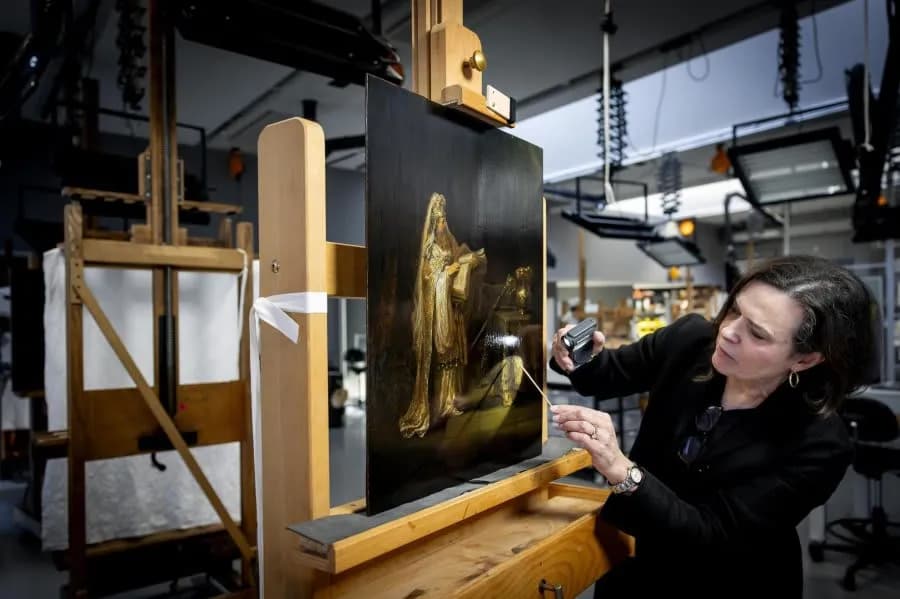
- •The Rijksmuseum in the Netherlands has confirmed the authenticity of Rembrandt's 'Vision of Zacharias in the Temple,' which had been missing for 65 years after being removed from the catalog in 1960.
- •Advanced technical analysis including Macro-XRF scanning revealed that pigments, techniques, and evidence of compositional changes all matched characteristics of Rembrandt's works.
- •Through a long-term loan from an anonymous collector, the painting will be open to the public at the Rijksmuseum in Amsterdam starting March 4.
The Return of a Lost Masterpiece
The Rijksmuseum in the Netherlands has confirmed the authenticity of a Rembrandt van Rijn painting that had been missing for 65 years. The work in question is 'Vision of Zacharias in the Temple' (1633), which was removed from the official Rembrandt catalog in 1960 and completely disappeared from public view after being sold to a private collector in 1961.
On March 2, the museum officially announced that after two years of detailed investigation, the work is indeed a genuine Rembrandt. The opportunity for reassessment arose when the anonymous current owner requested authentication from the museum. The museum employed the same cutting-edge analytical technology used in 'The Night Watch' restoration project to meticulously verify the painting. The work will be open to the public at the Rijksmuseum in Amsterdam starting March 4.
Truth Revealed Through Science
Researchers used state-of-the-art analytical techniques, including Macro X-ray fluorescence (Macro-XRF) scanning, to determine the work's authenticity. Analysis revealed that all pigments used in the painting matched those found in other Rembrandt works from the same period, and the technique of layering paint and brushwork style displayed typical characteristics of Rembrandt's early works.
Particularly noteworthy is the discovery of evidence showing the artist modified the composition during the creation process. This precisely matches Rembrandt's working method of constantly reconsidering and changing compositions while working. The choice of subject matter, manner of expression, and overall quality of execution also supported the work's authenticity as a Rembrandt.
A Biblical Moment Told Through Light
The work depicts the story of the high priest Zacharias from the New Testament. It shows the moment when the archangel Gabriel appears before Zacharias as he burns incense in the temple, prophesying that he and his wife Elizabeth will have a son despite their old age. That son would become John the Baptist.
Rather than directly depicting the angel, Rembrandt suggested the arrival of a divine presence through light pouring from the upper right of the canvas. Zacharias's surprised expression delicately captures the human bewilderment of hearing an incredible prophecy. The dramatic contrast between light and dark, and the subtle expression of emotion—these are evidence that the young 27-year-old Rembrandt had already matured as a masterful painter.
History of Rembrandt Attribution Controversies
The debate surrounding Rembrandt's catalog of works is one of the most complex cases in art history. Rembrandt, a master of the 17th-century Dutch Golden Age, had numerous pupils and workshop painters during his lifetime, and countless works imitating his style were produced. In the 20th century, art historians began employing scientific methodologies to distinguish genuine works from copies.
In the 1960s, conservative authentication standards prevailed. It was during this period that 'Vision of Zacharias in the Temple' was removed from the catalog. However, in the 21st century, advances in materials science and imaging technology dramatically increased the precision of artwork analysis. Since 2019, the Rijksmuseum has been conducting 'Operation Night Watch,' accumulating cutting-edge technologies such as AI-based analysis and high-resolution scanning, and applied the same system to verify the Zacharias work.
In recent years, cases of works being reconfirmed as genuine Rembrandts have been increasing. A portrait held by the Fiedels Museum in 2014, a work at Oxford's Ashmolean Museum in 2016, and others have been rehabilitated through scientific verification. The authentication of the Zacharias work is a continuation of this trend.
Future Prospects [AI Analysis]
This discovery reaffirms the importance of collaboration between museums and private collectors. If the anonymous collector had not made the work available to the museum, this masterpiece would likely have remained lost forever. As more private collections undergo scientific verification, it is expected that more 'hidden masterpieces' will emerge.
Technological advances are changing the paradigm of art historical research. AI learns painters' brushstroke patterns to determine authenticity, and spectral analysis reveals underlying structures invisible to the naked eye. Over the next decade, as major museums undertake comprehensive re-examinations of their collections, the catalogs of not only Rembrandt but various masters are likely to be reorganized.
Taco Dibbits, Director of the Rijksmuseum, expressed his anticipation for the public unveiling, saying he is "delighted that we can see this work in person." The Rembrandt masterpiece that has returned after 65 years is gaining new meaning at the intersection where science and art, past and present, meet.
댓글 (3)
Rembrandt 관련 기사 잘 읽었습니다. 유익한 정보네요.
그 부분은 저도 궁금했습니다.
Lost에 대해 더 알고 싶어졌습니다. 후속 기사 부탁드립니다.
More in Culture & Art

‘Crush’, ‘Tero’, ‘Jidae’… The languages of North and South Korea are becoming increasingly distant.
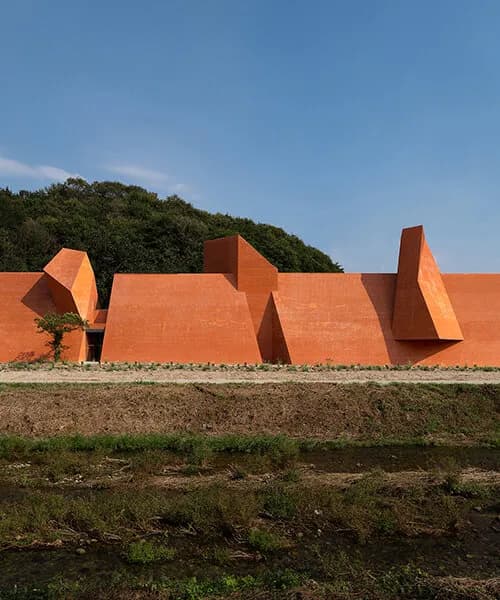
‘Fortress Café’ stands tall in the forests of Gangwon-do, reinterpreting ancient fortress walls through modern architecture.
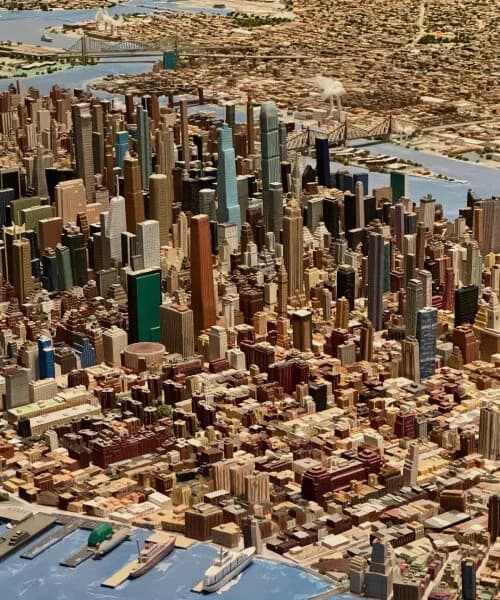
New York, hand-carved for 21 years, unveiled for the first time at an art museum
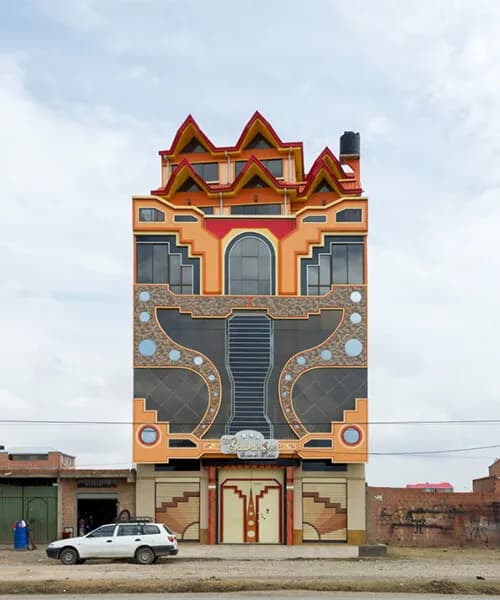
Freddie Mamani colors the city with Andean culture
An abandoned concrete pipe is reborn as a playground... Busan Museum of Art ‘Concrete Utopia’
A Swedish artist's house, the essence of architecture that becomes one with nature
Latest News

"간부 잘 아는데 교통비 좀" 휴가 군인들 돈 뜯은 50대 구속
50대 A씨가 휴가 중인 군인들에게 부대 간부를 아는 척 접근해 돈을 사취

英 옥토퍼스, 이란 전쟁 이후 태양광 판매 50% 증가
이란 전쟁 이후 영국 옥토퍼스의 태양광 판매량 50% 증가

당정 "추경, 지방·취약계층에 더 지원되는 방식으로"
당정이 지방자치단체와 취약계층 중심의 추경 편성 방침 재확인

당정, 석유 최고가격제 손실 보전을 추경에 반영키로
당정이 석유 최고가격제 손실을 추경에 반영하기로 결정
어머니 폭행하고 금팔찌 빼앗은 30대 아들 경찰에 붙잡혀
어머니 폭행 후 금팔찌 빼앗은 30대 남성 체포

아이티 갱단 폭력사태로 10개월간 5천명 이상 사망
아이티에서 지난 10개월간 갱단 폭력으로 5천명 이상 사망

서방 정보당국 "러시아, 우크라이나 전쟁 후 이란에 드론·식량 공급"
서방 정보당국, 러시아의 이란 드론·식량 공급 작업 거의 완료 파악

6년 전 세 살 딸 살해한 30대 친모 구속송치
경찰, 6년 전 세 살 딸 살해 혐의 30대 친모를 구속송치