Seoul Faces Housing Supply Crisis: 250,000 Units Short Over Next 5 Years
Experts Propose Modular Housing Expansion and Public-Private Dual Supply Model
- •Seoul is expected to face a shortage of 250,000 housing units over the next five years, with experts warning of a supply crisis.
- •Despite population decline, housing demand continues to rise due to household fragmentation, creating a paradoxical situation.
- •A public-private dual supply model and modular housing expansion have been proposed as solutions.
250,000-Unit Shortage Expected Over 5 Years
Seoul's housing market is facing a severe supply cliff. At the "2026 Real Estate Legislative Forum" held on the 19th at the Press Center in Jung-gu, Seoul, experts warned that up to 250,000 housing units could be in short supply over the next five years.
Yang Ji-young, an expert committee member at Shinhan Premier Pathfinder, pointed out that "Seoul has no more land to develop, making redevelopment projects virtually the only means of urban housing supply," adding that "while 80,000 units are needed annually, actual supply remains at around 30,000 units."
Households Increase Despite Population Decline
Paradoxically, Seoul is experiencing declining population alongside increasing housing demand. Over the past decade, Seoul's population decreased by 850,000, yet the number of households increased by 440,000. The rise in one- and two-person households and household fragmentation is driving housing demand.
Yang explained that "homes are occupied by households, not individuals," noting that "combining 50,000 new households and 30,000 replacement units for demolished housing requires 80,000 units annually, but actual supply falls far short of this."
Redevelopment Projects Delayed by Regulations
Demand is concentrating in urban centers, particularly core areas of Seoul. The highest subscription competition rates were all for redevelopment apartments, while the lowest were for public housing sites in outlying areas, supporting this trend.
However, redevelopment projects face significant delays due to various regulations including the Reconstruction Excess Profit Recapture System. "Maple Xi" in Seocho-gu, which was completed last year, was delayed by 2 years and 3 months after management disposition approval due to construction cost disputes and regulatory burdens. Cases like "Jamsil Le Ellui" and "Jamsil Raemian I-Park" in Songpa-gu are cited as examples where projects that typically take 4-5 years have extended beyond 7 years.
Public contributions have also been identified as factors worsening project viability. Yang noted that "uniform social mix requirements, forced donations of undesirable facilities, and identical standards for Gangnam and non-Gangnam areas make projects difficult."
Singapore-Style Dual Model Proposed
Experts proposed a "dual supply model" separating private redevelopment projects from public rental housing as a solution. Citing Singapore as an example, Yang explained that "more than 80% of Singapore's population lives in public housing (HDB) with homeownership rates reaching 90%," describing it as "a structure where the public sector handles most residential stability while the private sector absorbs remaining demand."
She added that "Singapore also differentiates regulations by location—outlying, intermediate, and urban core," noting that "the more urban the area, the stronger the regulations, but with expanded residential support."
Research committee member Lim Seok-ho proposed modular housing expansion as an alternative, emphasizing that "we need to expand housing supply channels through rapid, high-quality modular housing."
Ruling Party Signals Legislative Push for Housing Supply
The ruling party and government have announced they will accelerate legislation to stimulate housing supply. Under the principle that "supply is about speed and execution, and legislation supports that execution," attention is focused on how the various policy proposals presented at this forum will be reflected in future legislative discussions.
Center Director Jeon Seong-je emphasized that "the sure way to stabilize housing prices is ultimately supply," adding that "regional details determine success or failure."
댓글 (6)
이 위기를 어떻게 극복할 수 있을지 전문가 의견이 더 필요합니다.
걱정이 많이 되네요. 좋은 지적입니다.
경제 상황이 좋지 않은데, 정부의 대응이 아쉽습니다.
맞습니다. 대비가 필요한 시점이에요.
Housing 상황이 심각하네요. 서민들 피해가 걱정됩니다.
걱정이 많이 되네요. 좋은 지적입니다.
More in Economy

당정, 석유 최고가격제 손실 보전을 추경에 반영키로

미·이란 긴장 한 달, 금융시장 요동…장기화 우려

뉴욕증시 3대 지수 동반 상승…이란 휴전 기대감

Elon Musk's X recruits a cryptocurrency expert as head of design... ‘X Money’ launch imminent

BitGo-GK Sync plans to build ‘tokenized deposit’ infrastructure for banks

The other side of prediction markets: Ethical dilemmas of cryptocurrency platforms dealing in war and terrorism
Latest News
"간부 잘 아는데 교통비 좀" 휴가 군인들 돈 뜯은 50대 구속
50대 A씨가 휴가 중인 군인들에게 부대 간부를 아는 척 접근해 돈을 사취

英 옥토퍼스, 이란 전쟁 이후 태양광 판매 50% 증가
이란 전쟁 이후 영국 옥토퍼스의 태양광 판매량 50% 증가

당정 "추경, 지방·취약계층에 더 지원되는 방식으로"
당정이 지방자치단체와 취약계층 중심의 추경 편성 방침 재확인
어머니 폭행하고 금팔찌 빼앗은 30대 아들 경찰에 붙잡혀
어머니 폭행 후 금팔찌 빼앗은 30대 남성 체포
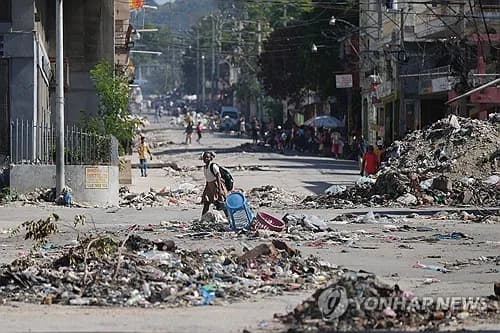
아이티 갱단 폭력사태로 10개월간 5천명 이상 사망
아이티에서 지난 10개월간 갱단 폭력으로 5천명 이상 사망

서방 정보당국 "러시아, 우크라이나 전쟁 후 이란에 드론·식량 공급"
서방 정보당국, 러시아의 이란 드론·식량 공급 작업 거의 완료 파악

6년 전 세 살 딸 살해한 30대 친모 구속송치
경찰, 6년 전 세 살 딸 살해 혐의 30대 친모를 구속송치

中企 수입 나프타의 80% 이상이 중동산…공급망 위기 심화
중소기업 수입 나프타의 80% 이상이 중동산으로 공급 의존도 높음