South Korea's Knowledge Services Trade Deficit Hits $10.2B—AI, OTT Subscriptions Drive Largest Gap in 12 Years
Despite surpluses in IT and K-pop, deficit expands by $2.9B due to surging overseas R&D outsourcing and intellectual property fees

- •South Korea's knowledge services trade deficit reached $10.25 billion in 2025, the largest in 12 years.
- •AI and OTT subscriptions, along with surging overseas R&D outsourcing, were identified as primary drivers of the expanding deficit.
- •Information technology services and K-content achieved record surpluses, but deficits with North America and Europe were overwhelming.
Largest Deficit in 12 Years
According to preliminary statistics released by the Bank of Korea on the 19th, South Korea's knowledge services trade deficit reached $10.25 billion (approximately 15 trillion won) in 2025. This represents an increase of nearly $2.88 billion from the previous year ($7.37 billion) and marks the largest deficit since 2013 ($10.81 billion deficit)—a 12-year high.
Knowledge services trade encompasses four sectors: intellectual property royalties, information and communication services, culture and leisure services, and professional and business services. In 2025, exports in these areas totaled $41.46 billion, while imports reached $51.71 billion.
AI, OTT Subscriptions and Overseas R&D Outsourcing Drive Deficit Expansion
Park Sung-gon, director of the Bank of Korea's Balance of Payments team, explained that "increases in artificial intelligence (AI) services and OTT (online video streaming) subscriptions, along with major corporations' expanded overseas research and development (R&D) outsourcing, were key factors in the deficit expansion."
By sector, the professional and business services deficit reached $9.39 billion. Within this category, the R&D sector alone recorded a deficit of $6.12 billion—an increase of $980 million from the previous year. This resulted from major corporations like Samsung Electronics increasing overseas R&D outsourcing to secure global competitiveness.
The intellectual property royalties deficit also stood at a substantial $7.03 billion, reflecting surging costs for global companies' industrial property rights and software copyright fees.
Information Technology and K-pop Achieve Record Surpluses
Despite the expanding deficit, some sectors performed well. Information and communication services recorded a surplus of $5.19 billion, achieving a record high. This resulted from significantly increased exports of Korea's information provision and platform services.
Culture and leisure services also posted a surplus of $980 million. Notably, K-pop performance and exhibition-related exports recorded a record surplus of $440 million. As global popularity of Korean content like K-dramas continues, this sector maintains steady export momentum.
Director Park analyzed that "while exports increased mainly in information provision and platform services, imports grew even more steeply in R&D, industrial property rights, and software copyrights."
North America and Europe Drive Regional Deficits
Regionally, Asia generated a surplus of $6.9 billion. In contrast, North America showed a massive deficit of $7.72 billion, and Europe recorded a deficit of $3.69 billion. This reflects concentrated imports of intellectual property royalties and high-end professional services from U.S. and European companies.
When Did This Trend Begin?
South Korea's knowledge services trade entered a structural deficit phase after the mid-2010s. After peaking at $10.8 billion in 2013, the deficit temporarily narrowed but has been expanding again since the 2020s.
Particularly after the 2020 pandemic, accelerated digital transformation led to surging corporate use of overseas software subscriptions and cloud services. Following the emergence of ChatGPT in 2023 and the generative AI boom, AI service subscription fees began to be reflected in the trade balance in earnest during 2024-2025.
Simultaneously, Korean companies increased their use of overseas R&D centers to enhance global competitiveness. As collaboration with foreign research institutions became essential in core industries like semiconductors, batteries, and advanced materials, a structure of continuously increasing R&D spending became entrenched.
Meanwhile, K-content solidified its position in the global market following BTS's Billboard breakthrough in 2018, and in the 2020s, K-dramas like "Squid Game" and "The Glory" achieved worldwide success through Netflix, maintaining a cultural services surplus.
Future Outlook [AI Analysis]
The knowledge services trade deficit is likely to continue for the foreseeable future. As Director Park pointed out, "increases in overseas industrial property rights usage and professional/business services are essential for our companies' production, investment expansion, and global competitiveness enhancement."
AI service subscriptions and cloud infrastructure usage are expected to increase in 2026 as well. Import amounts may grow further as global big tech companies like Microsoft, Google, and OpenAI raise AI service prices.
R&D outsourcing is also a structural factor. For Korean companies to maintain competitiveness in advanced technology fields, utilizing global research networks is inevitable. Collaboration with advanced research institutions in the U.S. and Europe is particularly difficult to reduce in the short term.
However, surpluses in information and communication services and K-content may expand. Korean platform companies are accelerating their entry into Southeast Asian and Middle Eastern markets, and K-content has established a stable revenue structure based on global fandom.
Ultimately, knowledge services trade represents a structure where two trends collide: "investment costs for securing advanced technology competitiveness" versus "K-content and platform exports." To reduce the deficit, the long-term challenge remains building proprietary intellectual property and enhancing high-value-added service export competitiveness.
What This Means for South Korea: The knowledge services deficit is not simply a trade imbalance but an indicator of where the Korean economy stands in the global value chain. While it can be viewed as growing pains in the transition from a manufacturing powerhouse to a knowledge-based economy, strengthening indigenous innovation capabilities is essential in the long run.
댓글 (3)
기사 잘 봤습니다. 다른 시각의 분석도 읽어보고 싶네요.
공감합니다. 참고하겠습니다.
Korea 관련 기사 잘 읽었습니다. 유익한 정보네요.
More in Global
Latest News
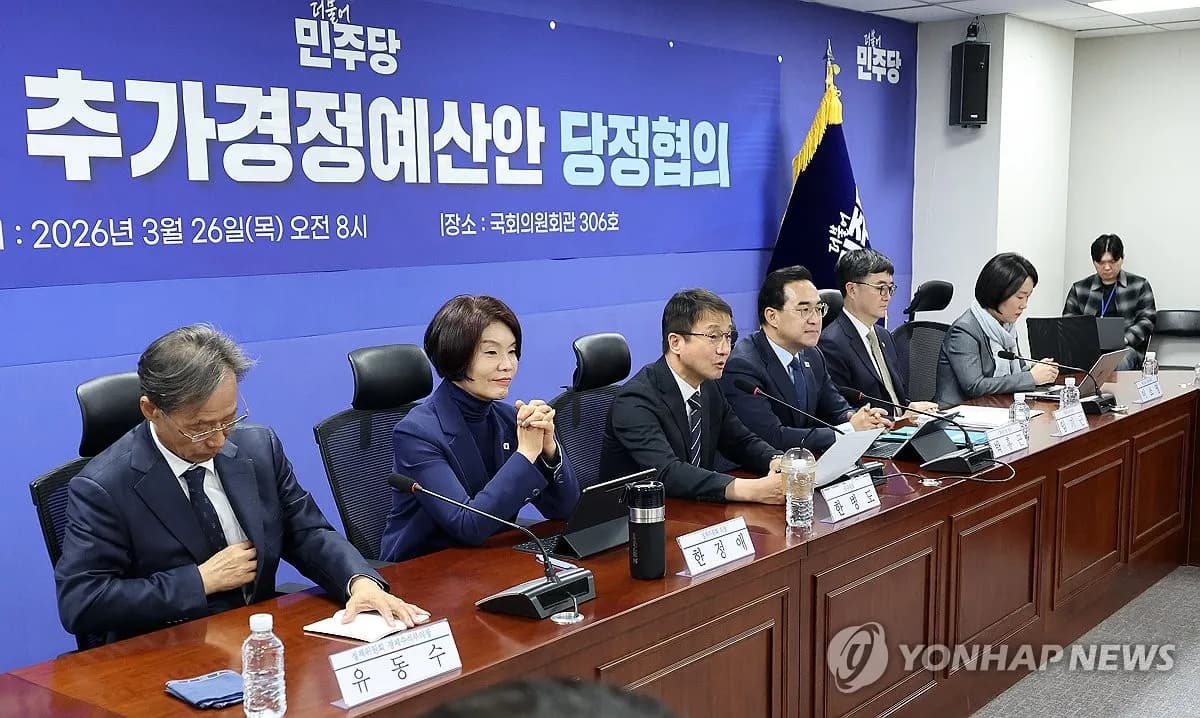
당정, 석유 최고가격제 손실 보전을 추경에 반영키로
당정이 석유 최고가격제 손실을 추경에 반영하기로 결정

6년 전 세 살 딸 살해한 30대 친모 구속송치
경찰, 6년 전 세 살 딸 살해 혐의 30대 친모를 구속송치

中企 수입 나프타의 80% 이상이 중동산…공급망 위기 심화
중소기업 수입 나프타의 80% 이상이 중동산으로 공급 의존도 높음

미·이란 긴장 한 달, 금융시장 요동…장기화 우려
미·이란 갈등으로 증시 변동성 확대, 코스피 6천 고지 후 등락

미·이란 전쟁 한 달, 미국 전문가 "종전·확전 기로"
미·이란 전쟁 1개월 도래, 종전·확전 기로 평가

미·이란 전쟁 1개월, 한국 안보·공급망 취약점 노출
미·이란 전쟁 장기화로 한국 안보·경제 취약점 노출