St. Francis of Assisi's Remains Publicly Displayed for First Time in 800 Years
Medieval Saint's Relics in Bulletproof Glass Case Draw 400,000 Pilgrims Over One Month
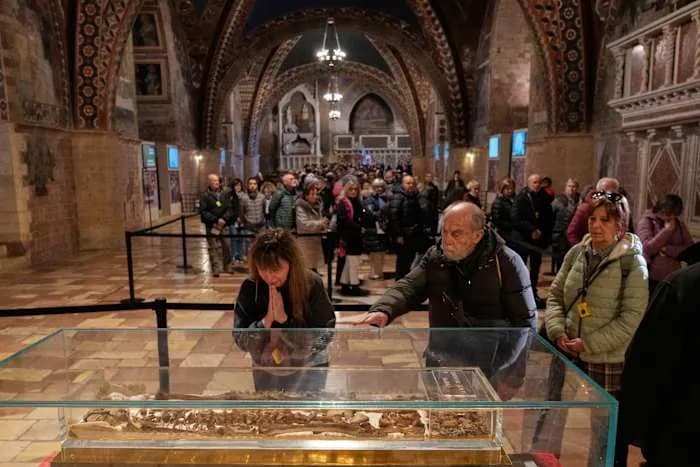
- •The remains of St. Francis of Assisi have been publicly displayed for the first time since his death in 1226, marking an unprecedented 800-year revelation.
- •Housed in a bulletproof glass case, the relics will be exhibited until March 22, with approximately 400,000 people having pre-registered for viewing.
- •The remains, secretly buried in 1230 and rediscovered in 1818, provide physical evidence of the saint's life of poverty and asceticism.
First Public Display in 800 Years
On February 12 (local time), the remains of St. Francis of Assisi were publicly displayed for the first time in history at the Basilica of St. Francis in Assisi, Italy. The relics, which have been housed in an underground crypt since the saint's death in 1226, are now exhibited in the basilica's lower church within a nitrogen-filled bulletproof plexiglass case. The case bears the Latin inscription 'Corpus Sancti Francisci' (The Body of St. Francis).
Approximately 400,000 pilgrims have pre-registered for the month-long exhibition, placing considerable strain on the small Umbrian mountain town of Assisi. According to multiple international media sources, the display will continue until March 22.
Centuries of Concealment
St. Francis's remains were secretly buried by a monk in 1230 and remained undiscovered for nearly 600 years. Concerned about theft or desecration, the monks concealed the relics deep beneath the basilica, keeping their location strictly confidential.
The remains were not rediscovered until 1818. During excavation, experts noted that the bones appeared "damaged and worn," physical evidence consistent with the saint's life of poverty and asceticism.
Friar Giulio Cesareo, communications director of the Franciscan monastery in Assisi, stated that he hopes "this exhibition will be a meaningful experience for both believers and non-believers."
St. Francis: The Saint of Poverty
St. Francis of Assisi (1181/1182–1226) stands as one of the most influential figures in medieval Catholic history. Born the son of a wealthy merchant, he renounced all his possessions in his early twenties to dedicate his life to serving the poor. In 1209, he founded the Franciscan Order, establishing the monastic principles of "poverty, chastity, and obedience" that continue to define the order today.
His philosophy resonated deeply throughout 13th-century European society. In an era dominated by materialism, his voluntary embrace of poverty attracted numerous followers, and the Franciscan Order rapidly expanded across Europe. Today, approximately 1.5 million Franciscan religious operate worldwide, and Pope Francis famously chose his papal name in honor of the saint.
Assisi served as the stage for most of St. Francis's life. He was born there, experienced his conversion, founded his order, and ultimately died in the town. The Basilica of St. Francis, whose construction began in 1228 immediately after his canonization, was built over his tomb and now attracts millions of pilgrims annually.
Future Outlook [AI Analysis]
This public display of the relics represents more than religious significance—it can be viewed as a cultural-historical experiment in "the modern reinterpretation of sacred relics." The preservation method utilizing bulletproof glass and nitrogen-filling technology demonstrates the intersection of science and faith.
The pre-registration figure of 400,000 people suggests that even in the digital age, the human desire to "see and experience directly" remains strong. This may lead to more religious sites adopting similar approaches to displaying sacred objects in the future.
However, the challenge of equipping small-scale cities like Assisi with infrastructure to accommodate large pilgrimage crowds remains significant. How to establish sustainable pilgrimage tourism models will be a crucial issue moving forward.
댓글 (4)
기사 잘 봤습니다. 다른 시각의 분석도 읽어보고 싶네요.
Francis 관련 기사 잘 읽었습니다. 유익한 정보네요.
흥미로운 주제입니다. 주변에도 공유해야겠어요.
좋은 의견이십니다.
More in Culture & Art

‘Crush’, ‘Tero’, ‘Jidae’… The languages of North and South Korea are becoming increasingly distant.
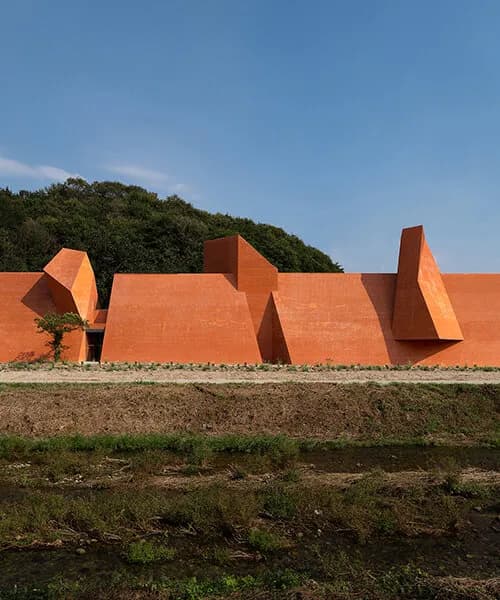
‘Fortress Café’ stands tall in the forests of Gangwon-do, reinterpreting ancient fortress walls through modern architecture.
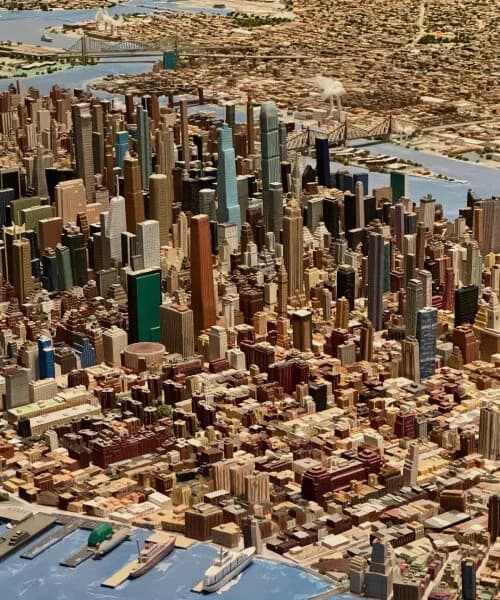
New York, hand-carved for 21 years, unveiled for the first time at an art museum
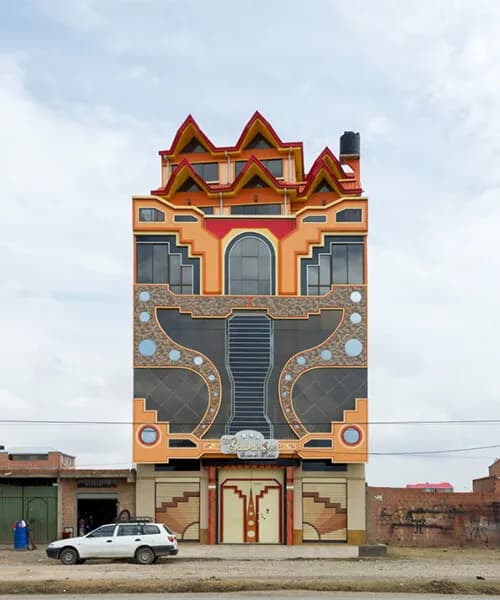
Freddie Mamani colors the city with Andean culture
An abandoned concrete pipe is reborn as a playground... Busan Museum of Art ‘Concrete Utopia’
A Swedish artist's house, the essence of architecture that becomes one with nature
Latest News

"간부 잘 아는데 교통비 좀" 휴가 군인들 돈 뜯은 50대 구속
50대 A씨가 휴가 중인 군인들에게 부대 간부를 아는 척 접근해 돈을 사취

英 옥토퍼스, 이란 전쟁 이후 태양광 판매 50% 증가
이란 전쟁 이후 영국 옥토퍼스의 태양광 판매량 50% 증가

당정 "추경, 지방·취약계층에 더 지원되는 방식으로"
당정이 지방자치단체와 취약계층 중심의 추경 편성 방침 재확인

당정, 석유 최고가격제 손실 보전을 추경에 반영키로
당정이 석유 최고가격제 손실을 추경에 반영하기로 결정
어머니 폭행하고 금팔찌 빼앗은 30대 아들 경찰에 붙잡혀
어머니 폭행 후 금팔찌 빼앗은 30대 남성 체포
아이티 갱단 폭력사태로 10개월간 5천명 이상 사망
아이티에서 지난 10개월간 갱단 폭력으로 5천명 이상 사망

서방 정보당국 "러시아, 우크라이나 전쟁 후 이란에 드론·식량 공급"
서방 정보당국, 러시아의 이란 드론·식량 공급 작업 거의 완료 파악

6년 전 세 살 딸 살해한 30대 친모 구속송치
경찰, 6년 전 세 살 딸 살해 혐의 30대 친모를 구속송치