Taiwan Invasion: The Key Variable Determining US-China Relations
Former White House National Security Advisor O'Brien Outlines Trump's Second-Term Foreign Policy

- •Former White House National Security Advisor O'Brien identified China's non-invasion of Taiwan and the Philippines as key conditions for US-China peaceful coexistence.
- •President Trump judges that Xi Jinping will refrain from military action during his term and plans to focus on internal tasks such as rebuilding the US military.
- •As the Taiwan Strait situation becomes a watershed in US-China relations, South Korea's strategic position and choices are also becoming more critical.
Trump Administration's China Strategy: Taiwan as the Watershed
Robert O'Brien, who served as White House National Security Advisor during Trump's first term, has identified the Taiwan issue as the key variable that will determine the future of US-China relations.
In a recent interview with Foreign Affairs magazine's podcast, O'Brien stated, "If China does not invade Taiwan and does not invade the Philippines, the United States can peacefully coexist with China." He emphasized that President Trump said "Xi Jinping and Chinese officials told him they would not take any action during his term," adding that "they understand the consequences."
Trump's Strategic Calculations
O'Brien explained that President Trump is currently managing multiple tasks simultaneously: rebuilding the US military, controlling the southern border, addressing the Ukraine situation, and dealing with Gaza and Iran issues.
He noted that "adding a US-China trade war or cold war to the to-do list is a situation everyone, including Trump himself, wants to avoid," and that "Trump intuitively judges that Xi Jinping will not invade Taiwan or the Philippines during his term."
This is interpreted as part of strategic priority setting. The Trump administration plans to focus on resolving domestic issues rather than immediate US-China conflicts, laying the groundwork so the next administration can respond from a more advantageous position.
Diplomatic Tensions Surrounding Taiwan
President Trump held bilateral talks with President Xi Jinping in South Korea in late October, but stated after the meeting that Taiwan was not discussed. Subsequently, in an interview with US media, when asked "whether US forces would intervene if China launched a military attack on Taiwan," he avoided a specific answer, saying "I can't reveal my secrets."
China's military threats against Taiwan continue to intensify. The People's Liberation Army repeatedly conducts military exercises in waters and airspace around Taiwan, increasing pressure, and the Taiwan Strait situation has emerged as a major concern for the international community.
Impact on South Korea
As Taiwan emerges as a key variable in US-China relations, South Korea's strategic position is also becoming increasingly important. South Korea is a key US ally while maintaining close economic relations with China, potentially facing difficult choices in the event of a Taiwan Strait crisis.
Particularly within the framework of the ROK-US alliance, South Korea may be asked to cooperate in some form with US Taiwan defense operations, which could directly impact Korea-China relations. Cooperation with Taiwan in advanced industries such as semiconductors and batteries is also expanding, making the Taiwan Strait situation a direct variable for the Korean economy.
Outline of Trump's Second-Term Foreign Policy [AI Analysis]
Through his Foreign Affairs contribution, O'Brien presented specific directions for Trump's second-term foreign policy. Beyond the 2026 defense budget, plans include investing an additional $150 billion to accelerate US military modernization and persuading allies to spend 5% of GDP on defense to share the free world's security burden.
In Middle East policy, the administration is expected to maintain a hardline stance of not recognizing Hamas, firmly supporting Israel, applying maximum pressure on Iran, and not ruling out attacks on nuclear enrichment facilities. While the Ukraine war is moving toward resolution, progress remains slow due to President Putin's lack of willingness to compromise.
Future US-China relations are likely to see continued structural tensions centered on the Taiwan issue. Even if the Trump administration avoids immediate conflict, the fundamental structure of collision between China's will for Taiwan unification and the US Indo-Pacific strategy remains unchanged. For countries in the region, including South Korea, balanced diplomacy that secures strategic autonomy while maximizing practical benefits will become increasingly important amid this US-China competitive structure.
댓글 (3)
기사 잘 봤습니다. 다른 시각의 분석도 읽어보고 싶네요.
좋은 의견이십니다.
Invasion: 관련 기사 잘 읽었습니다. 유익한 정보네요.
More in Global

Latest News
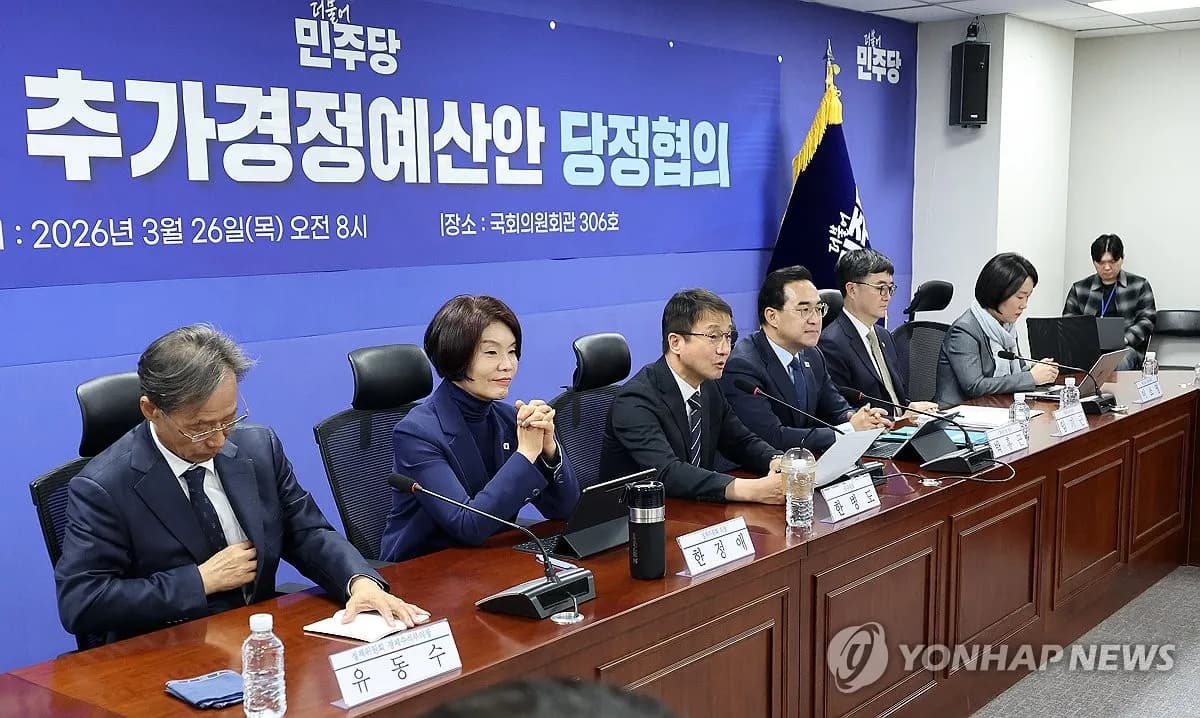
당정, 석유 최고가격제 손실 보전을 추경에 반영키로
당정이 석유 최고가격제 손실을 추경에 반영하기로 결정

6년 전 세 살 딸 살해한 30대 친모 구속송치
경찰, 6년 전 세 살 딸 살해 혐의 30대 친모를 구속송치

中企 수입 나프타의 80% 이상이 중동산…공급망 위기 심화
중소기업 수입 나프타의 80% 이상이 중동산으로 공급 의존도 높음

미·이란 긴장 한 달, 금융시장 요동…장기화 우려
미·이란 갈등으로 증시 변동성 확대, 코스피 6천 고지 후 등락

미·이란 전쟁 한 달, 미국 전문가 "종전·확전 기로"
미·이란 전쟁 1개월 도래, 종전·확전 기로 평가

미·이란 전쟁 1개월, 한국 안보·공급망 취약점 노출
미·이란 전쟁 장기화로 한국 안보·경제 취약점 노출