The Trump Era: Challenges for Middle Powers in a New World Order
Canada, Europe, and Other Middle Powers Seek Strategic Autonomy Amid Unraveling of U.S.-Led International Order
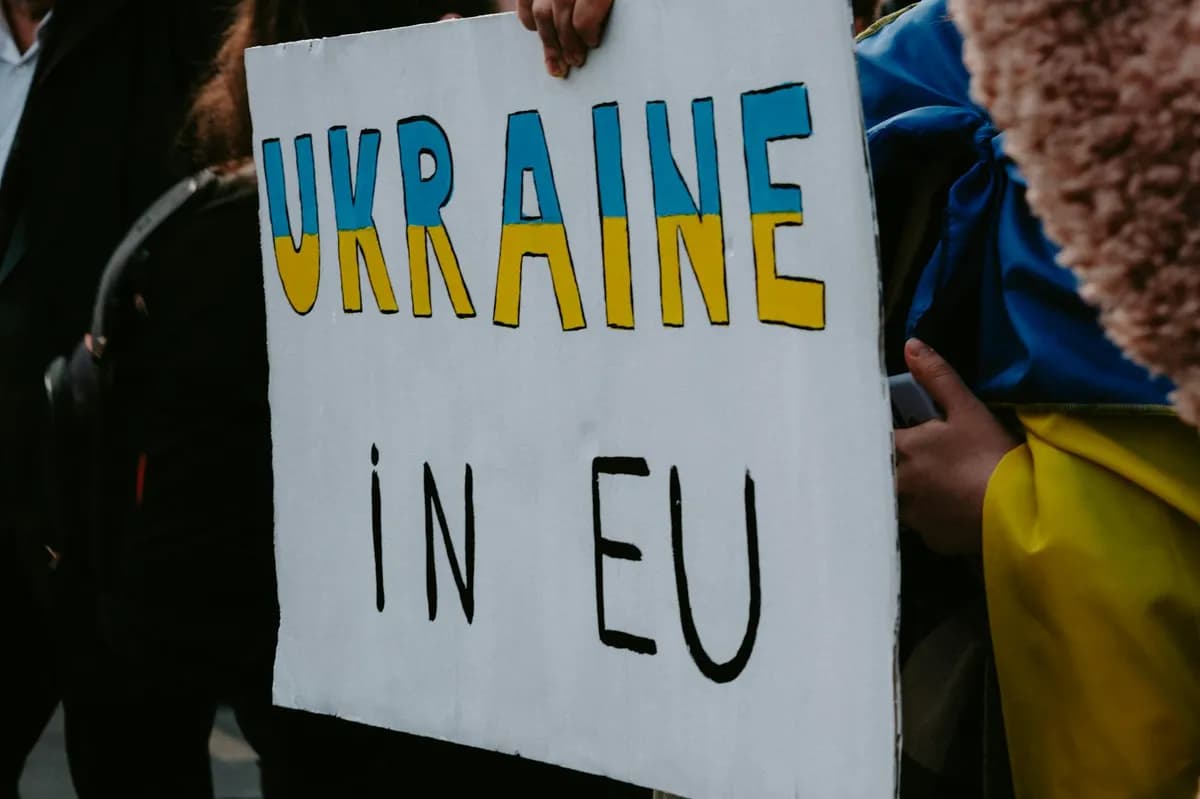
- •Changes in the Trump administration's alliance policy are prompting Canada, Europe, and other middle powers to reduce U.S. dependency and seek strategic autonomy.
- •Europe is increasing defense spending and building independent military capabilities while discussing formation of a new international order through middle power coalitions.
- •South Korea needs a multi-layered strategy maintaining the ROK-U.S. alliance while participating in middle power cooperation and strengthening autonomous defense capabilities.
Fractures in the U.S. Alliance System
Although President Trump has withdrawn his threat to annex Greenland, the world has already begun viewing the United States through a different lens. At last week's Davos Forum, Canadian Prime Minister Mark Carney referenced "fractures" in the existing rules-based order, urging middle powers to unite and build a new world order.
Ukrainian President Volodymyr Zelenskyy also emphasized that Europe must "stop wandering" and build independent military capabilities without relying on the United States. As the Trump administration casts uncertainty over NATO's future and shakes the Atlantic alliance, countries outside the U.S.-China-Russia triangle are contemplating fundamental strategic realignments.
Europe's Choice: Securing Strategic Autonomy
Aliona Hlivco, a former Ukrainian politician and representative of the Saint James Policy Group, noted that "Europe desperately needs a coherent strategy to move forward as a geopolitical entity." She emphasized the need to strengthen strategic autonomy in economic, security, and energy sectors, particularly achieving self-sufficiency in security matters.
Hlivco added that rather than simply blaming the United States, structural causes must be understood. She acknowledged that decades of declining European defense spending and ignoring American burden-sharing requests have resulted in Washington maintaining a global security umbrella at enormous cost.
"It took a disruptive presidency for Europe to begin course correction," she pointedly observed. She argued that the shared values of freedom, human rights, and rule of law that have bound Western democracies since World War II must once again become central to a new order.
Implications for South Korea
This reshuffling of the international order has significant implications for South Korea. While South Korea has traditionally anchored its diplomacy and security on the ROK-U.S. alliance, it must now prepare for potential changes in American alliance policy.
First, increased defense spending and strengthening of autonomous defense capabilities appear inevitable. Preemptive responses are necessary to avoid repeating Europe's mistake of belatedly increasing defense budgets after decades of reductions.
Second, participation in middle power coalitions should be considered. The middle power cooperation proposed by the Canadian Prime Minister represents an attempt to create a third voice within the U.S.-China-Russia trilateral structure. South Korea could explore expanded cooperation with Australia, Canada, ASEAN nations, and others.
Third, securing economic autonomy is essential. Supply chain diversification and increased technological self-reliance are needed in critical industries like semiconductors and batteries that have high U.S. dependency.
Realistic Limitations of Middle Power Cooperation
However, Justin Logan, Director of Defense and Foreign Policy Studies at the Cato Institute, soberly assessed that "the potential for middle power cooperation is limited." He noted that middle powers possess different interests and geopolitical positions, making consistent solidarity difficult to achieve.
For example, while Canada and Poland are NATO members, India and Turkey maintain non-aligned traditions. Building a common security system without the United States is realistically challenging for these diverse actors.
Future Outlook [AI Analysis]
As Trump's second term progresses, the international order is likely to transition from a U.S.-centered unipolar order to a multipolar complex order. Several scenarios are anticipated in this process.
First, gradual European military strengthening is expected. Following the Ukraine war, Germany, Poland, and others have already increased defense spending beyond 2% of GDP, a trend likely to continue. However, establishing an integrated European military force will take considerable time.
Second, expanded selective cooperation among middle powers is likely. Rather than comprehensive alliances, flexible coalitions around specific issues (climate change, cybersecurity, trade, etc.) are more probable. South Korea can increase its influence by actively participating in such issue-based coalitions.
Third, increased fluidity in Asian security dynamics is anticipated. If the U.S. Indo-Pacific strategy weakens, Chinese influence could expand. South Korea will need a dual strategy maintaining the ROK-U.S. alliance while expanding multilateral cooperation.
Ultimately, middle powers in the new world order are expected to operate along two axes: strategic autonomy and selective solidarity. South Korea likewise requires a balanced approach—strengthening its own capabilities while building cooperative networks with like-minded nations sharing common values.
댓글 (4)
The에 대해 더 알고 싶어졌습니다. 후속 기사 부탁드립니다.
그 부분은 저도 궁금했습니다.
Trump 관련 기사 잘 읽었습니다. 유익한 정보네요.
공감합니다. 참고하겠습니다.
More in Global
Latest News
당정, 석유 최고가격제 손실 보전을 추경에 반영키로
당정이 석유 최고가격제 손실을 추경에 반영하기로 결정

6년 전 세 살 딸 살해한 30대 친모 구속송치
경찰, 6년 전 세 살 딸 살해 혐의 30대 친모를 구속송치

中企 수입 나프타의 80% 이상이 중동산…공급망 위기 심화
중소기업 수입 나프타의 80% 이상이 중동산으로 공급 의존도 높음

미·이란 긴장 한 달, 금융시장 요동…장기화 우려
미·이란 갈등으로 증시 변동성 확대, 코스피 6천 고지 후 등락

미·이란 전쟁 한 달, 미국 전문가 "종전·확전 기로"
미·이란 전쟁 1개월 도래, 종전·확전 기로 평가

미·이란 전쟁 1개월, 한국 안보·공급망 취약점 노출
미·이란 전쟁 장기화로 한국 안보·경제 취약점 노출